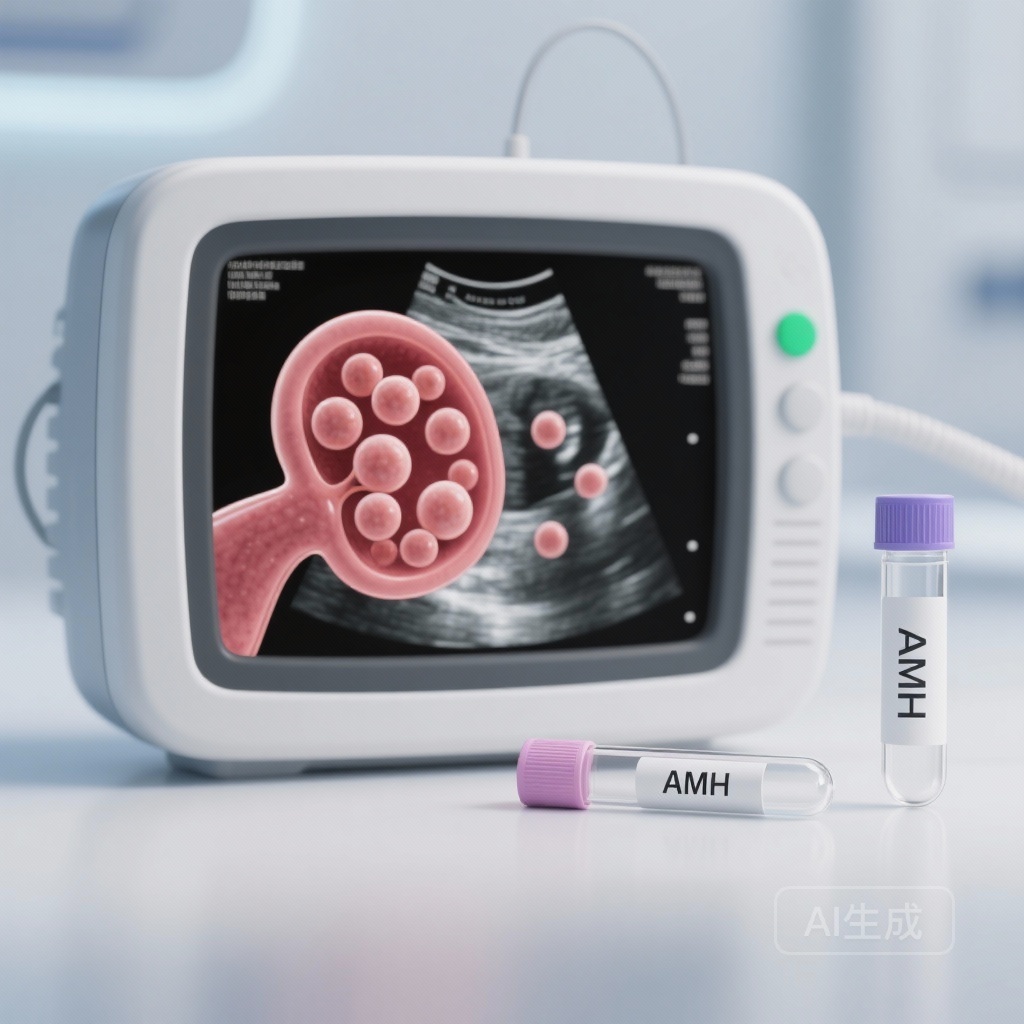
Establishing the Baseline for Reproductive Health
In the evolving landscape of reproductive medicine, understanding the parameters of a ‘normal’ ovarian reserve is paramount. For years, clinicians have relied on markers such as Anti-Müllerian Hormone (AMH) and Antral Follicle Count (AFC) to assess fertility potential, primarily in women already facing infertility or those approaching the twilight of their reproductive years. However, data regarding the baseline functional ovarian anatomy in young, healthy women—those at the peak of their reproductive potential—has been surprisingly sparse. A landmark study recently published in Human Reproduction Open, titled ‘The functional ovarian anatomy of 492 women aged 18-22 years: a population-based study in Norway,’ provides much-needed clarity on this demographic.
The study, led by researchers at the Norwegian Institute of Public Health and Telemark Hospital Trust, addresses a fundamental question: How do measures of functional ovarian anatomy vary among women between the ages of 18 and 22? This specific age window is critical because it represents the period after the completion of puberty but before the biological clock begins its inevitable decline. By establishing these benchmarks, the medical community can better identify early outliers who may be at risk for premature ovarian insufficiency or reduced fecundability later in life.
Study Design and Population Characteristics
The research was conducted as part of the Norwegian Mother, Father and Child Cohort Study (MoBa), a massive population-based pregnancy study that has tracked thousands of families over decades. For this specific cross-sectional analysis, daughters born into the MoBa cohort were invited to participate once they reached early adulthood. The study cohort consisted of 492 women, aged 18 to 22, who were not using hormonal contraceptives—a crucial inclusion criterion, as hormonal birth control can significantly suppress ovarian activity and alter AMH and AFC measurements.
Participants underwent rigorous clinical examinations during the early follicular phase of their menstrual cycle (days 2–5). This timing ensures that the antral follicles measured are truly representative of the resting pool and are not confounded by the emergence of a dominant follicle. The protocol included fasting blood samples for endocrinological profiling, anthropometric measurements, and detailed questionnaires. Most notably, trained clinicians performed transvaginal ultrasound (TVUS) to assess ovarian volume and AFC with high precision. To ensure the results were generalizable, the researchers also compared the participants to a larger group of over 8,000 MoBa daughters who answered questionnaires but did not undergo the clinical exam, finding no significant differences in representativeness.
Detailed Metrics of Functional Ovarian Anatomy
The core findings of the study highlight a striking degree of inter-individual variability. Even within this narrow, young age group, the range of ovarian reserve markers was broad. The total ovarian volume (sum of both ovaries) showed an interquartile range (IQR) of 9.3 to 17.2 cm³. This suggests that some healthy young women possess nearly double the ovarian tissue volume of their peers.
When looking at the Antral Follicle Count, the IQR was 21 to 37 follicles. While a count of 21 is considered healthy, a count of 37 or higher often borders on the morphology seen in Polycystic Ovary Syndrome (PCOS), yet these participants were drawn from a general population sample. The serum AMH levels, a biochemical proxy for the primordial follicle pool, also showed significant spread, with an IQR of 16.0 to 35.4 pmol/l.
The Correlation Matrix: AMH, AFC, and Ovarian Volume
One of the study’s strengths is its validation of the relationship between different ovarian markers. The researchers found strong positive correlations across the board. The correlation between AFC and AMH was particularly robust (r = 0.71, P < 0.01), reinforcing the clinical utility of using these two markers in tandem to assess ovarian reserve. Ovarian volume also correlated well with both AFC (r = 0.52) and AMH (r = 0.53). These findings suggest that while each marker provides unique anatomical or biochemical information, they collectively point toward a unified biological state of the ovary.

Association between total ovarian volume, total antral follicle count, and anti-Müllerian hormone (pmol/l).
Asymmetry in Ovarian Morphometry
An intriguing finding of the study was the consistent difference between the right and left ovaries. The mean right ovarian volume was 7.4 cm³ (95% CI: 7.1–7.8), significantly larger than the mean left ovarian volume of 6.5 cm³ (95% CI: 6.1–6.8). This anatomical asymmetry (t(446) = 4.8, P < 0.001) has been observed in smaller studies previously but is now confirmed in a large, population-based cohort. While the exact biological reason for this preference is not fully understood, some hypothesize it may relate to differences in venous drainage or arterial supply between the two sides of the pelvis.
Clinical Significance and Biological Plausibility
For clinicians, these data are invaluable. They demonstrate that ‘normal’ is a wide spectrum. When a 20-year-old patient presents with an AMH on the lower end of this IQR, it may not necessarily indicate pathology, but rather her unique position within the population distribution. Conversely, the high variability suggests that some women may start their reproductive lives with a significantly smaller ‘egg bank’ than others, which could have profound implications for their reproductive lifespan, especially if they choose to delay childbearing into their 30s.
From a biological standpoint, the high AFC and AMH levels seen in this cohort reflect the peak of the ovarian primordial follicle pool. Unlike older women, where a low AFC is usually a sign of depletion, a lower AFC in a 19-year-old might represent the lower bound of a healthy baseline. The study provides the reference ranges necessary to make these distinctions with greater statistical confidence.
Methodological Strengths and Practical Limitations
The primary strength of this research lies in its population-based design. Most previous studies on ovarian reserve have been conducted in fertility clinic settings, which inherently introduces selection bias. By using the MoBa cohort, Warp and colleagues have provided a snapshot of the general population. The use of transvaginal ultrasound—the gold standard for AFC—rather than transabdominal imaging, further enhances the accuracy of the data.
However, the authors noted several limitations. The participation rate was relatively low, likely due to the invasive and intimate nature of transvaginal ultrasound and the requirement for clinical visits during a specific window of the menstrual cycle. While the researchers confirmed that the participants were representative of the broader MoBa population in terms of general health and demographics, the possibility of self-selection bias remains. Furthermore, the study is cross-sectional and ongoing. Longitudinal follow-up will be required to see how these baseline measurements correlate with actual future fertility outcomes, such as time to pregnancy and age at menopause.
Conclusion: Implications for Future Fertility Care
The findings from this Norwegian cohort underscore the necessity of personalized reproductive medicine. With the wide variability in functional ovarian anatomy confirmed, it is clear that a ‘one size fits all’ approach to counseling young women about their fertility may be inadequate. As the researchers continue to follow these 492 women, linking their data with the Medical Birth Registry of Norway, we will gain even deeper insights into how early-life ovarian markers predict long-term reproductive success.
For now, this study serves as a critical benchmark. It provides clinicians with the data needed to interpret ovarian reserve tests in young adults with greater nuance, emphasizing that while the average reserve is high, the range of normality is vast. In an era where more women are seeking to understand their fertility earlier in life, such population-based data are the cornerstone of evidence-based counseling and proactive reproductive planning.
Funding and Clinical Trials
This study was funded by the Norwegian Institute of Public Health and Telemark Hospital Trust. It received support from the Research Council of Norway (Project Nos. 262700 and 320656) and was co-funded by the European Union through the European Research Council (ERC) project BIOSFER (101071773). The authors declared no competing interests. No clinical trial registration was required for this observational study.
References
1. Warp ML, Skåra KH, Grindstad TK, Kirkegaard K, Morken NH, Ramlau-Hansen CH, Romundstad LB, Håberg SE, Hanevik HI. The functional ovarian anatomy of 492 women aged 18-22 years: a population-based study in Norway. Hum Reprod Open. 2025 Sep 24;2025(4):hoaf057. doi: 10.1093/hropen/hoaf057 IF: 11.1 Q1 .
2. Anderson RA, Nelson SM, Wallace WH. Measuring anti-Müllerian hormone for the assessment of ovarian reserve: when and for whom is it indicated? Maturitas. 2012;71(1):28-33.
3. Kelsey TW, Wright P, Nelson SM, Anderson RA, Wallace WH. A validated model of serum anti-Müllerian hormone from conception to menopause. PLoS One. 2011;6(7):e22024.