Highlights
Impact of Treatment Cessation
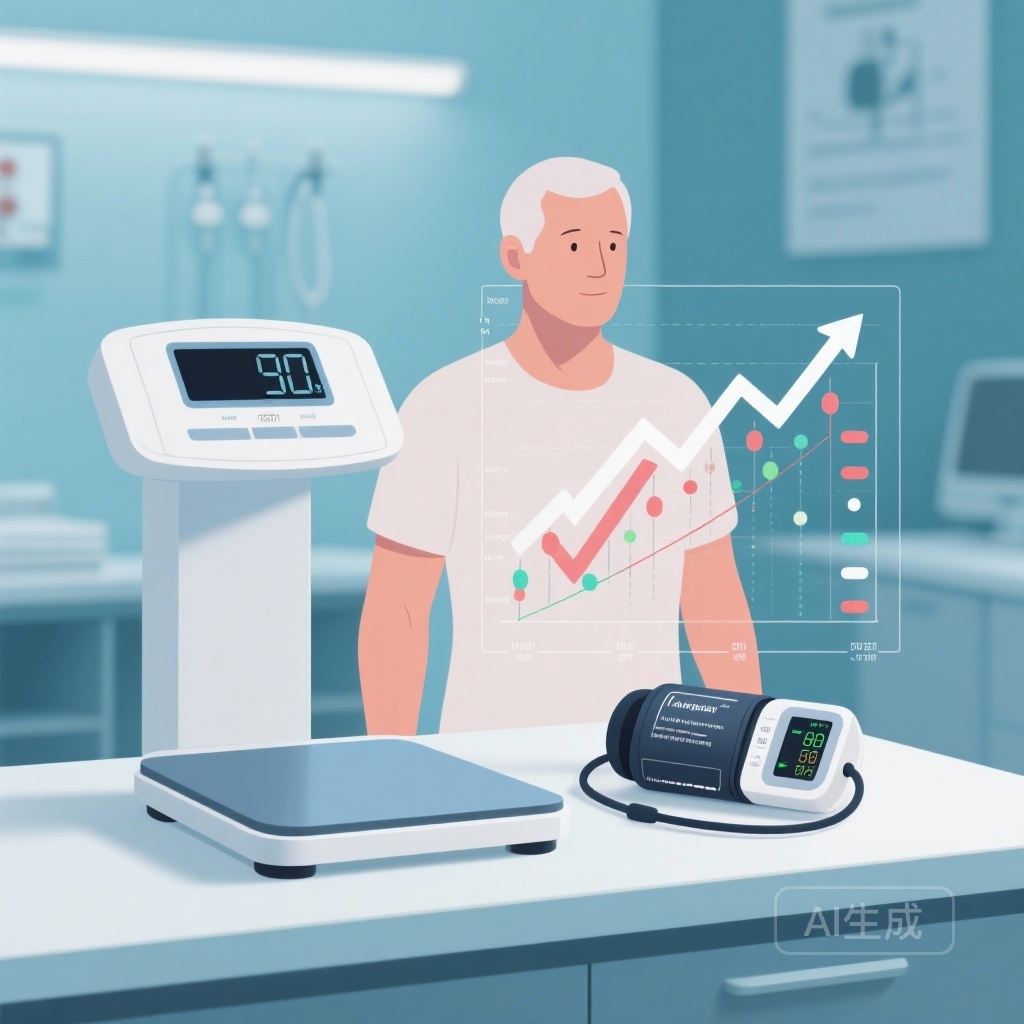
Most adults with obesity who achieved significant weight loss with tirzepatide experienced a 25% or greater regain of that weight within one year of switching to a placebo.
Proportional Reversal of Benefits
The degree of weight regain was directly associated with the reversal of initial improvements in waist circumference, systolic blood pressure, HbA1c, and lipid profiles.
Maintenance is Key
Participants who maintained their weight loss (less than 25% regain) after withdrawal preserved most of their cardiometabolic improvements, emphasizing that weight maintenance, rather than just initial loss, drives long-term health benefits.
Clinical Imperative
These findings provide robust evidence that obesity requires continuous, long-term pharmacological or lifestyle management to prevent the recurrence of metabolic dysfunction.
Introduction: The Challenge of Sustained Weight Loss
The advent of dual GIP (glucose-dependent insulinotropic polypeptide) and GLP-1 (glucagon-like peptide-1) receptor agonists, such as tirzepatide, has revolutionized the treatment of obesity. Clinical trials like the SURMOUNT series have demonstrated weight reduction previously only achievable through bariatric surgery. However, as these medications move into broader clinical practice, a critical question remains: what happens when treatment stops?
Obesity is increasingly recognized by medical societies as a chronic, relapsing disease rather than a temporary condition. Despite this, many patients and payers view pharmacological intervention as a short-term ‘kickstart’ to weight loss. The SURMOUNT-4 trial previously showed that continuing tirzepatide led to sustained weight loss, while switching to a placebo led to significant regain. This post hoc analysis dives deeper, examining how the magnitude of that weight regain specifically impacts the cardiometabolic markers that reduce cardiovascular risk.
Study Design and Methodology
This post hoc analysis utilized data from the SURMOUNT-4 trial (NCT04660643), which initially enrolled adults with a body mass index (BMI) of 30 or greater (or 27 or greater with weight-related comorbidities), excluding those with diabetes.
Initial Phase and Randomization
All participants underwent a 36-week lead-in period where they received tirzepatide (escalated to a maximum tolerated dose of 10 mg or 15 mg). At week 36, those who achieved at least a 10% weight reduction were randomized 1:1 to either continue tirzepatide or switch to a placebo for an additional 52 weeks (the withdrawal phase).
Analysis Groups
This specific analysis focused on the 308 participants who were switched to the placebo. Researchers categorized these participants into four groups based on the percentage of weight they regained by week 88, relative to the weight they had lost during the first 36 weeks:
1. Less than 25% weight regain.
2. 25% to less than 50% weight regain.
3. 50% to less than 75% weight regain.
4. 75% or more weight regain.
Endpoints
The primary focus was the change from week 36 to week 88 in waist circumference, systolic blood pressure (SBP), fasting insulin, non-high-density lipoprotein cholesterol (non-HDL-C), and hemoglobin A1c (HbA1c).
Key Findings: The Metabolic Cost of Regain
Of the 308 participants in the placebo group, the majority (71.1%) were female, with a mean age of 47.1 years. The distribution across regain categories showed that only a minority (54 participants) managed to keep their regain below 25%, while the rest experienced significant weight return.
Waist Circumference and Body Fat Distribution
Waist circumference is a potent proxy for visceral adiposity and metabolic risk. In the group with less than 25% weight regain, the increase in waist circumference was negligible (0.8 cm). However, in the 75% or more regain group, waist circumference increased by an average of 14.7 cm. This suggests that weight regain after tirzepatide withdrawal rapidly replenishes visceral fat stores, which are closely linked to systemic inflammation.
Blood Pressure and Cardiovascular Strain
One of the most concerning findings was the rapid rebound of systolic blood pressure. Even in the group with the least weight regain (<25%), SBP rose by 6.8 mm Hg. In the highest regain group, the increase was 10.4 mm Hg. This indicates that some cardiovascular benefits of tirzepatide may be tied to the presence of the drug itself or its direct effect on the sympathetic nervous system and natriuresis, in addition to weight-mediated effects.
Figure 1. Change in Weight, Body Mass Index (BMI), and Waist Circumference by Categories of Weight Regain on Tirzepatide Withdrawal.

Figure 2. Change in Blood Pressure by Categories of Weight Regain on Tirzepatide Withdrawal.

Figure 3. Change in Glycemic Parameters by Categories of Weight Regain on Tirzepatide Withdrawal.

Glycemic Control and Insulin Sensitivity
During the initial 36 weeks, participants saw significant drops in HbA1c and fasting insulin. Upon withdrawal, HbA1c levels rose across all groups. The group with the highest weight regain saw an HbA1c increase of 0.35%, effectively reversing the glycemic improvements achieved during the treatment phase. Fasting insulin levels followed a similar trend, rising by 46.2% in the 50% to 75% regain group, signaling a rapid return of insulin resistance.
Lipid Profiles
Non-HDL cholesterol, a key marker for atherogenic risk, remained relatively stable in those who regained less than 50% of their weight. However, those in the 75% or more regain category saw a 10.8% increase in non-HDL-C, potentially increasing their long-term risk for atherosclerotic cardiovascular disease (ASCVD).
Expert Commentary: Clinical Implications
The data from this SURMOUNT-4 analysis provides a sobering look at the ‘yo-yo’ effect of pharmacological weight management. From a clinical perspective, these findings suggest that obesity medications should be viewed similarly to antihypertensives or statins: they work as long as they are taken.
The Biology of Regain
Mechanistically, when GLP-1 and GIP receptor stimulation is removed, the body’s homeostatic mechanisms for energy preservation are reactivated. Appetite increases, satiety decreases, and metabolic rate may remain lower than pre-weight-loss levels, creating a ‘perfect storm’ for rapid weight regain. The fact that cardiometabolic markers worsen almost in lockstep with weight regain suggests that the metabolic ‘memory’ of the weight-loss state is short-lived without ongoing intervention.
The Importance of Maintenance
Interestingly, the subset of patients who maintained their weight loss despite stopping the medication still preserved many of their cardiometabolic gains. This highlights that while the drug is a powerful tool, the physiological state of reduced adiposity is what drives the improvement in lipids and glucose metabolism. The challenge for clinicians is identifying which patients can maintain weight loss through lifestyle alone and which require lifelong pharmacotherapy.
Conclusion
This post hoc analysis underscores that the withdrawal of tirzepatide in adults with obesity leads to significant weight regain in the majority of patients, which in turn causes a reversal of hard-won improvements in blood pressure, glycemic control, and lipid profiles. The findings reinforce the concept of obesity as a chronic disease requiring continuous care. For clinicians, the message is clear: the cessation of obesity pharmacotherapy should be approached with caution, and patients must be counseled on the high likelihood of metabolic reversal if weight is regained.
Future research should focus on ‘step-down’ dosing strategies or the identification of biomarkers that can predict which individuals are most at risk for rapid metabolic decline following treatment withdrawal.
Funding and Trial Registration
This study was funded by Eli Lilly and Company. The SURMOUNT-4 trial is registered at ClinicalTrials.gov (NCT04660643).
References
1. Horn DB, Linetzky B, Davies MJ, et al. Cardiometabolic Parameter Change by Weight Regain on Tirzepatide Withdrawal in Adults With Obesity: A Post Hoc Analysis of the SURMOUNT-4 Trial. JAMA Intern Med. 2025; Published online November 24, 2024. doi:10.1001/jamainternmed.2025.6112 IF: 23.3 Q1 .2. Aronne LJ, Sattar N, Horn DB, et al. Continued Treatment With Tirzepatide for Maintenance of Weight Reduction in Adults With Obesity: The SURMOUNT-4 Randomized Clinical Trial. JAMA. 2024;331(1):38-48. doi:10.1001/jama.2023.24945 IF: 55.0 Q1 .3. Jastreboff AM, Aronne LJ, Ahmad NN, et al. Tirzepatide Once Weekly for the Treatment of Obesity. N Engl J Med. 2022;387(3):205-220. doi:10.1056/NEJMoa2206038 IF: 78.5 Q1 .