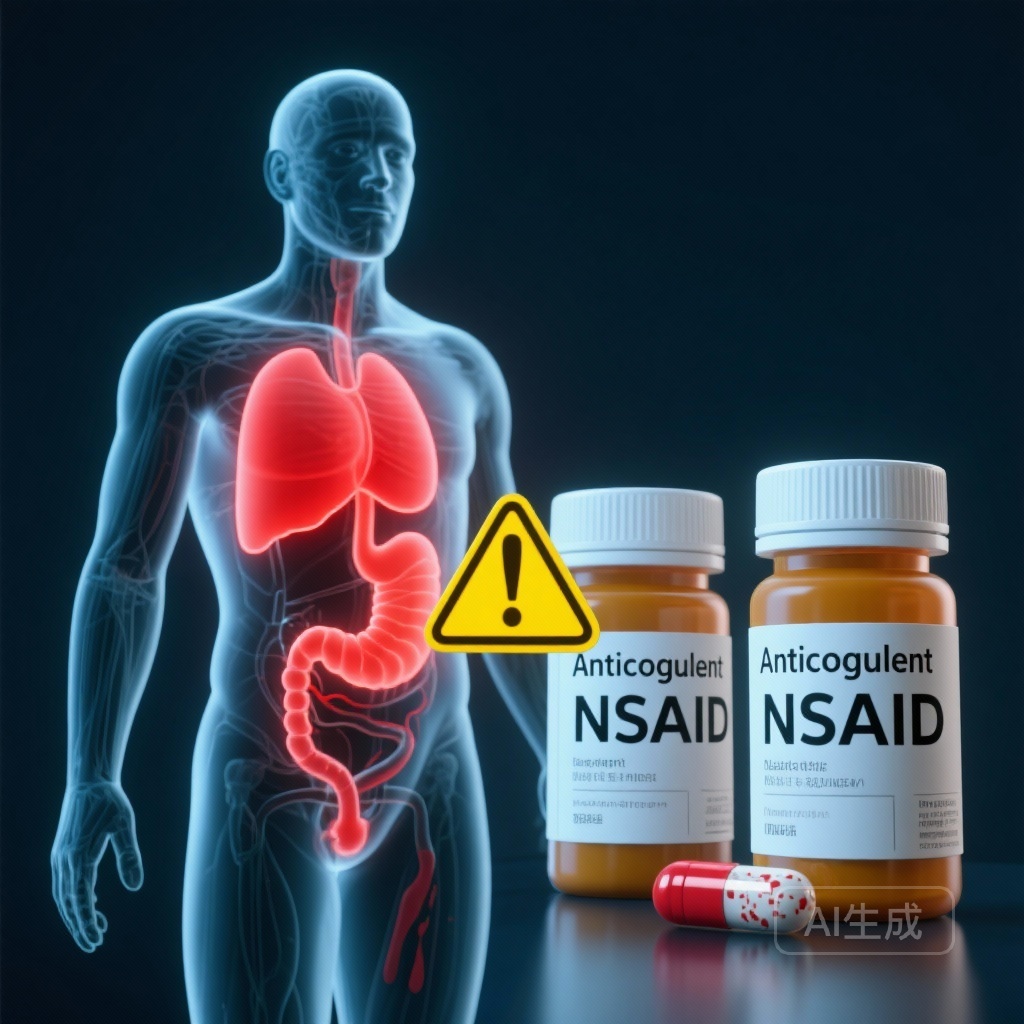
Introduction: The Clinical Dilemma of Pain Management in Anticoagulated Patients
Managing chronic pain or acute inflammation in patients with atrial fibrillation (AF) presents a frequent and significant challenge for clinicians. Atrial fibrillation requires long-term oral anticoagulation (OAC) to prevent thromboembolic events, yet the demographic most affected by AF—older adults—often suffers from comorbid osteoarthritis or other inflammatory conditions that necessitate analgesic use. Non-steroidal anti-inflammatory drugs (NSAIDs) remain among the most commonly used medications worldwide, frequently available over-the-counter. However, the pharmacodynamic synergy between NSAIDs and anticoagulants is a well-known recipe for disaster, yet specific data on individual direct oral anticoagulants (DOACs) and their interaction with NSAIDs have been relatively sparse until now.
A recent landmark nationwide cohort study by Petersen et al., published in the European Heart Journal – Quality of Care and Clinical Outcomes, provides a comprehensive analysis of this risk. By examining over 114,000 patients, the researchers have quantified the staggering increase in bleeding complications when NSAIDs are added to an anticoagulant regimen, offering a sobering reminder of the need for vigilant medication reconciliation.
Study Methodology: A Decade of Nationwide Data
This study utilized high-quality Danish nationwide registries to identify 114,119 patients diagnosed with first-time AF between 2012 and 2022. All included patients had initiated oral anticoagulation, including warfarin and the four major DOACs: apixaban, rivaroxaban, dabigatran, and edoxaban. The researchers employed a time-dependent multivariate cause-specific Cox regression model to assess the association between NSAID use and hospital-diagnosed bleeding episodes. This methodology allowed for a dynamic assessment of risk, accounting for the fact that NSAID use is often intermittent rather than continuous.
The primary endpoint was any hospital-diagnosed bleeding event. Secondary endpoints included site-specific bleeding (gastrointestinal, thoracic/respiratory, and urinary tract) and bleeding-related complications such as anaemia. By adjusting for a wide range of potential confounders—including age, sex, comorbidities, and concomitant medications—the study aimed to isolate the specific risk attributable to the OAC-NSAID combination.
Key Findings: Quantifying the Hazard
Overall Bleeding Risk and the Number Needed to Harm
The results were stark. The rate of hospital-diagnosed bleeding events was 6.2 per 100 person-years among those using NSAIDs, compared to 3.9 per 100 person-years among non-users. This translated to an adjusted hazard ratio (aHR) of 1.81 (95% CI, 1.59-2.06), representing a nearly 80% increase in the risk of serious bleeding. Perhaps more clinically relevant is the Number Needed to Harm (NNH): for every 43 patients treated with an OAC and an NSAID for one year, one additional hospital-diagnosed bleeding event occurred. In the context of chronic disease management, an NNH of 43 is remarkably low, indicating a high level of risk for a commonly encountered drug-drug interaction.
Anatomical Diversity of Bleeding
While the gastrointestinal (GI) tract is often the primary focus of NSAID-related safety concerns, this study demonstrated that the risk is systemic. While GI bleeding risk was indeed significantly elevated (aHR, 2.30; 95% CI, 1.92-2.76), other sites showed notable increases as well. Thoracic and respiratory tract bleeding risk increased by 59% (aHR, 1.59), and urinary tract bleeding risk increased by 48% (aHR, 1.48). Most strikingly, the risk of anaemia caused by bleeding was 3.5 times higher in the NSAID group (aHR, 3.50; 95% CI, 2.33-5.26), suggesting that many patients may be experiencing chronic, subclinical blood loss that eventually leads to clinical decompensation.
Comparison Across Individual Anticoagulants
One of the most valuable aspects of this research is the breakdown of risk by individual anticoagulant. The study found that NSAID use increased bleeding rates across all agents, but the magnitude of the relative risk varied:
- Edoxaban: aHR 2.87 (95% CI, 1.26-6.53)
- Apixaban: aHR 2.15 (95% CI, 1.70-2.72)
- Rivaroxaban: aHR 2.05 (95% CI, 1.64-2.57)
- Warfarin: aHR 1.46 (95% CI, 1.07-1.98)
- Dabigatran: aHR 1.40 (95% CI, 0.92-2.13)
While the confidence intervals for edoxaban and dabigatran were wider due to smaller sample sizes or fewer events, the trend suggests that the relative increase in risk might be higher for certain Factor Xa inhibitors compared to direct thrombin inhibitors or Vitamin K antagonists. However, it is essential to interpret these relative risks alongside the baseline bleeding profiles of each drug.
Expert Commentary: Mechanistic Insights and Clinical Implications
The biological plausibility of these findings is well-established. NSAIDs contribute to bleeding through two primary mechanisms: the inhibition of cyclooxygenase-1 (COX-1), which reduces the production of thromboxane A2 (a critical component of platelet aggregation), and the direct irritation of the gastric mucosa combined with reduced prostaglandin-mediated mucosal protection. When these antiplatelet effects are combined with the systemic anticoagulation provided by OACs, the primary and secondary hemostatic pathways are simultaneously impaired.
The finding that bleeding risk extends beyond the GI tract is particularly important for clinicians. It suggests that the use of proton pump inhibitors (PPIs), while effective at reducing gastric ulcers, may only provide partial protection against the overall bleeding burden associated with NSAIDs in this population. The significant increase in anaemia also highlights the need for regular hemoglobin monitoring in patients who report even occasional NSAID use.
Clinicians should prioritize alternative pain management strategies for patients with AF. Acetaminophen remains a safer first-line option for mild-to-moderate pain, and topical NSAIDs may offer localized relief with significantly lower systemic absorption. For chronic inflammatory conditions, consultation with rheumatology or pain management specialists to explore non-pharmacological therapies or disease-modifying agents is warranted.
Study Limitations and Considerations
As with any observational cohort study, there are limitations. While the researchers adjusted for many factors, the possibility of residual confounding remains. Furthermore, the study relied on hospital-diagnosed bleeding events, which likely underestimates the true incidence of bleeding by excluding minor events managed in primary care. Additionally, the study could not perfectly account for over-the-counter NSAID use that was not captured in prescription registries, though in Denmark, many patients obtain NSAIDs via prescription for reimbursement reasons.
Conclusion: A Call for Vigilance
The study by Petersen et al. provides definitive evidence that the concomitant use of NSAIDs and oral anticoagulants in patients with atrial fibrillation is associated with a nearly two-fold increase in serious bleeding. This risk is consistent across different NSAID subtypes and all available oral anticoagulants. Given the low Number Needed to Harm, healthcare providers must exercise extreme caution. Medication reconciliation should be a priority at every clinical encounter, and patients must be clearly educated on the risks of self-medicating with over-the-counter NSAIDs while on anticoagulation therapy. In the era of personalized medicine, avoiding this high-risk combination remains one of the simplest and most effective ways to improve patient safety in AF management.
References
Petersen SR, Bonnesen K, Larsen JB, Pedersen L, Schmidt M. Bleeding risk using non-steroidal anti-inflammatory drugs in anticoagulated patients with atrial fibrillation: a nationwide cohort study. Eur Heart J Qual Care Clin Outcomes. 2025 Dec 19;11(8):1340-1350. doi: 10.1093/ehjqcco/qcaf076. PMID: 40833918.