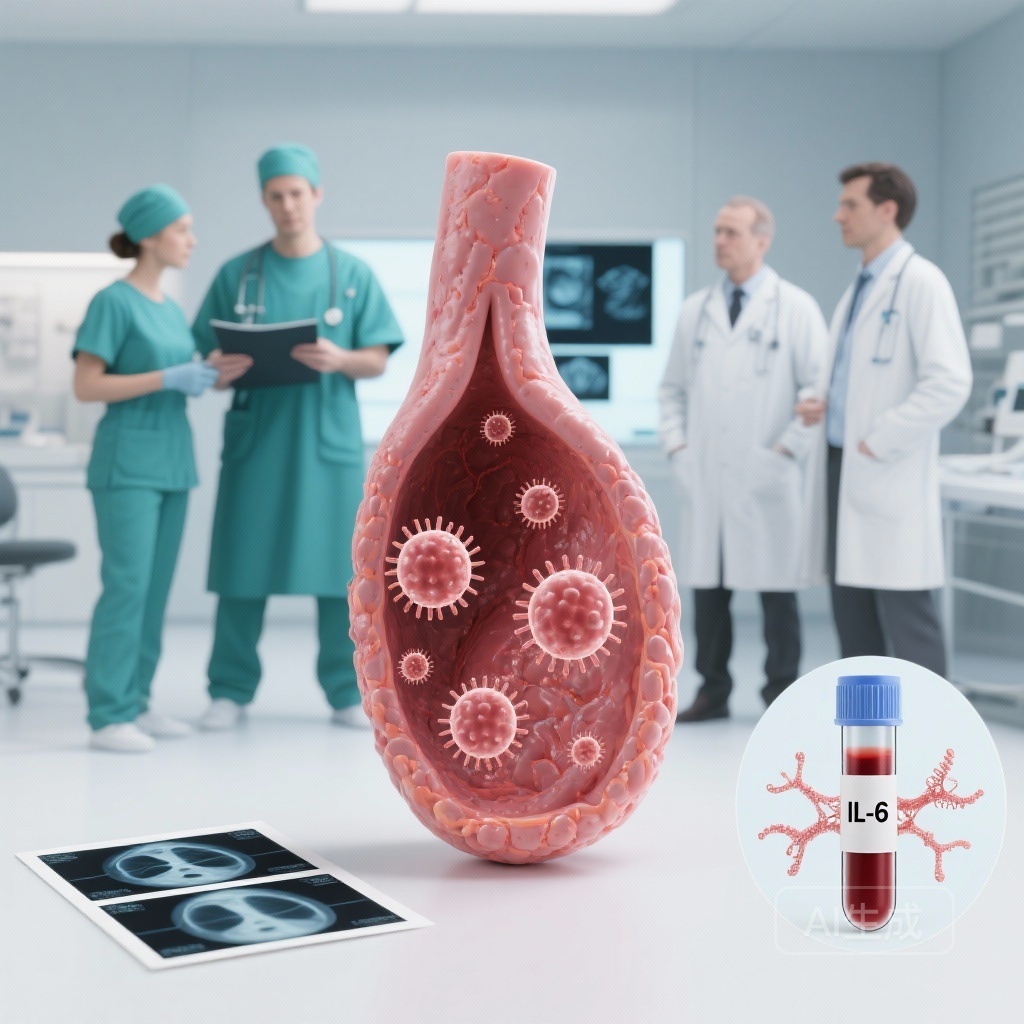
Highlights
– PALACE-2, a multicenter phase 1/2 single-arm trial, evaluated preoperative pembrolizumab combined with chemoradiotherapy (PPCT) in locally advanced, resectable esophageal squamous cell carcinoma (ESCC), enrolling 143 patients with 125 undergoing surgery.
– Pathological complete response (pCR) was 43.2% (54/125); R0 resection rate 96.8%; 1-year DFS 91.1% and OS 96.5% (median follow-up 17.4 months).
– Baseline low serum IL-6 associated with higher response; mechanistic studies show IL-6 suppresses CD4+ cytotoxic T-cell function and IL-6 blockade enhances anti-PD-1 efficacy in preclinical models.
Background and clinical context
Esophageal squamous cell carcinoma (ESCC) remains a major global cancer burden, particularly in East Asia. Locally advanced but resectable disease is commonly treated with neoadjuvant chemoradiotherapy (nCRT) followed by esophagectomy; pathologic complete response (pCR) after nCRT is a strong surrogate for improved long-term outcomes. Immune checkpoint inhibitors (ICIs) targeting the PD-1 axis have transformed systemic therapy for advanced esophageal cancer and are being integrated into earlier-stage, curative-intent settings. However, optimal combinations, patient selection, and biomarkers predictive of benefit remain active areas of investigation.
Study design (PALACE-2)
PALACE-2 is a multicenter, single-arm phase 1/2 trial designed to evaluate safety, feasibility, and efficacy of preoperative pembrolizumab (anti–PD-1) given concurrently with standard chemoradiotherapy (taxane + platinum chemotherapy and radiotherapy) in locally advanced, potentially resectable ESCC. The reported cohort included 143 enrolled patients; 125 proceeded to surgery after completion of neoadjuvant therapy and the preoperative interval.
The primary endpoint was pathological complete response (pCR); secondary endpoints included safety, surgical feasibility (R0 resection rate, minimally invasive surgery rates), disease-free survival (DFS), overall survival (OS), and translational biomarker analyses. The investigators conducted tumor microenvironment profiling by single-cell RNA sequencing (scRNA-seq), serum biomarker analyses, in vitro immune functional assays, and mouse models to probe mechanisms underlying response and resistance.
Key results
Major efficacy outcomes
Of the 125 patients who underwent resection, 54 achieved pCR (43.2%). An additional 48% achieved complete remission of the primary tumor on pathology, indicating substantial tumor eradication with the PPCT regimen. The R0 resection rate was 96.8%, and minimally invasive surgery accounted for 77.6% of operations.
With a median follow-up of 17.4 months, 1-year DFS and OS were 91.1% and 96.5%, respectively, and 2-year estimates were 71.4% DFS and 86.7% OS. These early survival signals are encouraging but should be interpreted cautiously given the single-arm design and relatively short follow-up.
Patterns of relapse
Among 22 recurrences observed, local/regional and distant metastatic recurrences were roughly balanced (~50% each). This suggests that the combined regimen may change the typical failure pattern compared with historical nCRT alone, but definitive conclusions require comparative data.
Safety and perioperative outcomes
The regimen was deliverable to most patients, but toxicity was substantial. During neoadjuvant therapy, 75.7% of patients experienced grade ≥3 adverse events. The most frequent toxicity was lymphopenia (74.3%), typically managed conservatively. Other common toxicities included anemia, neutropenia, and immune-related events such as pneumonitis. Three patients could not proceed to surgery due to treatment-related serious adverse events: two died from gastrointestinal hemorrhage and one died from severe immune-related multi-organ toxicity (myocarditis, hepatitis, and pancreatitis).
Postoperative complications included anastomotic leak (11.2%), pneumonia (21.6%), and vocal cord palsy/hoarseness (16.8%). One patient died within 90 days postoperatively from a severe tracheoesophageal fistula. These outcomes emphasize the need for careful patient selection, optimized perioperative care, and vigilance for immune-related toxicities when combining ICIs with chemoradiation.
Translational findings: IL-6 as a predictive and targetable mediator
Translational analyses are a major strength of this study. scRNA-seq of tumor samples after PPCT demonstrated increased infiltration of CD8+ tumor-reactive T cells, particularly CXCL13-expressing subsets, and a shift in CD4+ T-cell populations with increased cytotoxic CD4+ T cells and reduced regulatory T cells among responders.
Analysis of circulating biomarkers revealed that lower baseline serum interleukin-6 (IL-6) correlated with higher rates of pathologic response. Functional in vitro assays showed that IL-6 exposure impaired cytotoxic functions of CD4+ T cells. In mouse models of esophageal cancer, combining an IL-6–blocking antibody with anti–PD-1 produced superior tumor control and increased infiltration/activation of cytotoxic CD4+ T cells versus anti–PD-1 alone. These data support a biological model in which IL-6 promotes an immunosuppressive milieu that blunts checkpoint blockade efficacy, and that IL-6 blockade can restore or amplify antitumor immunity.
Clinical interpretation and implications
PALACE-2 provides important prospective, multicenter evidence that adding pembrolizumab to standard neoadjuvant chemoradiotherapy is feasible and yields a high pCR rate (43.2%) in resectable ESCC. pCR rates in the 40% range are substantial compared with historical pCR for chemoradiotherapy alone, which have generally been lower, although exact comparisons are limited by differences in patient populations and trial designs.
High pCR and R0 resection rates may translate into improved long-term outcomes, but randomized data with longer follow-up are needed to confirm survival benefit. The toxicity profile highlights a trade-off: higher grade ≥3 toxicity rates and rare but severe immune-related deaths occurred, underlining the importance of multidisciplinary management and careful risk–benefit assessment.
Biomarker-driven personalization: strengths and caveats
The identification of baseline serum IL-6 as a potential predictive biomarker is compelling and clinically attractive because blood assays are minimally invasive and scalable. The mechanistic data linking IL-6 to suppression of cytotoxic CD4+ T-cell function and the preclinical synergy of IL-6 blockade with PD-1 inhibition provide biological plausibility.
However, several important caveats apply. This was an exploratory biomarker analysis within a single-arm trial and requires prospective validation in independent cohorts. The optimal IL-6 cutoff, assay standardization, temporal dynamics, and potential confounders (concurrent infection, comorbid inflammatory conditions) must be clarified. Moreover, IL-6 blockade (for example, using anti–IL-6R agents such as tocilizumab) has known effects on host immunity and wound healing; its safety and timing relative to surgery require rigorous evaluation. The trial’s translational approach provides a clear rationale for randomized trials testing addition of IL-6 pathway inhibitors to neoadjuvant PPCT in selected patients, but such strategies should be tested only in controlled settings.
Limitations
Key limitations include the single-arm design without a randomized control, limiting causal inference about incremental benefit over standard nCRT. Median follow-up is relatively short for definitive survival conclusions. The cohort was predominantly from Chinese centers where ESCC histology predominates; generalizability to populations with differing tumor biology or mixed histologies (adenocarcinoma) is uncertain. Safety signals—especially rare fatal immune-related events—necessitate caution.
Next steps and research priorities
Important next steps include randomized phase 3 trials comparing PPCT with standard nCRT, stratified by histology and incorporating pre-specified biomarker analyses (including IL-6). Prospective validation of IL-6 as a predictive biomarker should include standardized assays and predefined cutpoints, and explore activity of IL-6 pathway inhibitors in biomarker-selected patients. Detailed perioperative management protocols and strategies to mitigate immune-related toxicity and optimize surgical outcomes should be integrated into future trials.
Conclusion
PALACE-2 advances the field by demonstrating that neoadjuvant pembrolizumab added to chemoradiotherapy is feasible and yields a high pCR rate in resectable ESCC, with promising early survival signals. The identification of serum IL-6 as a candidate predictive biomarker and the preclinical validation of combined IL-6 and PD-1 blockade open a plausible translational pathway to more personalized neoadjuvant strategies. Randomized validation, biomarker standardization, and careful attention to safety will be necessary before broad clinical adoption.
Funding, trial registration, and authorship
Full trial funding sources, detailed authorship, and clinical trial registration are reported in the primary manuscript in Signal Transduction and Targeted Therapy (2025): original article link: https://www.nature.com/articles/s41392-025-02477-4. Readers should consult the original publication for trial registration number, sponsor details, and comprehensive protocol information.
Selected references
1) Li H-C, Li Y, Li B, et al. Preoperative Pembrolizumab Combined with Chemoradiotherapy for Resectable Esophageal Squamous Cell Carcinoma (PALACE-2): multicenter phase 1/2 study. Signal Transduction and Targeted Therapy. 2025. https://www.nature.com/articles/s41392-025-02477-4
2) National Comprehensive Cancer Network (NCCN) Clinical Practice Guidelines in Oncology: Esophageal and Esophagogastric Junction Cancers. Available at: https://www.nccn.org (consult latest version for staging and neoadjuvant/adjuvant recommendations).
Author note
This article synthesizes the PALACE-2 findings and places them in a clinical and translational context for practicing clinicians and clinical investigators. Clinicians should review the original publication for full methodological details and should await randomized data and guideline updates before changing standard practice.