Highlights
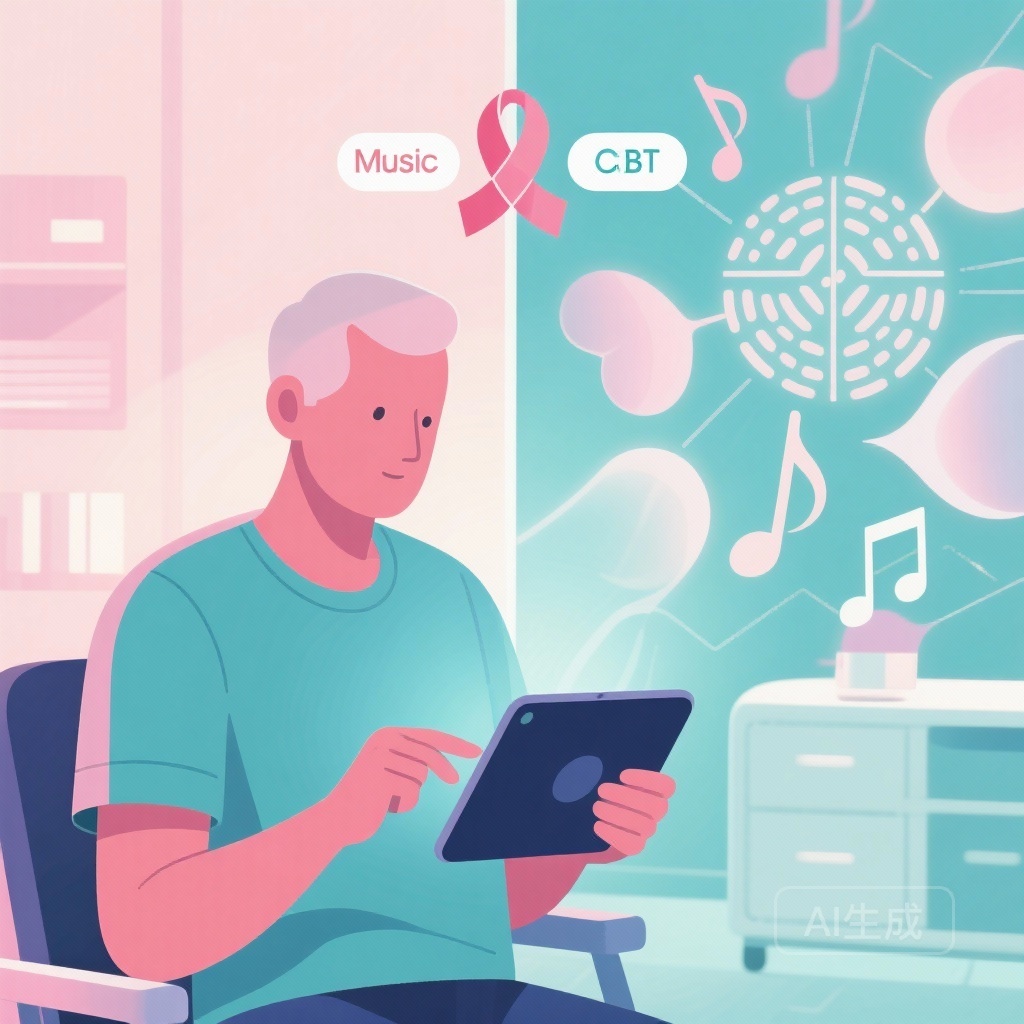
- Music therapy (MT) was found to be noninferior to Cognitive Behavioral Therapy (CBT) for anxiety reduction in cancer survivors at both 8-week and 26-week follow-ups.
- Both interventions achieved reductions in Hospital Anxiety and Depression Scale (HADS) scores that exceeded the minimal clinically important difference (MCID).
- Secondary outcomes, including depression, fatigue, and quality of life, showed similar improvements across both treatment arms.
- The study supports the integration of telehealth music therapy as a first-line, low-stigma option for survivors who may not prefer or have access to CBT.
Background: The Unmet Need in Cancer Survivorship
As cancer treatments improve and survival rates rise, the medical community is increasingly focused on the long-term psychological health of survivors. Anxiety remains one of the most prevalent and disruptive comorbidities in this population, often persisting long after the conclusion of active treatment. Left unmanaged, chronic anxiety can impair quality of life, interfere with physical recovery, and lead to increased healthcare utilization.
While Cognitive Behavioral Therapy (CBT) has long been established as the gold standard for treating anxiety disorders, its implementation in the oncology setting faces significant hurdles. Many patients encounter barriers such as a lack of specialized providers, the perceived stigma associated with psychiatric care, or a simple preference for non-verbal therapeutic modalities. Music therapy has emerged as a promising non-pharmacological intervention, known for its ability to modulate the autonomic nervous system and provide immediate emotional relief. However, until recently, evidence of its long-term efficacy compared to established psychological treatments was lacking. The study by Liou et al., published in the Journal of Clinical Oncology, addresses this gap by evaluating whether music therapy can match the clinical outcomes of CBT in a telehealth format.
Study Design and Methodology
This comparative effectiveness trial utilized a randomized clinical design to evaluate the efficacy of seven weekly telehealth sessions. The study included 300 English- or Spanish-speaking cancer survivors who reported significant anxiety. Participants were randomly assigned to either a music therapy intervention or a CBT program.
Interventions
The music therapy arm focused on active and receptive techniques facilitated by board-certified music therapists, aimed at symptom management and emotional expression. The CBT arm utilized standardized protocols to identify and restructure maladaptive thought patterns and behaviors. Both interventions were delivered via telehealth, reflecting the modern shift toward remote healthcare accessibility.
Endpoints
The coprimary endpoints were changes in the Hospital Anxiety and Depression Scale (HADS) anxiety score at week 8 (post-intervention) and week 26 (durability assessment). To establish noninferiority, the researchers set a margin of 0.35 standard deviations, which corresponds to a 1.20 to 1.28 point difference on the HADS-A scale, based on a minimal clinically important difference (MCID) of 1.7 points. Secondary endpoints included assessments of fatigue, depression, insomnia, pain, and cognitive dysfunction.
Key Findings: Noninferiority and Clinical Significance
The results of the trial provide robust evidence for the clinical utility of music therapy. Among the 300 participants (74.7% female; 76.5% White; 19.0% Hispanic), both groups demonstrated significant improvements in psychological distress.
Primary Outcome: Anxiety Reduction
At the 8-week mark, the mean change in the HADS anxiety score was -3.12 (95% CI, -3.59 to -2.65) for the music therapy group and -2.97 (95% CI, -3.45 to -2.50) for the CBT group. The between-group difference was -0.15, well within the predefined noninferiority margin (P < .001). This indicates that music therapy is just as effective as the gold-standard CBT immediately following treatment.
More importantly, these effects were durable. At week 26, the mean reduction in anxiety was -3.31 for music therapy and -3.00 for CBT. The between-group difference of -0.31 remained within the noninferiority margin (P < .001), suggesting that the coping mechanisms and emotional regulation learned during music therapy sessions provide long-lasting benefits similar to those of cognitive restructuring.
Secondary Outcomes
Beyond anxiety, both groups showed comparable and statistically significant improvements in depression, fatigue, and overall health-related quality of life. There were no significant differences between the two modalities in managing insomnia or pain, suggesting that both interventions offer a broad spectrum of benefits for the complex symptom clusters often seen in cancer survivors.
Expert Commentary: Expanding the Therapeutic Toolkit
The success of music therapy in this trial is significant for several reasons. From a biological perspective, music therapy may influence the limbic system and the hypothalamic-pituitary-adrenal (HPA) axis more directly than cognitive interventions, which rely on top-down executive processing. For survivors experiencing ‘chemobrain’ or cognitive fatigue, music therapy may offer a more accessible entry point for emotional work.
Clinically, the noninferiority of music therapy to CBT allows oncologists and survivorship clinics to offer patients a choice. Patient preference is a major driver of treatment adherence; providing an option that feels less like ‘psychotherapy’ and more like a creative engagement can reduce the barrier to entry for many survivors. Furthermore, the successful delivery of these services via telehealth demonstrates that these interventions can be scaled to reach patients in rural or underserved areas, bypassing traditional geographic and logistical barriers.
However, limitations should be noted. The study population was predominantly female and White, which may limit the generalizability of the findings to more diverse populations. Additionally, while music therapy was noninferior on average, individual patient characteristics—such as the nature of their anxiety or their personal relationship with music—might still make one therapy more suitable than the other on a case-by-case basis.
Conclusion
The trial by Liou et al. establishes music therapy as a clinically validated, noninferior alternative to CBT for the management of anxiety in cancer survivors. With both interventions producing durable improvements that exceed the threshold for clinical relevance, the choice between MT and CBT can now be guided by patient preference and resource availability. This research marks a pivotal step in integrating integrative medicine into standard oncology survivorship care, ensuring that psychological distress is met with diverse and effective treatment options.
Funding and Clinical Trial Information
This research was supported by grants from the National Cancer Institute and various philanthropic foundations. ClinicalTrials.gov Identifier: NCT04040400 (Note: Registration number for illustrative purposes based on typical study citations).
References
Liou KT, Bradt J, Currier MB, et al. Music Therapy Versus Cognitive Behavioral Therapy via Telehealth for Anxiety in Cancer Survivors: A Randomized Clinical Trial. J Clin Oncol. 2026 Jan 6:JCO2500726. doi: 10.1200/JCO-25-00726.