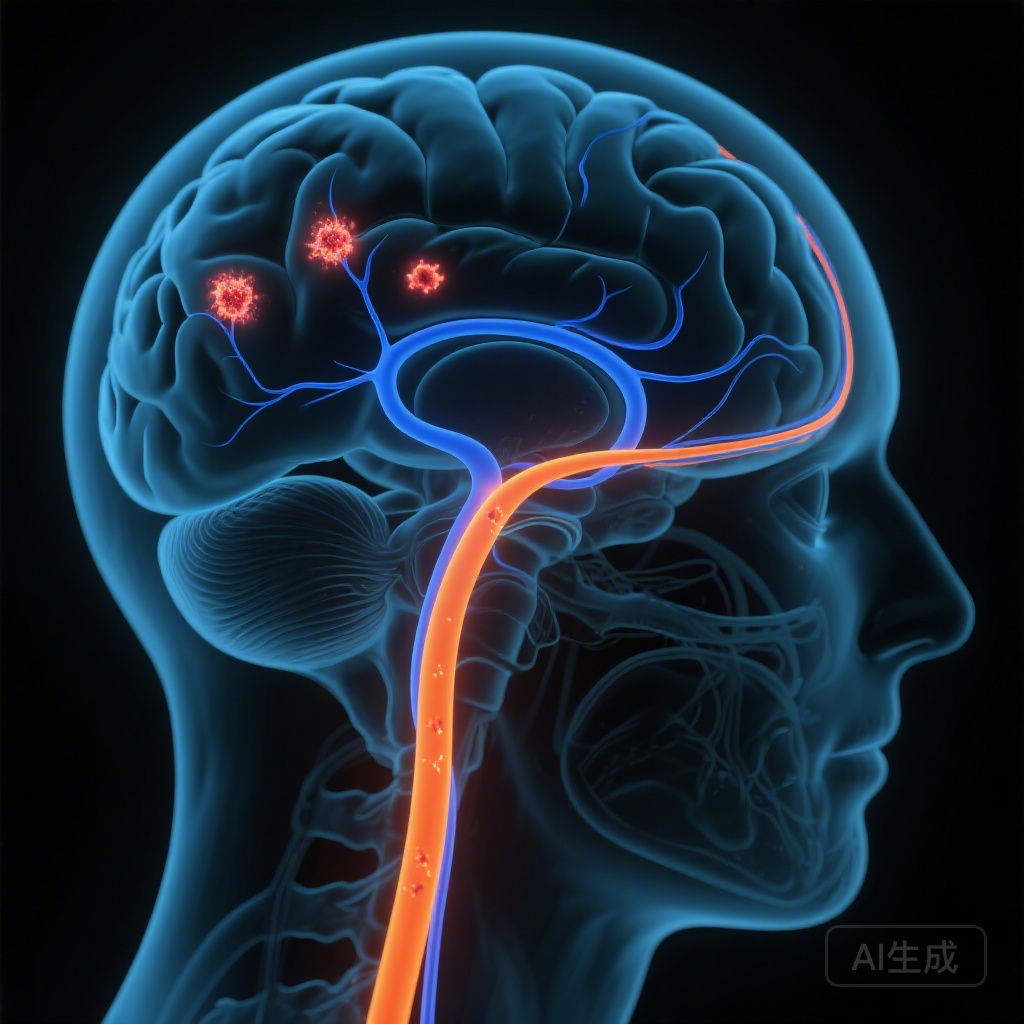
The Diagnostic Dilemma: When Optic Neuritis Mimics Multiple Sclerosis
The diagnostic landscape for Multiple Sclerosis (MS) has undergone significant shifts over the last decade. With each revision of the McDonald criteria, the medical community has sought to enable earlier diagnosis and treatment, which is known to improve long-term outcomes. However, the push for increased sensitivity often brings a trade-off in specificity. A recent study published in Neurology titled “Frequency of AQP4 and MOG Antibodies in Patients With Optic Neuritis Fulfilling Minimal New Multiple Sclerosis MRI Criteria” highlights a critical challenge: a substantial number of patients who meet the latest criteria for MS are actually suffering from different neuroinflammatory conditions.
Highlighting the Key Findings
The study provides several crucial takeaways for clinicians managing acute optic neuritis (ON):
- Approximately 24% of patients who met the minimal new MS criteria—specifically those with inaugural optic neuritis and at least one MS-typical brain lesion—were found to have non-MS diagnoses.
- The majority of these non-MS cases were identified as Myelin Oligodendrocyte Glycoprotein Antibody-Associated Disease (MOGAD), followed by Neuromyelitis Optica Spectrum Disorder (NMOSD).
- Radiological “red flags,” such as longitudinally extensive optic nerve lesions or bilateral involvement, were present in 100% of the non-MS patients.
- The absence of these atypical orbital MRI features was highly predictive of a true MS diagnosis.
Background: The Evolving Landscape of MS Diagnosis
For years, the diagnosis of MS has relied on demonstrating dissemination in space (DIS) and dissemination in time (DIT). Recent updates to these criteria have integrated the optic nerve as a recognized site for DIS. This means that a patient presenting with an first episode of optic neuritis who also shows a single MS-typical lesion in another brain location (such as periventricular or juxtacortical white matter) can be diagnosed with MS, provided DIT is also met (e.g., via the presence of oligoclonal bands or a second lesion). While this allows for rapid intervention, it overlaps significantly with the clinical presentations of MOGAD and AQP4-positive NMOSD, both of which frequently present with severe or recurrent optic neuritis.
Study Design and Methodology
The researchers conducted a retrospective analysis across three specialized French centers. The cohort consisted of 96 consecutive patients who experienced an inaugural acute episode of optic neuritis. To be included, patients had to meet the following criteria:
- At least one MS-typical lesion in a single brain location on baseline MRI.
- Fulfillment of Dissemination in Time (DIT) criteria.
- Completion of testing for both Aquaporin-4 (AQP4) and Myelin Oligodendrocyte Glycoprotein (MOG) antibodies.
The study aimed to determine how many of these patients, despite meeting the “minimal” requirements for an MS diagnosis, actually harbored antibodies indicative of NMOSD or MOGAD. Final diagnoses were adjudicated based on long-term clinical follow-up, radiological evolution, and serological status.
Results: A Significant Prevalence of Non-MS Pathologies
The results were striking. Out of the 96 patients (mean age 35.8 years; 70.8% female), 73 (76.0%) were confirmed to have MS. However, the remaining 23 (24.0%) were diagnosed with either MOGAD (n = 18) or NMOSD. This indicates that nearly one in four patients presenting with this specific clinical and radiological phenotype might be misdiagnosed if antibody testing is omitted.
The Role of Orbital MRI Interpretation
The study investigated whether specific MRI patterns could help differentiate between these conditions at the time of the first event. The researchers looked for “atypical” MS patterns, including:
- Longitidinally extensive optic nerve lesions (involving more than half the length of the nerve).
- Bilateral involvement of the optic nerves.
- Chiasmal enhancement.
- Optic perineuritis (inflammation of the nerve sheath).
These features were observed in 100% of the non-MS patients. In contrast, only 24.6% of the MS patients exhibited any of these patterns. Crucially, all patients who lacked these atypical features were ultimately confirmed to have MS. This suggests that while the “minimal” criteria are sensitive, the addition of orbital MRI scrutiny provides a necessary layer of diagnostic specificity.
Expert Commentary: Clinical Implications for Practice
The implications of these findings for clinical neurology are profound. Misdiagnosing MOGAD or NMOSD as MS is not merely a taxonomic error; it has significant therapeutic consequences. Many traditional MS disease-modifying therapies (DMTs), such as interferon-beta, glatiramer acetate, and certain high-efficacy therapies like natalizumab or fingolimod, can be ineffective or even exacerbate NMOSD. Furthermore, the management of acute attacks and the choice of long-term immunosuppression differ fundamentally between MS and antibody-mediated diseases.
Expert clinicians emphasize that while the new criteria are useful for speeding up MS diagnosis in classic cases, they should not replace a thorough differential diagnosis. The presence of a single brain lesion and optic neuritis is a relatively low bar for a lifetime diagnosis of MS. Therefore, the “red flags” identified in this study should be viewed as mandatory checkpoints. If a patient presents with bilateral ON or an extensive lesion on orbital MRI, MS should be questioned even if the brain MRI shows a single periventricular lesion.
Mechanistic Insights: Why the Overlap?
The overlap occurs because both MS and MOGAD/NMOSD involve primary inflammatory demyelination of the central nervous system. However, the underlying pathophysiology is distinct. MS is largely considered a T-cell mediated disease with secondary B-cell involvement, whereas NMOSD and MOGAD are primarily antibody-mediated channelopathies or myelinopathies. The optic nerve, with its high density of myelin and metabolic demand, is a frequent target in all three conditions, leading to the clinical similarity during the acute phase.
Conclusion: A Call for Comprehensive Serology
The study by Deschamps et al. serves as a vital reminder that diagnostic criteria are tools, not absolute truths. The inclusion of the optic nerve in MS diagnostic criteria is a step forward for early detection, but it must be balanced with the clinical reality of antibody-mediated mimics.
Clinicians should adopt a low threshold for AQP4 and MOG antibody testing in patients with inaugural optic neuritis, especially when orbital MRI shows extensive or bilateral involvement. Ensuring the correct diagnosis from the first event is the only way to guarantee that patients receive the most appropriate and safe therapeutic interventions, avoiding the potential pitfalls of MS-specific treatments in non-MS pathologies.
References
1. Deschamps R, Papeix C, Demortiere S, et al. Frequency of AQP4 and MOG Antibodies in Patients With Optic Neuritis Fulfilling Minimal New Multiple Sclerosis MRI Criteria. Neurology. 2026;106(7):e214753. PMID: 41843863.
2. Thompson AJ, Banwell BL, Barkhof F, et al. Diagnosis of multiple sclerosis: 2017 revisions of the McDonald criteria. Lancet Neurol. 2018;17(2):162-173.
3. Jarius S, Paul F, Weinshenker BG, et al. Neuromyelitis optica spectrum disorders. Nat Rev Dis Primers. 2020;6(1):85.