The Persistent Shadow of Reperfusion: Understanding Hemorrhagic Transformation
In the modern era of stroke management, the swift restoration of blood flow through intravenous thrombolysis (IVT) and endovascular thrombectomy (EVT) has revolutionized patient outcomes. However, the phenomenon of hemorrhagic transformation (HT) remains a primary complication that haunts the clinical success of these interventions. While the catastrophic impact of large parenchymal hematomas is well-documented, the clinical significance of smaller, petechial hemorrhages—often categorized as hemorrhagic infarctions (HI)—has been a subject of ongoing debate.
A landmark study recently published in Stroke, titled “Clinical Impact of Postrecanalization Hemorrhagic Transformation and Its Prediction Using Baseline Noncontrast CT,” provides critical clarity on this issue. By analyzing data from over 2,200 patients, researchers have demonstrated that even the mildest forms of HT are independently associated with poorer functional outcomes, challenging the long-held assumption that petechial hemorrhages might be benign byproducts of successful reperfusion.
Highlights of the Research
The study offers several pivotal insights for the clinical community:
Universal Clinical Impact
All subtypes of HT, from HI1 to PH2, were found to be independent predictors of worse functional recovery at 90 days. The risk follows a clear, stepwise progression as the severity of the hemorrhage increases.
Automated Predictive Precision
Automated imaging models utilizing baseline noncontrast CT (NCCT) biomarkers, such as net water uptake (NWU) and ischemic volume, significantly outperformed traditional clinical scoring systems like the HAT and SEDAN scores.
Broad Applicability
The association between HT and poor outcomes remained consistent regardless of whether the patient received IVT, EVT, or both, and across different vascular territories.
Study Design: A Deep Dive into the CRCS-K Registry
Researchers utilized the multicenter Clinical Research Collaboration for Stroke in Korea (CRCS-K) Imaging repository, analyzing 2,211 patients treated between 2022 and 2024. This cohort represented a real-world population of patients undergoing reperfusion therapy for acute ischemic stroke.
HT was classified using standard follow-up imaging (CT or MRI) into four distinct categories:
1. Hemorrhagic Infarction Type 1 (HI1): Small petechiae along the margins of the infarct.
2. Hemorrhagic Infarction Type 2 (HI2): Confluent petechiae within the infarcted area but no space-occupying effect.
3. Parenchymal Hematoma Type 1 (PH1): Blood clots in ≤30% of the infarcted area with some mild space-occupying effect.
4. Parenchymal Hematoma Type 2 (PH2): Dense blood clots occupying >30% of the infarcted area with significant mass effect.
At baseline, the researchers quantified ischemic lesion volume and Alberta Stroke Program Early CT Score (ASPECTS)-based net water uptake (NWU) using automated software on NCCT. The primary endpoint was the 90-day modified Rankin Scale (mRS) score, representing functional independence.
Key Findings: The Stepwise Toll of Hemorrhage
The study reported an overall HT incidence of 41.2%. The distribution was as follows: HI1 (13.8%), HI2 (16.8%), PH1 (6.5%), and PH2 (4.1%). The most striking result was the multivariable regression analysis showing that no subtype of hemorrhage was “silent.”
The odds ratios (OR) for poor functional outcomes (higher mRS scores) increased dramatically with HT severity:
– HI1: OR 1.77 (95% CI, 1.40-2.22)
– HI2: OR 2.83 (95% CI, 2.27-3.53)
– PH1: OR 4.65 (95% CI, 3.41-6.36)
– PH2: OR 14.76 (95% CI, 9.61-22.90)
These data suggest that even the most minor petechial hemorrhages (HI1) nearly double the odds of a worse functional outcome. This finding is critical for clinicians who may have previously viewed HI1 as a “radiological curiosity” rather than a clinically significant event.
The Power of Automated Imaging Biomarkers
Historically, clinicians have relied on clinical scores like the Hemorrhage After Thrombolysis (HAT) score or the SEDAN score (which looks at blood Sugar, Early CT signs, Drinkers, Age, and NIHSS) to predict HT. While useful, these scores often lack the precision needed for individualized decision-making in the emergency setting.
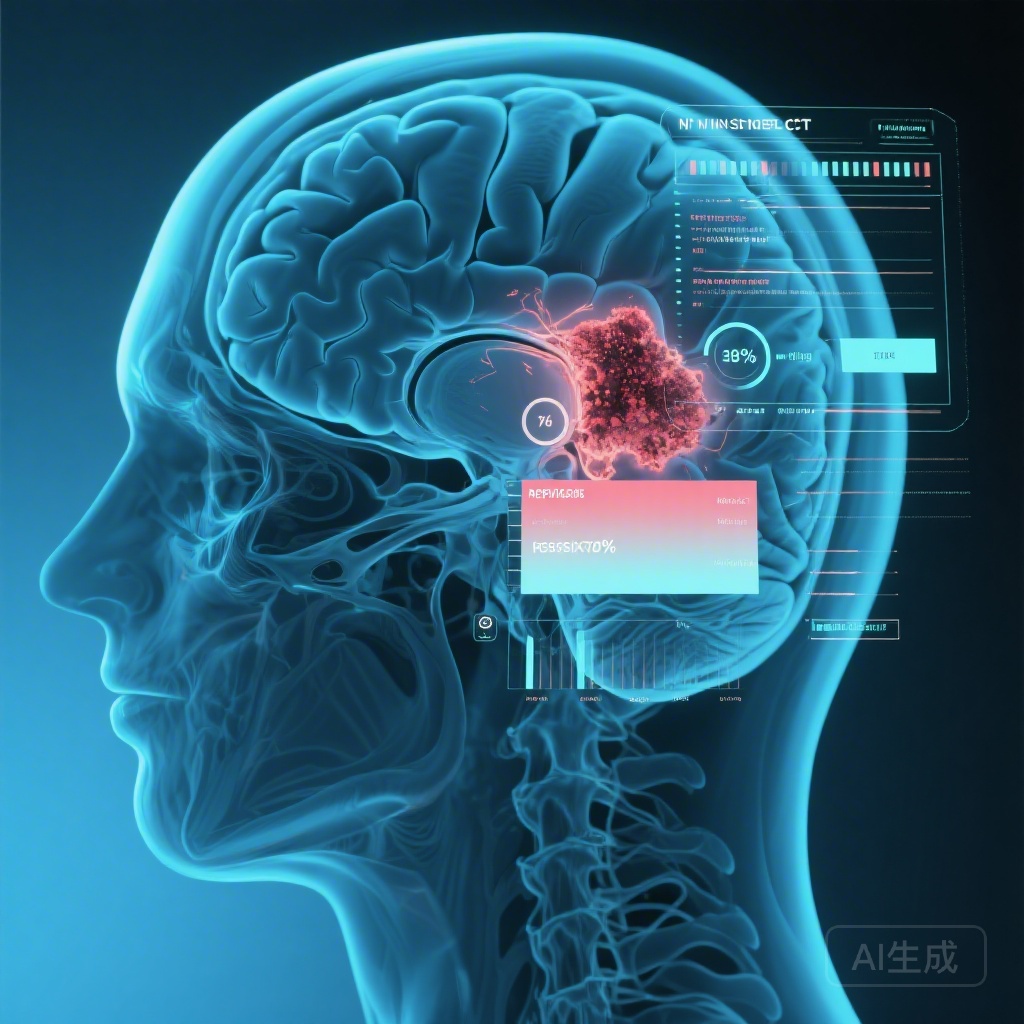
The Korean study introduced an automated imaging model that combines NCCT markers (ischemic volume and NWU) with clinical variables. NWU is a particularly innovative biomarker, as it measures the increase in brain volume due to ionic edema directly from the Hounsfield Unit changes on NCCT. It serves as a “tissue clock,” indicating the severity of ischemic injury regardless of the time from symptom onset.
The results showed that the automated model achieved an Area Under the Curve (AUC) of 0.77, significantly higher than the HAT score (0.71) and SEDAN score (0.72) (P<0.01). This suggests that the biological signature of the brain tissue at baseline—visible through automated analysis—is a more potent predictor of future bleeding than clinical demographics alone.
Expert Commentary: Shifting the Clinical Paradigm
The findings of this study necessitate a shift in how we approach post-recanalization care. If even mild HI1 affects long-term recovery, the prevention of HT must become a more central focus of neurocritical care.
Mechanistically, the association between mild HI and poor outcomes may be explained by the blood-brain barrier (BBB) disruption that HI represents. Even small amounts of extravasated blood can trigger inflammatory cascades, exacerbate edema, and release neurotoxic substances like iron and hemoglobin, which further damage the peri-infarct penumbra.
Furthermore, the superiority of NCCT-derived biomarkers is a win for practical medicine. While MRI is excellent for identifying HT risk, it is not always feasible in the hyperacute phase. NCCT is nearly universal. By leveraging automated software to extract NWU and volume data, hospitals without advanced imaging infrastructure can still achieve high-level risk stratification.
Study Limitations and Future Directions
While robust, the study is not without limitations. The data comes from a specific geographic population (South Korea), and while the multicenter nature adds strength, global validation across different ethnicities is warranted. Additionally, while the study establishes a strong association between HT and poor outcomes, it does not explicitly test whether altering treatment (e.g., more aggressive blood pressure control) based on these automated scores would improve those outcomes. This remains the next frontier for clinical trials.
Conclusion: A New Tool for Individualized Stroke Care
The Clinical Research Collaboration for Stroke in Korea has provided a clear message: every drop of blood matters. By demonstrating that all subtypes of hemorrhagic transformation independently worsen prognosis, this research underscores the fragility of the reperfused brain.
More importantly, the development of automated NCCT-derived biomarkers offers a practical, scalable tool for the reperfusion era. Clinicians can now move beyond static clinical scores toward a dynamic, imaging-based understanding of HT risk, allowing for more nuanced management of blood pressure, antithrombotic timing, and intensive care monitoring. As we continue to refine these automated tools, the goal remains the same: maximizing the benefits of recanalization while minimizing the shadow of hemorrhagic transformation.
References
1. Ha HJ, Ryu WS, Sunwoo L, et al. Clinical Impact of Postrecanalization Hemorrhagic Transformation and Its Prediction Using Baseline Noncontrast CT. Stroke. 2026. PMID: 41797706.
2. Larrue V, von Kummer RR, Müller A, Bluhmki E. Risk factors for severe hemorrhagic transformation in ischemic stroke patients treated with IV ethyl alcohol: a secondary analysis of the ECASS II trial. Stroke. 2001.
3. Strbian D, Meretoja A, Ahlhelm FJ, et al. Predicting outcome of IV thrombolysis-treated ischemic stroke patients: the DRAGON score. Neurology. 2012.
4. Galego O, Canhão P, Melo TP. Hemorrhagic transformation after ischemic stroke. Expert Review of Cardiovascular Therapy. 2018.