High-Risk Indicators in Glaucoma Suspects: The Role of Microvascular Dropout
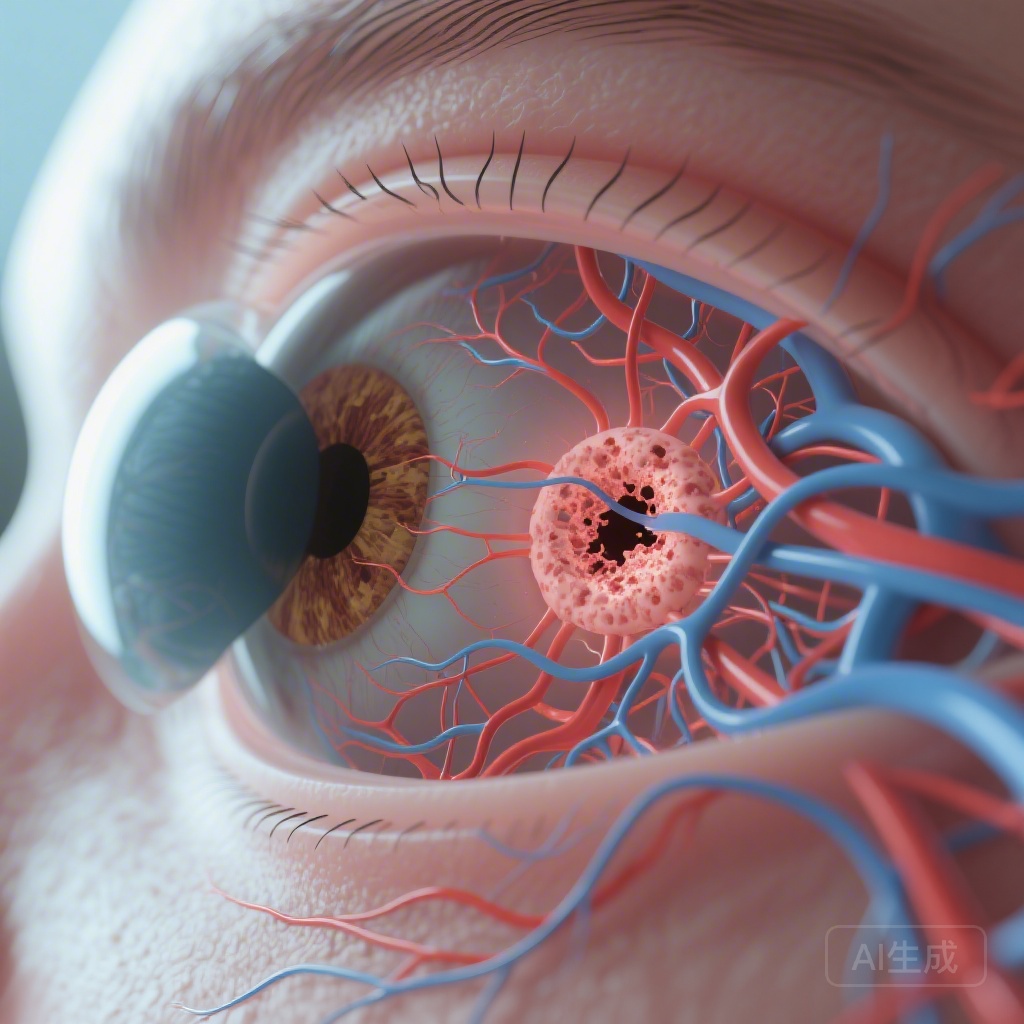
Identifying which glaucoma suspects will eventually progress to manifest glaucoma remains one of the most significant challenges in clinical ophthalmology. While intraocular pressure (IOP) remains the only modifiable risk factor, structural changes often precede functional loss by years. Recent research published in the American Journal of Ophthalmology by Soltani et al. provides compelling evidence that microvascular dropout (MvD) in the parapapillary region is a critical biomarker for structural optic disc progression, even in eyes that remain clinically stable by traditional perimetric standards.
Highlights
- The presence of microvascular dropout (MvD) is associated with a nearly 16-fold increase in the odds of structural optic disc progression in glaucoma suspects.
- Progressive expansion of the β-zone parapapillary atrophy (PPA) independently quadruples the risk of structural damage.
- Glaucoma suspect eyes exhibiting both MvD and β-zone PPA progression have a 75% predicted probability of structural progression over long-term follow-up.
- Structural changes, including neuroretinal rim thinning and RNFL defects, occur in eyes that do not yet meet the criteria for perimetric glaucoma, highlighting a window for early intervention.
Background: The Challenge of the Glaucoma Suspect
Glaucoma is a leading cause of irreversible blindness worldwide, characterized by the progressive loss of retinal ganglion cells and their axons. A ‘glaucoma suspect’ is typically defined by an optic nerve appearance suggestive of glaucomatous damage or elevated IOP, but with normal visual fields. The clinical dilemma lies in determining which of these patients require aggressive treatment and which can be monitored conservatively.
Traditional longitudinal monitoring has focused on stereophotography and optical coherence tomography (OCT) to detect thinning of the neuroretinal rim or retinal nerve fiber layer (RNFL). However, the underlying mechanisms of progression—whether purely mechanical (IOP-driven) or vascular (ischemia-driven)—remain a subject of intense study. The advent of optical coherence tomography angiography (OCTA) has allowed clinicians to visualize the deep layer microvasculature of the parapapillary region, revealing areas of capillary loss known as microvascular dropout (MvD). Understanding the temporal and predictive relationship between these vascular voids and structural decay is essential for refining risk stratification.
Study Design and Methodology
In this retrospective cohort study, researchers analyzed 180 eyes from 134 glaucoma suspect patients. The inclusion criteria required a minimum of five years of optic disc stereophotography follow-up prior to the baseline OCTA imaging. The mean follow-up duration for fundus photographs was remarkably long, averaging 19.0 years (95% CI, 17.9 to 20.1), providing a robust longitudinal perspective.
Structural Progression Assessment
Structural progression was defined by the expert grading of stereophotographs. Progression was recorded if there were new or enlarged RNFL defects or detectable thinning of the neuroretinal rim. These assessments were performed by masked graders to ensure objectivity.
Parapapillary Atrophy (PPA) Quantification
The β-zone PPA, an area of chorioretinal atrophy adjacent to the optic disc, was quantified based on area, radial width, and angular extent. Progression of PPA was defined as a 20% or greater increase in any of these parameters over the follow-up period.
Microvascular Dropout (MvD) Evaluation
At the final visit, OCTA was used to generate en-face choroidal vessel density maps. MvD was defined as a focal, complete loss of the microvasculature in the parapapillary atrophy zone. Multivariable logistic regression and margins analysis were utilized to assess the associations between these variables and structural progression, adjusting for age, mean IOP, and follow-up duration.
Key Findings: MvD and Structural Decay
The study found that 32.2% of the glaucoma suspect eyes (58 eyes) exhibited MvD. The results demonstrated a profound correlation between vascular deficiencies and structural damage.
Independent Risk Factors
Two primary factors emerged as independent predictors of structural optic disc progression:
1. Presence of MvD: Odds Ratio (OR) of 15.8 (95% CI, 5.6 to 44.6, P < 0.001).
2. β-zone PPA Progression: Odds Ratio (OR) of 3.8 (95% CI, 1.2 to 11.7, P = 0.022).
The Cumulative Risk Profile
The predictive power of combining these biomarkers was significant. Margin plots indicated that eyes with neither MvD nor PPA progression had a relatively low probability of structural change. However, for eyes showing both MvD and β-zone PPA progression, the estimated probability of structural progression surged to 0.75. This suggests that the combination of these two markers identifies a subset of patients at extremely high risk for neuroaxonal loss.
Stability of Visual Fields
Crucially, these structural changes were observed in eyes that remained clinically stable regarding their visual fields. None of the eyes included in the progression group converted to perimetric glaucoma during the observation period. This finding underscores the fact that vascular and structural markers can signal disease activity long before functional deficits become apparent on standard automated perimetry.
Expert Commentary: Mechanistic Insights and Clinical Utility
The strong association between MvD and structural progression lends weight to the vascular theory of glaucoma. MvD likely represents a localized compromise in the deep parapapillary perfusion, which may render the optic nerve head more susceptible to barometric stress or directly contribute to axonal death through chronic ischemia.
Biological Plausibility
The β-zone PPA is known to correlate with areas of thin or absent Bruch’s membrane. As PPA expands, the structural support of the optic nerve head may be compromised. When this mechanical instability is paired with MvD—a sign of inadequate blood supply—the neuroretinal rim appears to be at its most vulnerable. The study suggests that MvD is not merely a consequence of tissue loss but a co-indicator of a pathological environment.
Clinical Implications
For the practicing clinician, these findings suggest that OCTA should be integrated into the risk assessment of glaucoma suspects. While stereophotography remains a gold standard for detecting rim thinning, the presence of MvD on an OCTA scan should serve as a ‘red flag,’ potentially justifying more frequent monitoring or the initiation of IOP-lowering therapy even in the absence of visual field defects.
Study Limitations
As a retrospective study, there are inherent limitations, including the potential for selection bias. Additionally, MvD was assessed at the last visit, making it difficult to definitively establish the temporal sequence—whether the dropout preceded the structural change or vice versa in every instance. However, the strong association over a 19-year period provides a compelling case for its use as a long-term prognostic marker.
Conclusion: Moving Toward Proactive Management
The study by Soltani and colleagues clarifies the significant role of microvascular health in the progression of glaucoma. In suspects who appear stable on visual field testing, the presence of MvD and the expansion of β-zone PPA are powerful indicators of ongoing structural damage. By recognizing these subtle vascular and morphological shifts, clinicians can move toward a more proactive management strategy, potentially preventing the transition from ‘glaucoma suspect’ to irreversible glaucomatous vision loss.
References
1. Soltani G, Nishida T, Moghimi S, et al. Optic Disc Structural Progression in Glaucoma Suspect Eyes with Microvascular Dropout. American Journal of Ophthalmology. 2026. PMID: 41825843.
2. Richter GM, Coleman AL. Minimizing glaucoma progression: glaucoma management in the 21st century. Therapeutic Advances in Chronic Disease. 2016;7(2):118-137.
3. Weinreb RN, Aung T, Medeiros FA. The pathophysiology and treatment of glaucoma: a review. JAMA. 2014;311(18):1901-1911.
4. Rao HL, Pradhan ZS, Weinreb RN, et al. Regional Comparisons of Optical Coherence Tomography Angiography and Optic Nerve Head Structural Measurements in Glaucoma. Scientific Reports. 2017;7:1052.