The Unmet Therapeutic Need in Gastroparesis Management
Gastroparesis is a chronic, debilitating neuromuscular disorder of the upper gastrointestinal tract characterized by delayed gastric emptying in the absence of mechanical obstruction. Symptoms such as chronic nausea, vomiting, postprandial fullness, and abdominal pain severely impact quality of life and often lead to significant nutritional deficiencies and hospitalizations. Despite the high disease burden, the therapeutic landscape remains remarkably sparse. For decades, metoclopramide has remained the only FDA-approved medication for gastroparesis, yet its utility is severely limited by a black-box warning regarding tardive dyskinesia and other extrapyramidal side effects due to its ability to cross the blood-brain barrier. Consequently, there is an urgent clinical mandate for the development of peripherally restricted dopamine D2 receptor antagonists that can alleviate symptoms without the neurological risks associated with central dopamine blockade.
Mechanism of Action: Why NG101?
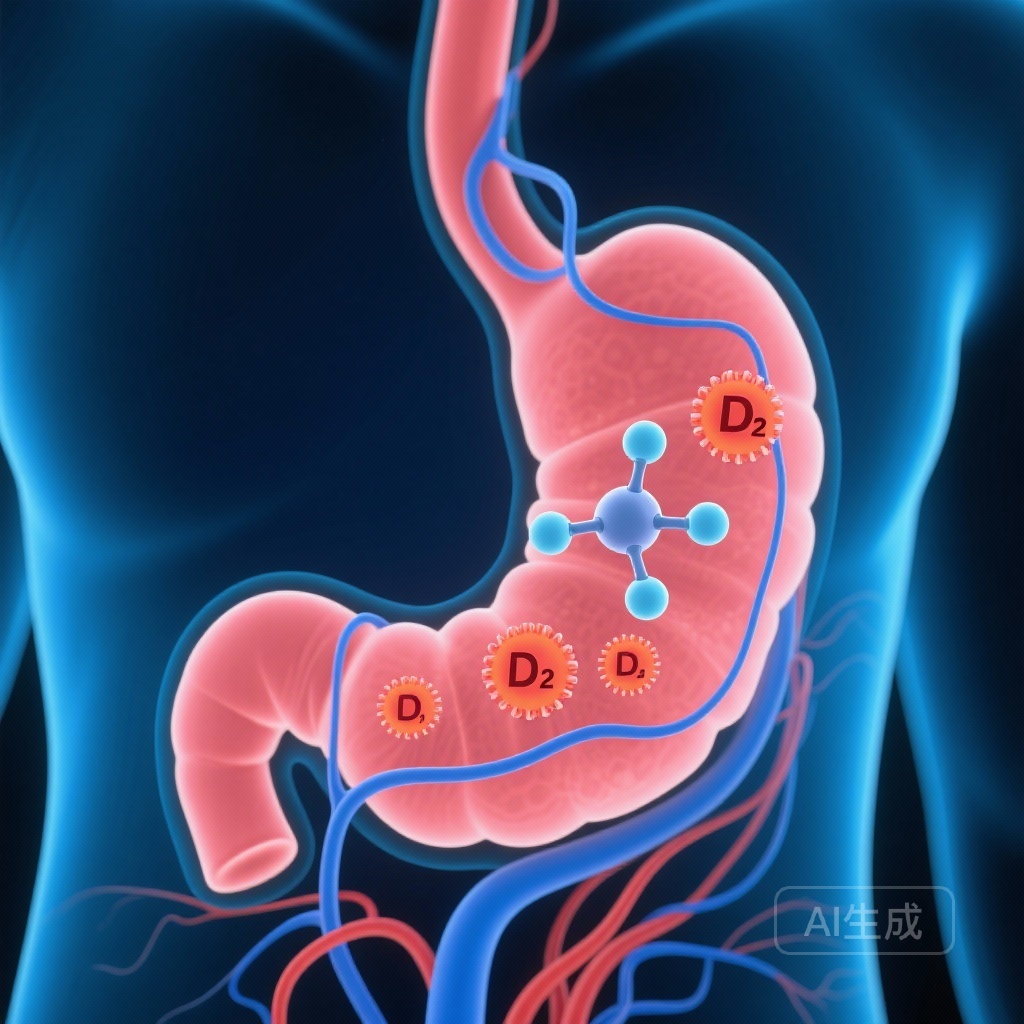
Metopimazine, the active moiety of NG101 (metopimazine mesylate), is a selective dopamine D2 receptor antagonist that has been utilized in Europe, particularly France, for decades to treat nausea and vomiting. Unlike metoclopramide, metopimazine is peripherally restricted. Its chemical structure limits its capacity to penetrate the blood-brain barrier, theoretically offering a much wider safety margin regarding central nervous system side effects. By targeting D2 receptors in the gastrointestinal tract and the area postrema—which lies outside the blood-brain barrier—NG101 aims to modulate gastric motility and suppress the emetic response without the risk of movement disorders. The Phase 2 study investigated whether this established antiemetic could be repurposed as a primary therapy for the complex symptom profile of gastroparesis.
Study Design and Methodology
The study was a 12-week, multicenter, randomized, double-blind, placebo-controlled Phase 2 trial designed to assess the safety and efficacy of NG101. A total of 161 participants were randomized, comprising a mix of diabetic gastroparesis (45.3%) and idiopathic gastroparesis (54.7%) patients. The study compared three dose levels of oral NG101—5 mg, 10 mg, and 20 mg administered four times daily—against a placebo control.
The primary efficacy endpoint was the change from baseline in the mean nausea severity score during weeks 7 through 12. This was measured using the Diabetic and Idiopathic Gastroparesis Symptoms Daily Diary (DIGS-DD), a validated patient-reported outcome (PRO) tool where patients rate symptoms (nausea, abdominal pain, early satiety, postprandial fullness, and vomiting) on a scale of 0 to 10. Secondary endpoints included the Patient Global Impression of Change (PGIC), which assessed the patient’s overall perception of symptom improvement on a 7-point scale, as well as safety and tolerability assessments.
Key Findings and Statistical Nuances
Primary Endpoint: Nausea Severity
Data analysis revealed that mean DIGS-DD nausea severity scores decreased from baseline in all treatment groups, including the placebo arm. However, when comparing the NG101 treatment groups to the placebo, the improvements did not reach statistical significance during the specified weeks 7–12. The presence of a significant placebo response, a common phenomenon in functional gastrointestinal disorder trials, likely contributed to the difficulty in achieving a statistically significant separation between the active drug and the control for this specific metric.
Secondary Endpoint: Patient Global Impression of Change
In contrast to the primary endpoint, the results for the Patient Global Impression of Change (PGIC) were highly encouraging. Across weeks 1 through 12, all NG101 treatment groups (5 mg, 10 mg, and 20 mg) demonstrated statistically significant improvements in nausea compared with the placebo group. This discrepancy suggests that while the daily diary (DIGS-DD) captured granular, day-to-day fluctuations in symptom intensity, the PGIC may have captured a more holistic and clinically meaningful improvement in the patients’ overall well-being and functional status.
Subgroup Analysis: Idiopathic vs. Diabetic Gastroparesis
An exploratory subgroup analysis provided further insight into the drug’s potential. Trends in both safety and efficacy appeared more favorable in patients with idiopathic gastroparesis compared to those with diabetic gastroparesis. Patients with idiopathic disease often represent a more heterogeneous population, but in this trial, they showed a more consistent response to NG101. This finding is critical for the design of future Phase 3 trials, as it suggests that patient selection and stratification by etiology may be vital for demonstrating therapeutic efficacy.
Safety and Tolerability
Safety was a paramount concern in this trial, given the history of D2 antagonists. NG101 was well-tolerated across all dose levels. Importantly, there were no reports of tardive dyskinesia or significant extrapyramidal symptoms, reinforcing the hypothesis that NG101’s peripheral restriction provides a superior safety profile compared to metoclopramide. The most common adverse events were mild and did not lead to a high rate of discontinuation. The absence of cardiac safety signals (such as QTc prolongation) is also noteworthy, as other prokinetic agents have historically faced challenges in this area.
Expert Commentary: Interpreting the Results
The failure of NG101 to meet its primary endpoint on the DIGS-DD scale highlights a recurring challenge in gastroparesis research: the selection of optimal endpoints. The FDA has historically emphasized daily symptom diaries, yet these tools may not always reflect the overall clinical benefit experienced by the patient. The significant results in the PGIC suggest that patients felt better overall, even if their numeric nausea scores did not drop as sharply as required for statistical significance over placebo.
Clinicians must also consider the “ceiling effect” and the high placebo response rate inherent in gastroparesis trials. The fact that the idiopathic subgroup showed better trends suggests that the underlying pathophysiology—perhaps related to different degrees of autonomic neuropathy—influences how patients respond to dopamine blockade. Moving forward, the development of NG101 will likely require a refined focus on the idiopathic population and perhaps a reconsideration of whether a composite endpoint or a global impression scale might better serve as a primary measure of efficacy.
Conclusions and Future Directions
While the Phase 2 trial of NG101 did not achieve statistical significance for its primary endpoint of nausea reduction via the DIGS-DD, the study provides a wealth of positive data regarding safety and secondary efficacy measures. The significant improvement in Patient Global Impression of Change across all doses is a strong signal of clinical activity. Given the favorable safety profile and the lack of central D2 antagonist side effects, NG101 remains a promising candidate for the treatment of gastroparesis, particularly in the idiopathic subgroup. Further large-scale studies are warranted to bridge the gap between subjective global improvement and daily symptom reporting, potentially offering a safer alternative for patients who currently have few therapeutic options.
Funding and Registration
This study was supported by Neurogastrx, Inc. Trial registration: ClinicalTrials.gov NCT04303195.
References
Loesch J, Hamza E, Pasricha PJ, et al. A Phase 2 Randomized, Double-Blind, Placebo-Controlled Study of the Safety and Efficacy of Metopimazine Mesylate (NG101) in Participants With Gastroparesis. Am J Gastroenterol. 2026 Feb 1;121(2):534-544. doi: 10.14309/ajg.0000000000003534.