Highlight
- Kangaroo care (K-care) significantly reduced Premature Infant Pain Profile (PIPP) scores during retinopathy screening examinations (RSE) compared to standard care on an examination table.
- Infants receiving K-care exhibited lower salivary cortisol levels at one hour post-procedure, indicating a blunted hypothalamic-pituitary-adrenal (HPA) axis response to stress.
- The study identified a reduction in delayed inflammatory markers, specifically interleukin-6 (IL-6) and tumour necrosis factor-alpha (TNF-α), at 6-8 hours after the examination.
- These findings suggest that skin-to-skin contact is a potent, non-pharmacological neuroprotective strategy for neonates undergoing mandatory but painful diagnostic procedures.
Background: The Clinical Challenge of Procedural Pain in the NICU
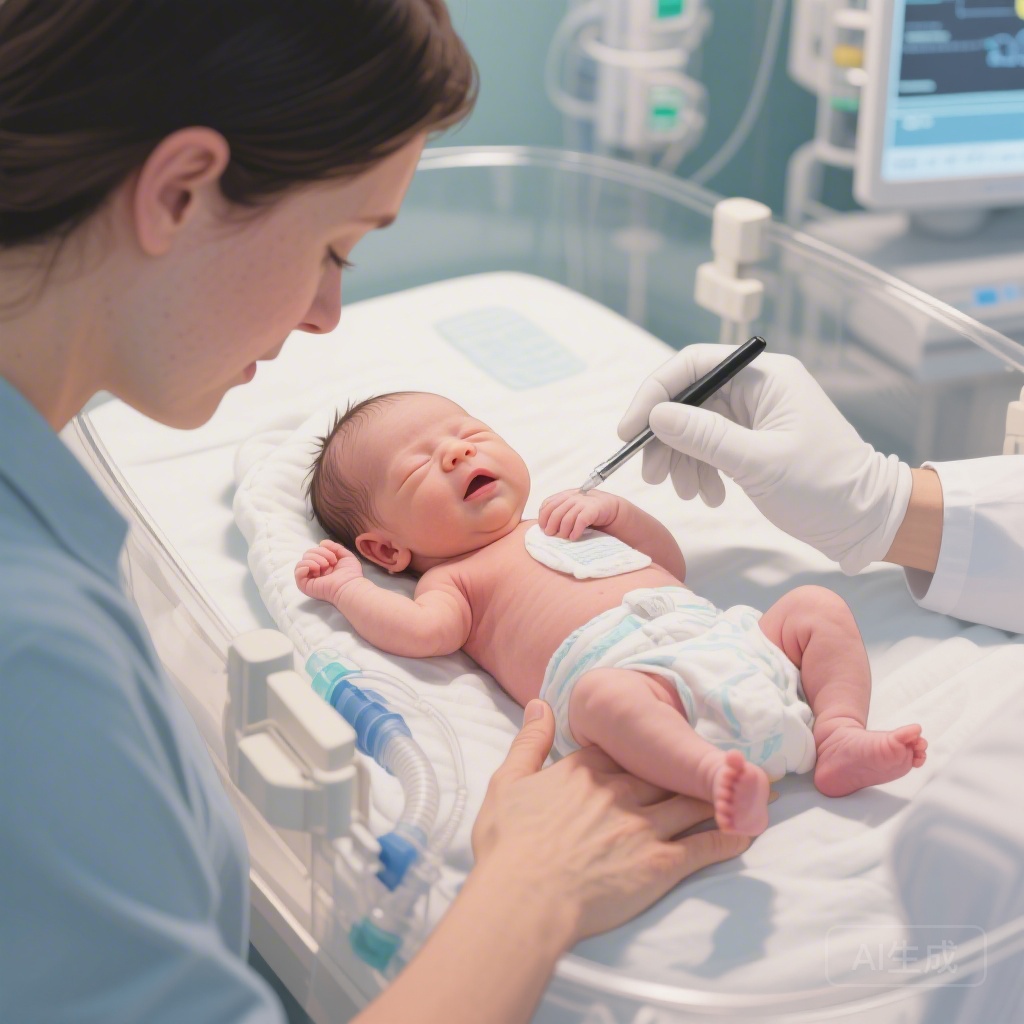
Retinopathy of prematurity (ROP) remains a leading cause of preventable childhood blindness worldwide. To mitigate this risk, preterm infants must undergo serial retinopathy screening examinations (RSE). While clinically essential, RSE is arguably one of the most stressful and painful routine procedures in the Neonatal Intensive Care Unit (NICU). The process involves the application of topical anesthetic drops, the insertion of an eyelid speculum, and often scleral indentation to visualize the peripheral retina. These maneuvers trigger significant physiological distress, including fluctuations in heart rate, oxygen desaturation, and elevated cortisol levels.
Emerging evidence suggests that repeated exposure to untreated pain in the neonatal period is not merely a transient concern. It can lead to long-term alterations in pain sensitivity, neurodevelopmental delays, and a heightened systemic inflammatory state. While pharmacological interventions like oral sucrose and topical anesthetics are commonly used, they often provide insufficient analgesia for the intense stimulus of RSE. Consequently, there is an urgent clinical need for multi-modal, evidence-based strategies that address both the acute sensory experience of pain and the subsequent physiological stress response.
Study Design and Methodology
In a randomized clinical trial conducted between March 2023 and August 2024 in a family-centered NICU, researchers investigated the efficacy of Kangaroo care (K-care) as a supportive intervention during the first RSE. The study enrolled 100 preterm infants with a mean gestational age of 31.1 weeks and a mean birth weight of 1496 grams. Inclusion criteria targeted infants with a gestation of less than 34 weeks or a birth weight under 2000 grams who were eligible for their first RSE.
Participants were randomly assigned to one of two groups (n=50 each):
Intervention Group (K-care)
Infants were placed in skin-to-skin contact on the chest of either their mother or father. The RSE was performed while the infant remained in this position, utilizing the parent’s warmth and presence as a physiological buffer.
Control Group
Infants underwent the RSE in the traditional manner, placed on a standard neonatal examination table.
The primary endpoint was the Premature Infant Pain Profile (PIPP) score within the first minute of the procedure. Secondary endpoints included salivary biomarkers of stress and inflammation. Saliva samples (>110 µL) were collected at three time points: baseline (pre-RSE), 1 hour post-RSE (for cortisol), and 6-8 hours post-RSE (for IL-1β, IL-6, and TNF-α). Biomarkers were analyzed using enzyme-linked immunosorbent assay (ELISA) methods in a blinded fashion to ensure objective data interpretation.
Key Findings: Pain Scores and Biomarker Analysis
The results of the trial provide robust evidence for the benefits of K-care in the context of ROP screening. The intervention demonstrated significant improvements across both behavioral and biochemical domains.
Reduction in Acute Behavioral Pain
The PIPP score, a validated composite measure that includes heart rate, oxygen saturation, and facial expressions (brow bulge, eye squeeze, and nasolabial furrow), was significantly lower in the K-care group. The mean PIPP score for infants in K-care was 11.0, compared to 12.9 in the control group (p=0.002). This difference indicates that while RSE remains a painful procedure, the intensity of the perceived pain is markedly attenuated by skin-to-skin contact.
Blunting the Endocrine Stress Response
Salivary cortisol is a reliable non-invasive marker of the HPA axis activity. At one hour following the RSE, infants in the control group showed significantly higher cortisol levels (6.9 ng/mL) compared to those in the K-care group (4.9 ng/mL; p=0.001). This suggests that K-care helps maintain hormonal stability and prevents the profound surge in stress hormones typically associated with invasive procedures.
Mitigation of the Delayed Inflammatory Response
Perhaps the most novel finding of this study is the impact of K-care on delayed inflammatory cytokines. Acute pain and stress are known to trigger a pro-inflammatory cascade. At 6-8 hours post-procedure, the K-care group exhibited significantly lower levels of:
- Interleukin-6 (IL-6): 31.9 vs 34.7 pg/mL (p=0.01)
- Tumour Necrosis Factor-alpha (TNF-α): 53.9 vs 58.6 pg/mL (p=0.02)
Interestingly, Interleukin-1β (IL-1β) levels did not show a statistically significant difference between the groups (50.4 vs 53.0 pg/mL; p=0.46). This may be due to the specific temporal kinetics of IL-1β release or a different sensitivity to the K-care intervention compared to IL-6 and TNF-α.
Expert Commentary: Mechanistic Insights and Clinical Implications
The findings by Huang et al. contribute to a growing body of literature supporting “family-integrated care” in the NICU. From a mechanistic perspective, the efficacy of Kangaroo care is likely multi-factorial. Skin-to-skin contact stimulates the release of oxytocin in both the infant and the parent, which has known analgesic and anxiolytic properties. Furthermore, the tactile, auditory, and olfactory stimuli provided by the parent may serve as a “competitive input” to the central nervous system, effectively dampening the transmission of nociceptive signals—a phenomenon related to the Gate Control Theory of pain.
The reduction in IL-6 and TNF-α is particularly noteworthy for clinical neonatologists. Systemic inflammation in preterm infants is linked to adverse outcomes, including bronchopulmonary dysplasia and periventricular leukomalacia. By reducing the “inflammatory hit” associated with routine procedures, K-care may offer a form of physiological protection that extends beyond immediate comfort.
However, the study is not without limitations. As a single-center trial, the generalizability to NICUs with different staffing models or parent-participation policies remains to be seen. Additionally, while the reduction in PIPP scores was statistically significant, the mean score of 11.0 in the K-care group still indicates moderate to severe pain. This underscores that K-care should be part of a larger, multi-modal analgesia protocol rather than a standalone solution.
Conclusion: Integrating Kangaroo Care into Standard Screening Protocols
The results of this randomized clinical trial provide a compelling argument for the integration of Kangaroo care into standard ROP screening protocols. K-care is a zero-cost, safe, and effective intervention that not only reduces the behavioral expression of pain but also stabilizes the infant’s endocrine and inflammatory responses. For health policy experts and NICU directors, these data support the implementation of family-centered care models that prioritize parental involvement even during technical medical examinations. Future research should focus on whether these physiological benefits translate into improved long-term neurodevelopmental trajectories for these vulnerable infants.
References
Huang HB, Xue Y, Liang Y, Wan XQ, Wu J, Zhang QS, Cheung PY. Effects of Kangaroo care during retinopathy screening examination: a randomised clinical trial. BMJ Paediatr Open. 2026 Jan 6;10(1):e003961. doi: 10.1136/bmjpo-2025-003961. PMID: 41494755; PMCID: PMC12778260.