Introduction
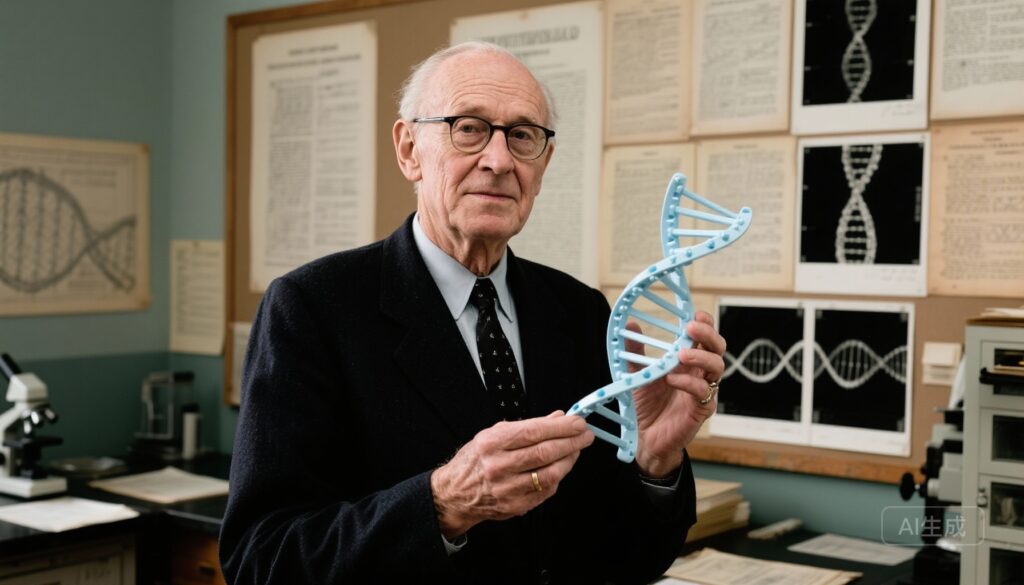
James Dewey Watson, born on April 6, 1928, remains a towering figure in 20th-century science. Best known for his role in discovering the structure of DNA—the double helix—Watson’s work unraveled the physical basis of inheritance and launched the molecular biology era. His landmark discovery, alongside Francis Crick and Maurice Wilkins, earned them the 1962 Nobel Prize in Physiology or Medicine and transformed how we understand genetics, heredity, and disease. Watson passed away on November 6, 2025, at age 97. This article explores his scientific journey, the significance of the DNA double helix discovery, the subsequent advances it spurred, and the complexities of his personal legacy.
The Scientific Breakthrough: Unveiling DNA’s Double Helix
By the early 1950s, scientists knew DNA carried genetic information, but its structure remained elusive. Watson, after earning his PhD from Indiana University Bloomington in 1950, joined Cambridge University’s Cavendish Laboratory where he met Francis Crick, a fellow researcher equally fascinated by DNA. Together, they embarked on deciphering DNA’s structure starting in October 1951.
A key piece of evidence was Rosalind Franklin’s X-ray diffraction images of DNA, particularly the famous “Photo 51,” captured without her full consent. This image suggested a helical shape with specific dimensions.
Using clues from Franklin’s image and available biochemical data, Watson and Crick proposed the iconic double helix model in 1953. This structure featured two intertwined strands made of sugar-phosphate backbones and paired nitrogenous bases (adenine-thymine and guanine-cytosine), explaining how DNA replicates and transmits genetic information.
They published this model in an April 1953 issue of the journal Nature, alongside complementary papers by Maurice Wilkins and Rosalind Franklin, who herself passed away in 1958 before the Nobel was awarded.
Impact and Legacy of the Discovery
The double helix revelation was more than a structural insight—it unified biology with chemistry and physics, establishing molecular biology as a distinct discipline. It demystified the physical mechanism underpinning heredity and gene expression, opening pathways to genetic engineering, DNA sequencing, and modern biotechnology.
Watson’s subsequent career was deeply intertwined with molecular biology’s growth. From 1956 to 1976, he taught at Harvard University, nurturing a generation of geneticists. In 1968, Watson became director of Cold Spring Harbor Laboratory (CSHL), where he expanded the center’s cancer research and molecular biology capabilities. Under his leadership, CSHL became a world-class hub fostering breakthroughs like recombinant DNA technology.
In the late 1980s and early 1990s, Watson played a critical role in initiating and supporting the Human Genome Project, which completed a comprehensive mapping of human DNA in 2003—a monumental step with vast implications for medicine and biology.
Scientific Contributions and Writings
Beyond research, Watson was an influential scientific communicator and author. His 1968 bestseller, “The Double Helix,” offered a candid, at times controversial, personal account of the race to discover DNA’s structure, sparking wide public interest in molecular biology and the human dimension of science.
He also co-authored “Molecular Biology of the Gene,” a foundational textbook first published in 1965 that educated numerous students and researchers worldwide.
Controversies and Challenges
While Watson’s scientific contributions were profound, his public legacy became complicated by contentious statements regarding genetics and race. In 2007, Watson ignited international criticism by suggesting a genetic basis for differences in intelligence among racial groups. After reiterating these views in a 2019 documentary, Cold Spring Harbor Laboratory revoked his honorary titles and severed institutional ties.
These controversies highlighted the sensitive ethical and social dimensions of genetics research, underscoring the need for careful communication and respect for diversity in science.
A Fictional Patient Scenario: The Impact of DNA Research on Medicine
Consider Sarah, a 35-year-old woman recently diagnosed with a hereditary cancer syndrome due to a mutation in the BRCA1 gene—discovered through genetic testing made possible by decades of DNA research initiated by Watson and colleagues. For Sarah, understanding her genetic risk allowed tailored preventive care, including increased screening and lifestyle adjustments, significantly improving her prognosis.
This vignette illustrates how the molecular understanding of DNA structure influences present-day clinical practice, personalized medicine, and preventive health.
Conclusion
James Watson’s discovery of the DNA double helix ranks as one of the most transformative scientific achievements of the 20th century. It laid the foundation for molecular biology, revolutionized our understanding of genetics, and paved the way for innovations in medicine, biotechnology, and genomic sciences.
While his later years were clouded by controversy, his contributions to science endure. The DNA double helix remains a symbol of human curiosity and the endless pursuit to unravel life’s mysteries. Future research building on this foundation promises new breakthroughs in disease treatment, synthetic biology, and beyond.
References
1. Watson JD, Crick FH. Molecular structure of nucleic acids: a structure for deoxyribose nucleic acid. Nature. 1953 Apr 25;171(4356):737–738.
2. Franklin RE, Gosling RG. Molecular configuration in sodium thymonucleate. Nature. 1953 Apr 25;171(4356):740–741.
3. Wilkins MH, Stokes AR, Wilson HR. Molecular structure of deoxypentose nucleic acids. Nature. 1953 Apr 25;171(4356):738–740.
4. National Human Genome Research Institute. The Human Genome Project Completion: Frequently Asked Questions. NIH; 2023.
5. Kevles DJ. DNA: The Secret of Life. Knopf; 1998.
6. Judson HF. The Eighth Day of Creation. Simon & Schuster; 1979.
7. Cold Spring Harbor Laboratory. History and Contributions. CSHL website.