Highlights of the Target Trial Emulation
A recent large-scale population-based study published in Diabetes Care has highlighted a significant clinical benefit of sodium-glucose cotransporter 2 inhibitors (SGLT2is) for patients suffering from both type 2 diabetes (T2D) and gout. The key highlights include:
- SGLT2i initiation was associated with a 38% lower hazard of allopurinol initiation compared to dipeptidyl peptidase 4 inhibitors (DPP-4is).
- The use of SGLT2is led to a notable reduction in the dispensing of high-dose glucocorticoids (22% reduction), NSAIDs (15% reduction), and colchicine (13% reduction).
- The benefits were particularly pronounced in patients already using diuretics at baseline, a group traditionally at higher risk for hyperuricemia.
- These findings suggest that SGLT2is may serve as a dual-purpose therapy, managing glycemic levels while simultaneously mitigating the clinical burden of gout.
The Intersection of Gout and Type 2 Diabetes: A Clinical Challenge
Gout and type 2 diabetes frequently coexist, driven by shared metabolic pathways involving insulin resistance and hyperinsulinemia. For clinicians, managing this patient population presents a complex challenge. Gout flares often necessitate the use of nonsteroidal anti-inflammatory drugs (NSAIDs) and glucocorticoids. However, these medications are frequently contraindicated or carry significant risks for patients with T2D, who often have concomitant chronic kidney disease (CKD) or cardiovascular disease (CVD).
Traditional urate-lowering therapies (ULT), such as allopurinol, are the gold standard for long-term gout management, but they do not address the underlying metabolic dysregulation. Furthermore, the polypharmacy burden in these patients is substantial; as noted in the study, approximately 67% of the cohort were already managing multiple medications. Therefore, identifying glucose-lowering agents that offer ancillary benefits for gout management is a high priority in cardiometabolic medicine.
Study Design: Emulating a Randomized Controlled Trial
The researchers, led by McCormick et al., utilized a target trial emulation framework to provide high-quality evidence in the absence of a dedicated large-scale randomized controlled trial (RCT). This methodology helps minimize the biases often found in traditional observational studies by mimicking the design, eligibility, and analysis of a prospective trial.
The study utilized a general population database from British Columbia, Canada, identifying 26,739 adults with gout and T2D. The primary objective was to compare the rates of allopurinol initiation and the use of anti-inflammatory drugs (NSAIDs, colchicine, steroids) and diuretics between patients initiating SGLT2is and those initiating DPP-4is. A secondary comparison was made with glucagon-like peptide 1 receptor agonists (GLP-1RAs). To ensure robust results, the team used inverse probability of treatment weighting (IPTW) to balance baseline characteristics and replicated their findings in an electronic health record (EHR) dataset with adjustments for body mass index (BMI) and baseline serum urate levels.
Key Findings: Lowering the Threshold for Gout Intervention
Allopurinol Initiation and Urate-Lowering Therapy
The primary outcome of the study revealed a striking difference in the need for new urate-lowering therapy. Patients starting SGLT2is were significantly less likely to require allopurinol than those on DPP-4is, with a hazard ratio (HR) of 0.62 (95% CI 0.52–0.73). This suggests that the urate-lowering effect of SGLT2is is clinically potent enough to delay or prevent the need for traditional ULT in a substantial portion of patients.
Reduction in Anti-Inflammatory and Diuretic Use
Managing gout flares is often as burdensome as managing chronic urate levels. The study found that SGLT2i use was associated with lower rate ratios (RR) for several classes of medications:
- High-dose glucocorticoids: RR 0.78 (95% CI 0.74–0.83)
- NSAIDs: RR 0.85 (95% CI 0.80–0.92)
- Colchicine: RR 0.87 (95% CI 0.83–0.92)
- Diuretics: RR 0.87 (95% CI 0.85–0.89)
The reduction in glucocorticoid and NSAID use is particularly vital. These medications are associated with adverse outcomes in diabetic patients, including glycemic instability, fluid retention, and accelerated renal decline. By reducing the frequency of gout flares—and thus the need for these rescue medications—SGLT2is may indirectly improve the overall safety profile of the patient’s treatment regimen.
Clinical Implications and Mechanistic Insights
The Uricosuric Effect of SGLT2 Inhibitors
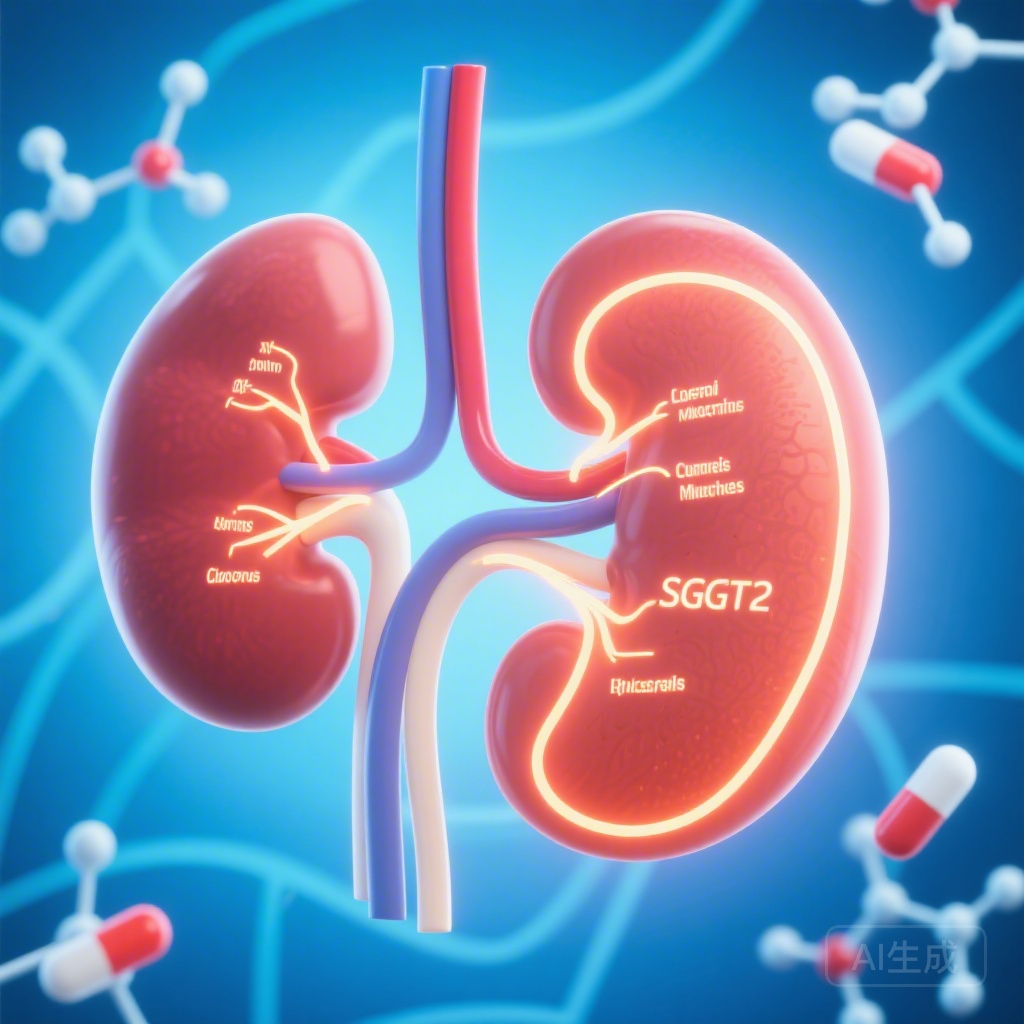
The biological plausibility for these findings lies in the unique mechanism of SGLT2 inhibitors. Beyond inhibiting glucose reabsorption in the proximal tubule, SGLT2is influence the transport of uric acid. Specifically, the increased glucose concentration in the tubular lumen competes with uric acid for reabsorption via the glucose transporter 9 (GLUT9). This results in increased uricosuria (the excretion of uric acid in the urine) and a subsequent decrease in serum urate levels. This study confirms that this physiological effect translates into a tangible reduction in clinical events and medication requirements.
Mitigating Cardiovascular and Renal Risks
The reduction in diuretic use (RR 0.87) is also noteworthy. Diuretics, while essential for many patients with heart failure or hypertension, are known to increase serum urate levels. The ability of SGLT2is to provide natriuretic and diuretic effects without the hyperuricemic penalty of traditional loop or thiazide diuretics represents a significant therapeutic advantage in the “cardiovascular-kidney-metabolic” (CKM) syndrome context.
Expert Commentary
While the results are compelling, clinicians must interpret them within the context of the study’s design. As a target trial emulation, it relies on the quality of the underlying real-world data. Although the researchers adjusted for many confounders, including BMI and baseline urate in a secondary analysis, the potential for residual confounding remains. However, the consistency of the results across primary and secondary comparators (DPP-4is and GLP-1RAs) strengthens the argument for a class-specific effect of SGLT2is on gout outcomes.
Medical experts suggest that for patients with T2D and gout, SGLT2is should be considered early in the treatment algorithm, provided there are no contraindications such as a high risk for euglycemic ketoacidosis or significant renal impairment (though the threshold for SGLT2i use in CKD continues to expand based on recent trials like EMPA-KIDNEY).
Conclusion
In patients with gout and type 2 diabetes, the initiation of SGLT2 inhibitors significantly reduces the need for allopurinol and the use of anti-inflammatory medications. This reduction in gout-related medication burden not only simplifies complex treatment regimens but also protects patients from the potential harms of long-term glucocorticoid and NSAID exposure. As the clinical community moves toward more holistic, organ-protective management of metabolic diseases, SGLT2is emerge as a powerful tool in the dual management of diabetes and hyperuricemic disorders.
References
1. McCormick N, Burrack N, Yokose C, et al. Gout-Related Medication Use After Initiating Sodium-Glucose Cotransporter 2 Inhibitors in Patients With Gout and Type 2 Diabetes: Population-Based Target Trial Emulation Studies. Diabetes Care. 2026;49(3):460-470. PMID: 41615420.
2. Choi HK, et al. Sodium-glucose cotransporter 2 inhibitors and risk of gout in type 2 diabetes: a systematic review and meta-analysis. Annals of the Rheumatic Diseases. 2020.
3. Heerspink HJL, et al. Dapagliflozin in Patients with Chronic Kidney Disease. New England Journal of Medicine. 2020;383:1436-1446.