Highlight
• IV thrombolysis (IVT) initiated beyond 4.5 hours at primary stroke centers (PSCs) before transfer for endovascular therapy (EVT) was associated with improved 3‑month modified Rankin Scale (mRS) distribution (PSOW common OR 1.97; 95% CI, 1.33–2.92).
• IVT before transfer markedly increased odds of recanalization during transfer (PSOW-OR 8.69; 95% CI, 3.16–23.87).
• No excess in any intracerebral hemorrhage (ICH) or symptomatic ICH was observed with late-window IVT in this cohort.
Background: clinical context and unmet need
Acute ischemic stroke due to large vessel occlusion (AIS-LVO) is a leading cause of death and disability worldwide. Endovascular therapy (EVT) for LVO has transformed outcomes when performed promptly. Intravenous thrombolysis (IVT) with alteplase or tenecteplase remains standard of care within 4.5 hours for eligible patients, and its role as ‘bridging’ therapy before EVT within that time window has been extensively studied.
However, the optimal use of IVT beyond 4.5 hours from last known well (LKW) is uncertain. Randomized trials that extended treatment windows for IVT (for example, imaging-guided selections in wake-up stroke) addressed different populations. More recently, randomized evidence assessing IVT in the late window before EVT is limited and heterogeneous. The TIMELESS randomized trial reported no overall benefit of IVT in the late window among patients primarily admitted directly to comprehensive stroke centers (CSCs), prompting debate about whether selected patients at PSCs might derive different benefit, especially when transfer time offers a prolonged interval for IVT to act before EVT.
Study design and population (OPEN-WINDOW)
Design: Multicenter retrospective cohort study conducted at 20 French PSCs (January 2020–December 2024) with 3‑month follow-up. The analysis used propensity score overlap weighting (PSOW) to balance baseline covariates between groups.
Population: Consecutive adult patients with AIS-LVO who presented to a PSC beyond 4.5 hours from LKW, underwent advanced brain imaging (MRI or CT with CT-perfusion in 93.2% of cases), and were transferred to a CSC for EVT. Patients were included whether or not they received IVT prior to transfer.
Intervention and comparator: IVT (given at the PSC prior to transfer) versus no IVT prior to transfer. The cohort included 584 patients; 232 (39.7%) received IVT before transfer.
Primary endpoint: 3‑month functional outcome measured by the modified Rankin Scale (mRS), analyzed ordinally (shift analysis). Secondary outcomes included recanalization during transfer and safety endpoints (any ICH and symptomatic ICH).
Key results
Baseline characteristics: Median age was 71 (IQR 61–81) years; 52.9% female. Median baseline NIH Stroke Scale (NIHSS) was 15 (IQR 10–19). Median time from LKW to PSC imaging was 10.5 (IQR 6.9–14.0) hours, reflecting a late-window population.
Primary outcome: 3‑month mRS
After PSOW to balance observed confounders, IVT initiated at the PSC was independently associated with a favorable shift in the 3‑month mRS compared with no IVT (PSOW-common odds ratio 1.97; 95% CI, 1.33–2.92; P = .001). This indicates an almost twofold increase in the odds of having a better functional outcome across the full range of the mRS.
Recanalization during transfer
Patients receiving IVT were much more likely to achieve recanalization during transfer to the CSC (PSOW-OR 8.69; 95% CI, 3.16–23.87; P < .001). This large effect size implies that IVT administered at the PSC enabled restoration of vessel patency in a substantial subset before EVT could be attempted.
Safety outcomes
Rates of any ICH and symptomatic ICH were similar between the IVT and no-IVT groups in PSOW-adjusted analyses. The study did not report an excess hemorrhagic risk attributable to late-window IVT in this selected cohort.
Other observations
Advanced imaging was used in most PSCs (MRI or CT perfusion in 93.2%), enabling selection of patients with small core and favorable penumbra profiles despite late presentation. The median LKW-to-imaging time (10.5 hours) underscores that these were very late-presenting patients, in whom spontaneous or delayed reperfusion after IVT might be especially relevant.
Expert commentary and interpretation
Mechanistic plausibility: IV thrombolytics can lyse thrombus and may partially or completely recanalize occluded large vessels. When EVT is delayed by transfer times, there is a biologically plausible window in which IVT could restore flow and salvage tissue, potentially reducing infarct growth and improving functional outcome. The large OR for recanalization during transfer supports this biological mechanism in practice.
Comparison with prior evidence: Randomized trials that compared EVT alone versus combined IVT+EVT within the early window (≤4.5 h) yielded mixed results, with several trials suggesting noninferiority of direct EVT in selected contexts and others favoring bridging therapy. For the late window, TIMELESS and other randomized data have raised uncertainty. Importantly, TIMELESS primarily enrolled patients who presented directly to CSCs where EVT could proceed rapidly, minimizing the time available for IVT to act. The OPEN-WINDOW cohort addresses a distinct scenario: drip-and-ship patients at PSCs with measurable transfer intervals. The divergent findings underscore that the context of care delivery—arrival location, transfer logistics, and imaging-based selection—matters when assessing the incremental benefit of late-window IVT.
Strengths of the study: Large multicenter sample reflecting real-world PSC practice, high rate of advanced imaging enabling physiological patient selection, robust PSOW to reduce confounding, clinically meaningful endpoints (ordinal mRS), and plausible mechanistic support from the recanalization findings.
Limitations: Observational and retrospective design leaves potential for residual confounding (unmeasured differences in transfer times, operator thresholds for EVT, or selection bias for giving IVT). PSOW balances observed covariates but cannot account for unmeasured confounders. Recanalization assessments during transfer may depend on variable monitoring protocols. Finally, bleeding endpoints can be under- or over-called in nonrandomized data.
Clinical implications
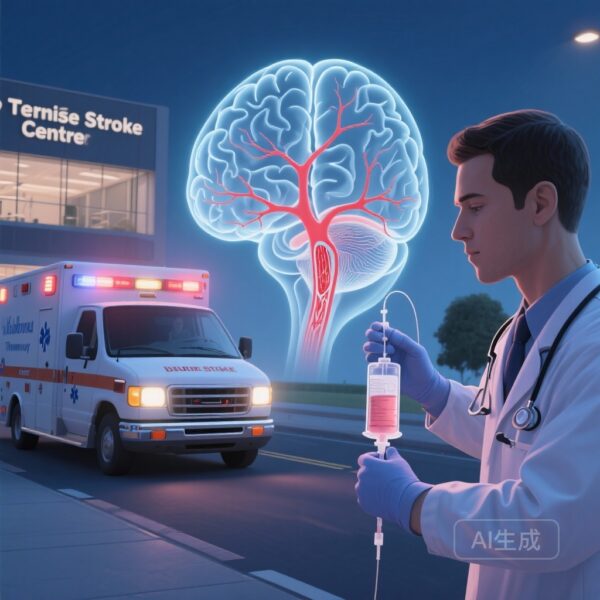
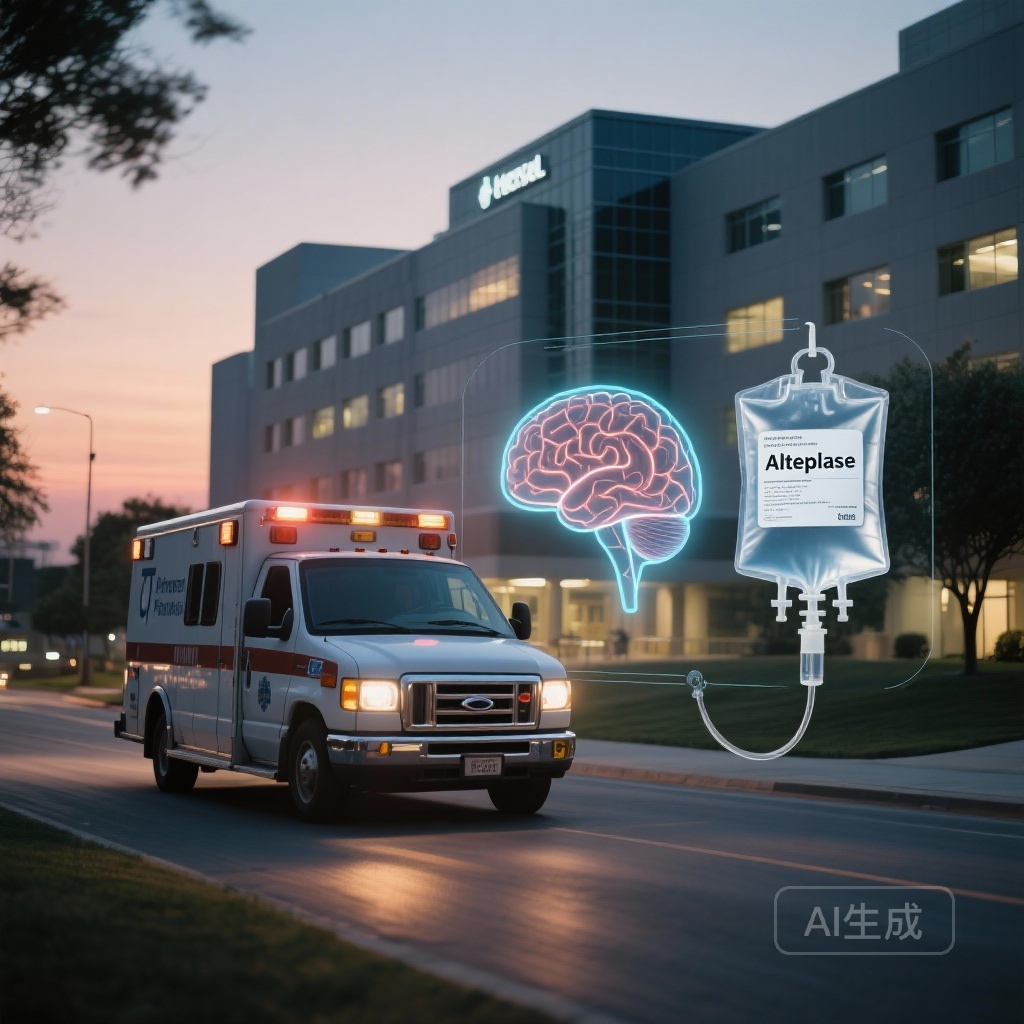
For clinicians at PSCs: In selected late-window AIS-LVO patients with favorable advanced imaging and anticipated transfer delays, administering IVT at the PSC may meaningfully increase the chance of early recanalization and improved functional outcome without apparent excess hemorrhagic risk in this cohort. This supports a pragmatic approach of considering IVT on a case-by-case basis when the expected door-in-door-out time and transfer interval allow IVT to act before EVT.
For systems of care: The findings emphasize the importance of integrated stroke systems that can combine rapid imaging-based selection, streamlined transfer, and coordinated decision-making between PSCs and CSCs. They also suggest that clinical trial designs examining late-window IVT should explicitly account for transfer intervals and pretransfer administration practices.
Research implications and next steps
Randomized controlled trials are needed to determine causality and quantify benefit and risk of late-window IVT administered at PSCs prior to transfer. Trials should stratify by transfer time, use standardized advanced imaging selection, and prospectively capture recanalization during transfer. Potential trial designs could randomize eligible late-window LVO patients at PSCs to IVT versus placebo before transfer with EVT available at the receiving CSC, with preplanned subgroup analyses by transfer time and imaging phenotype.
Conclusion
The OPEN-WINDOW multicenter cohort reported that IV thrombolysis initiated beyond 4.5 hours at PSCs before interhospital transfer for EVT was associated with higher rates of recanalization during transfer and improved 3‑month functional outcomes without increased hemorrhagic complications. While encouraging, these observational findings require confirmation in randomized trials that explicitly consider transfer logistics and imaging-based selection. In the meantime, clinicians and systems should weigh potential benefits of late-window IVT on a patient-by-patient basis, particularly when transfer delays are expected and advanced imaging demonstrates salvageable tissue.
Funding and registration
Reported by authors: reference provided as Seners P et al., Intravenous Thrombolysis Use in the Late Time Window Before Interhospital Transfer for Thrombectomy. JAMA Neurol. 2025 Dec 1:e254712. DOI: 10.1001/jamaneurol.2025.4712. OPEN-WINDOW collaborators listed in the publication. No clinicaltrials.gov identifier was reported for this retrospective cohort.
Selected references
1. Seners P, Nehme N, Ter Schiphorst A, et al; OPEN-WINDOW collaborators. Intravenous Thrombolysis Use in the Late Time Window Before Interhospital Transfer for Thrombectomy. JAMA Neurol. 2025 Dec 1:e254712. doi:10.1001/jamaneurol.2025.4712.
2. Albers GW, Marks MP, Kemp S, et al. Thrombectomy for Stroke at 6 to 16 Hours with Selection by Perfusion Imaging (DEFUSE 3). N Engl J Med. 2018;378(8):708–718.
3. Nogueira RG, Jadhav AP, Haussen DC, et al. Thrombectomy 6 to 24 Hours after Stroke with a Mismatch between Deficit and Infarct (DAWN). N Engl J Med. 2018;378(1):11–21.
4. Powers WJ, Rabinstein AA, Ackerson T, et al. 2019 Update to the 2018 Guidelines for the Early Management of Patients With Acute Ischemic Stroke. Stroke. 2019;50(12):e344–e418.
5. Saver JL, Goyal M, van der Lugt A, et al. Time to Treatment With Endovascular Thrombectomy and Outcomes From Ischemic Stroke: A systematic review and meta-analysis. JAMA. 2016;316(12):1279–1288.
For clinicians seeking practical guidance, discussion with receiving CSC teams and individualized consideration of imaging, transfer times, and patient comorbidity remain essential until randomized trial data addressing this exact scenario are available.