Highlights
Interactive mobile coaching led to a statistically significant reduction in dyspnea throughout the 12-month follow-up period compared to conventional counseling (P=.01).
While the primary endpoint of eating restriction at one month was not met, the mobile coaching group showed significant improvements in eating restriction at six months (P=.045) and body image at three months (P=.04).
Active users of the mobile app (≥8 weeks of use) reported significantly higher global health status compared to inactive users (P=.005).
Subgroup analyses identified younger patients, female patients, and those who underwent distal gastrectomy as the cohorts deriving the most benefit from digital human coaching.
Background: The Post-Gastrectomy Challenge
Gastrectomy remains a cornerstone in the curative treatment of gastric cancer. However, the surgical resection of the stomach—whether total or distal—precipitates a cascade of physiological and metabolic shifts known as postgastrectomy syndrome (PGS). Patients frequently struggle with early satiety, dumping syndrome, malabsorption, and significant weight loss. These challenges often lead to a profound decline in quality of life (QoL) as patients navigate the transition from hospital care to a self-managed regular diet.
Traditionally, nutritional support is provided through intermittent face-to-face consultations with clinical dietitians. While valuable, these sessions are often too infrequent to address the daily, real-time struggles of dietary adaptation. In recent years, mobile health (mHealth) interventions and human health coaching have emerged as effective tools for managing chronic metabolic conditions. This study, published in JMIR mHealth and uHealth, sought to determine if this digital proactive model could be successfully translated to the acute and complex recovery phase of gastric cancer surgery.
Study Design: Evaluating Digital vs. Conventional Support
This prospective randomized controlled trial (RCT) was conducted between May 2020 and August 2022. A total of 180 patients undergoing gastrectomy for gastric cancer were enrolled and randomized into two groups. After excluding dropouts, data from 160 patients (76 in the mobile coaching group and 84 in the conventional group) were analyzed.
Interventions
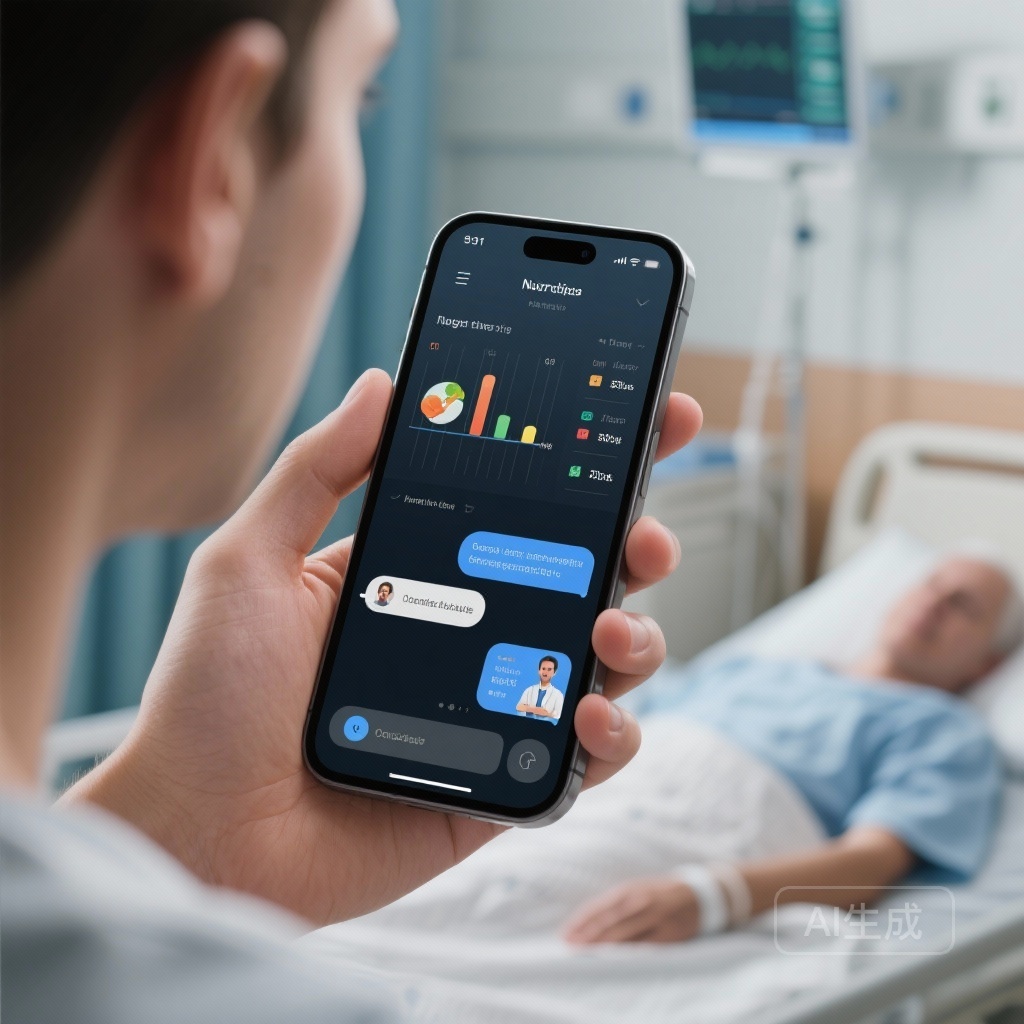
The mobile coaching group received access to a dedicated mobile app for three months following hospital discharge. This intervention featured personalized coaching from assigned professionals who provided advice based on self-recorded health data, including dietary intake, symptoms, and physical activity. In contrast, the conventional counseling group received standard care, which included dietary consultations with a clinical dietitian at one and three months postoperatively.
Endpoints and Assessment
The primary endpoint was the eating restriction score at one month postoperatively, measured via the European Organisation for Research and Treatment of Cancer Quality of Life Questionnaire (EORTC QLQ-STO22). Secondary endpoints included longitudinal assessments of the EORTC QLQ-C30 (core oncology QoL) and STO22 (gastric cancer-specific) subscales, as well as nutritional parameters such as body composition and blood chemistry, tracked at 1, 3, 6, and 12 months.
Key Findings: A Longitudinal Perspective on Symptom Control
The trial yielded nuanced results that highlight both the potential and the limitations of digital interventions in surgical oncology.
Primary Endpoint and Eating Restrictions
At the one-month mark, the study did not find a statistically significant difference in eating restriction scores between the mobile coaching and conventional groups. This suggests that the immediate postoperative period is equally challenging regardless of the support modality, as physiological healing dominates the clinical picture. However, a significant divergence appeared later; by six months, the mobile coaching group reported significantly fewer eating restrictions (P=.045), suggesting that continuous coaching facilitates better long-term dietary adaptation.
Symptom Management and Body Image
One of the most striking findings was the impact on dyspnea. Patients in the mobile coaching group reported significantly lower levels of dyspnea throughout the entire 12-month study period (P=.01). Furthermore, at three months post-surgery—a critical time for psychological adjustment—the coaching group reported a significantly better body image than the control group (P=.04). These findings suggest that the psychological support and symptom-tracking aspects of the app may provide a ‘safety net’ that reduces the perceived burden of symptoms.
Subgroup Variations and Engagement
The study revealed that the intervention was not ‘one size fits all.’ Younger patients (under 60 years), female patients, and those who underwent distal gastrectomy showed more pronounced improvements in QoL through mobile coaching. This may be attributed to higher digital literacy in younger cohorts and different psychosocial needs in female patients. Engagement also played a critical role: ‘active users’ (those using the app for at least 8 weeks) experienced a significantly better global health status than inactive users within the same group (P=.005).
Nutritional and Metabolic Outcomes
Interestingly, no significant differences were observed in body composition (e.g., skeletal muscle mass) or nutritional blood parameters between the two groups. This indicates that while the mobile app improved the subjective experience and management of symptoms (the ‘how’ of eating), it did not necessarily change the objective nutritional status (the ‘what’ of caloric absorption) more effectively than traditional methods.
Expert Commentary: The Shift Toward Digital Therapeutics
The results of this RCT underscore a transition in postoperative care toward digital therapeutics. While the failure to meet the primary endpoint at one month might seem like a setback, clinicians should interpret the longitudinal data as a win for patient-centered care. The reduction in dyspnea and improved body image highlight the holistic benefits of interactive coaching that go beyond mere caloric counts.
The lack of objective nutritional improvement suggests that future iterations of these apps might need to incorporate more aggressive nutritional interventions or integrate more closely with pharmacological management of postgastrectomy syndrome. However, the higher global health status among active users provides a clear signal: engagement is the key driver of efficacy. For healthcare systems, this suggests that the value of mHealth lies in its ability to provide continuous, low-friction access to human expertise during the ‘white space’ between hospital visits.
Conclusion: Integrating mHealth into Surgical Recovery
In conclusion, while interactive human coaching via a mobile app did not yield immediate benefits in eating restrictions at one month, it proved superior to conventional counseling in managing long-term symptoms and improving quality of life. The intervention appears particularly effective for younger patients and those who remain highly engaged with the platform. As surgical oncology moves toward more personalized recovery pathways, digital human coaching represents a scalable and effective tool to help patients navigate the complex journey of postgastrectomy life.
Funding and ClinicalTrials.gov
This study was registered at ClinicalTrials.gov (NCT04394585). The research was supported by relevant institutional grants aimed at improving digital health infrastructure in oncology.
References
1. Eom BW, Han M, Yoon HM, Kim YW, Kim SY, Oh JM, Wie GA, Ryu KW. Improvement in Quality of Life After Early Interactive Human Coaching via a Mobile App in Postgastrectomy Patients With Gastric Cancer: Prospective Randomized Controlled Trial. JMIR Mhealth Uhealth. 2025 Dec 18;13:e75445. doi: 10.2196/75445.
2. Blazeby JM, et al. Development of a questionnaire to assess quality of life of patients with gastric cancer: the EORTC QLQ-STO22. Br J Surg. 2004;91(3):353-8.
3. Aaronson NK, et al. The European Organisation for Research and Treatment of Cancer QLQ-C30: a quality-of-life instrument for use in international clinical trials in oncology. J Natl Cancer Inst. 1993;85(5):365-76.