Highlights
Cendakimab significantly reduced the frequency of dysphagia days compared to placebo at 24 weeks, achieving a mean reduction of 6.1 days.
Histologic response (≤6 eosinophils per high-power field) was achieved in 28.6% of patients receiving cendakimab once weekly, compared to only 2.2% in the placebo group.
Endoscopic severity scores showed marked improvement with cendakimab treatment, and efficacy was maintained through 48 weeks of therapy.
The safety profile of cendakimab was consistent with other biologics targeting type 2 inflammation, with no dose-limiting adverse events reported.
Background: The Evolving Landscape of EoE
Eosinophilic esophagitis (EoE) is no longer considered a rare disease; it is an increasingly prevalent chronic, immune-mediated clinicopathologic disorder of the esophagus. Characterized clinically by symptoms of esophageal dysfunction—most notably dysphagia and food impaction—and histologically by eosinophil-predominant inflammation, EoE significantly impairs quality of life and carries a risk of esophageal strictures and remodeling if left untreated.
The pathophysiology of EoE is rooted in type 2 inflammation, where interleukin-13 (IL-13) plays a central role. IL-13 is a key cytokine that drives the recruitment of eosinophils to the esophageal mucosa, induces the expression of periostin and eotaxin-3, and contributes to the breakdown of the epithelial barrier. While proton pump inhibitors (PPIs), topical corticosteroids, and dietary elimination have been the mainstays of treatment, many patients remain refractory to these interventions or find them difficult to maintain long-term. The recent approval of dupilumab (which targets the IL-4 receptor alpha subunit) marked a shift toward biologics, but there remains a clinical need for additional targeted therapies with distinct mechanisms, such as direct IL-13 inhibition.
Study Design and Methodology
The phase 3 trial (NCT04753697) was a rigorous, randomized, double-blind, placebo-controlled study designed to evaluate the efficacy and safety of cendakimab in adults and adolescents (aged 12 to 75 years) with symptomatic and histologically active EoE. Patients were required to have a history of dysphagia and a peak esophageal eosinophil count of at least 15 eosinophils per high-power field (hpf).
The participants were randomly assigned to one of three treatment arms:
1. Cendakimab 360 mg once weekly (QW) for 48 weeks.
2. Cendakimab 360 mg once weekly for 24 weeks, followed by 360 mg every other week (Q2W) for weeks 24 to 48.
3. Placebo for 48 weeks.
The trial utilized a coprimary endpoint strategy at week 24: the change from baseline in the number of dysphagia days (measured via the validated Daily Symptom Diary) and the proportion of patients achieving a histologic response (defined as a peak esophageal eosinophil count of ≤6 eos/hpf). Secondary endpoints included changes in the Eosinophilic Esophagitis Endoscopic Reference Score (EREFS) and long-term safety data up to 48 weeks.
Key Findings: Symptomatic and Histologic Success
The trial enrolled 430 patients, providing a robust dataset for analysis. At the 24-week mark, cendakimab demonstrated clear superiority over placebo in both coprimary endpoints.
Symptomatic Improvement
Patients treated with cendakimab QW experienced a significant reduction in dysphagia frequency. The least-squares mean change from baseline in dysphagia days was -6.1 for the cendakimab group compared to -4.2 for the placebo group (P<0.001). This improvement is clinically meaningful, as reducing the frequency of swallowing difficulties is often the primary goal for patients seeking treatment.
Histologic Response
The histologic results were even more striking. A histologic response (≤6 eos/hpf) was achieved by 28.6% of patients in the cendakimab QW group, whereas only 2.2% of the placebo group met this threshold (P<0.001). While the 28.6% response rate may appear lower than those seen in some other biologic trials, it represents a substantial and statistically significant improvement over the natural history of the disease under placebo conditions.
Endoscopic and Long-term Outcomes
Endoscopic evaluation using the EREFS score—which assesses edema, rings, exudates, furrows, and strictures—showed that cendakimab-treated patients had a mean reduction of 5.2 points compared to 1.2 points in the placebo group. Crucially, the efficacy observed at week 24 was maintained through week 48 in both the QW/QW and QW/Q2W groups, suggesting that cendakimab provides durable control of esophageal inflammation and symptoms.
Safety and Tolerability Profile
Safety is a paramount concern in the management of a chronic disease like EoE. Through 48 weeks, the incidence of adverse events (AEs) was slightly higher in the cendakimab groups (83.8% for QW/QW and 84.6% for QW/Q2W) compared to the placebo group (73.4%). However, the majority of these events were mild to moderate in severity. Common AEs included injection-site reactions and upper respiratory tract infections, which are consistent with the known safety profile of monoclonal antibodies targeting the type 2 pathway. There were no reports of dose-limiting toxicities or unexpected safety signals that would preclude the clinical use of the drug.
Expert Commentary: Clinical Implications and Mechanistic Insights
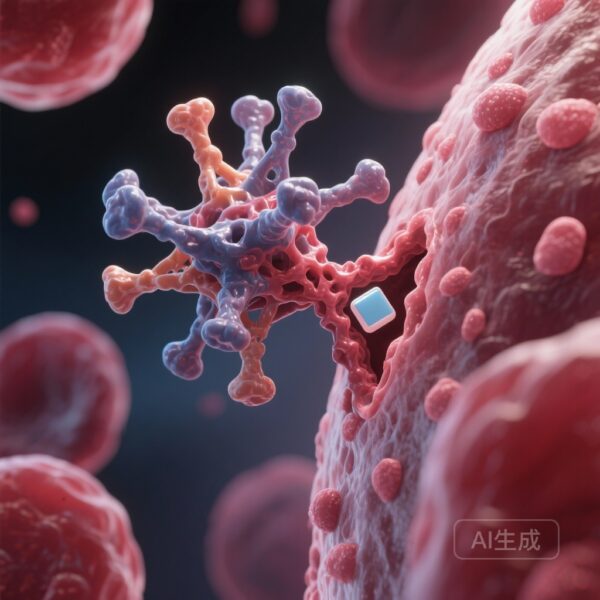
The success of cendakimab reinforces the “IL-13 hypothesis” in Eosinophilic Esophagitis. By binding with high affinity to IL-13, cendakimab prevents the cytokine from interacting with both the IL-13 receptor alpha 1 (IL-13Ra1) and the IL-13 receptor alpha 2 (IL-13Ra2). This dual blockade may be significant, as IL-13Ra2, once thought to be a decoy receptor, is now recognized to have potential signaling roles in fibrosis and tissue remodeling.
From a clinical perspective, the introduction of cendakimab could provide a vital alternative for patients who do not respond to or cannot tolerate IL-4/IL-13 dual inhibitors. However, clinicians must note that while the symptomatic improvement was robust, the percentage of patients achieving the strict histologic threshold of ≤6 eos/hpf was approximately 29%. This suggests that while IL-13 is a major driver, the heterogeneity of EoE may mean that some patients require even more comprehensive blockade or that different phenotypic subsets of the disease respond differently to targeted monotherapy.
The maintenance of efficacy at the every-other-week (Q2W) dosing schedule after an initial weekly induction phase is also encouraging. This could lead to improved patient adherence and a reduced burden of treatment for long-term maintenance therapy.
Conclusion
The Phase 3 trial of cendakimab represents a significant step forward in the precision medicine approach to Eosinophilic Esophagitis. By demonstrating statistically significant and clinically relevant improvements in symptoms, histology, and endoscopic appearance, cendakimab establishes itself as a potent candidate for the EoE armamentarium. As we move toward a more personalized treatment landscape, therapies that specifically target the underlying molecular drivers of esophageal inflammation will be essential in preventing long-term complications like strictures and ensuring a better quality of life for patients.
Funding and ClinicalTrials.gov
This study was funded by Bristol Myers Squibb. ClinicalTrials.gov number: NCT04753697.
References
1. Dellon ES, Charriez CM, Zhang S, et al. Cendakimab in Adults and Adolescents with Eosinophilic Esophagitis. NEJM Evid. 2025;4(10):EVIDoa2500095. doi:10.1056/EVIDoa2500095.
2. Rothenberg ME. Molecular, genetic, and cellular basis for eosinophilic esophagitis. Gastroenterology. 2020;158(4):829-843.
3. Furuta GT, Katzka DA. Eosinophilic Esophagitis. N Engl J Med. 2015;373(17):1640-1648.