Highlights
High-frequency transcutaneous electrical nerve stimulation (hfTENS) at 60 Hz demonstrated sustained improvements in specific neuropathic ocular pain (NOP) symptoms, including pressing and paroxysmal pain, at three months.
Both high-frequency and low-frequency TENS (lfTENS) provided significant acute analgesia, reducing eye pain intensity within 24 hours of the initial treatment session.
Baseline sensitivity to noxious heat stimuli and lower overall symptom severity were identified as significant predictors of a positive long-term response to TENS therapy.
The intervention did not alter clinical ocular surface signs, such as corneal staining, reinforcing the theory that NOP is primarily driven by neurogenic rather than purely inflammatory or mechanical ocular surface mechanisms.
Background: The Challenge of Nociplastic Ocular Pain
Chronic ocular pain remains one of the most frustrating challenges in modern ophthalmology. For decades, the clinical focus was almost exclusively on the ocular surface, with treatments targeting tear film stability and corneal inflammation. However, a significant subset of patients continues to experience debilitating pain despite a relatively healthy ocular surface. This clinical disconnect has led to the recognition of neuropathic and nociplastic ocular pain (NOP), where the primary driver is not surface damage but a dysfunctional somatosensory system.
Neuropathic pain results from a lesion or disease of the somatosensory system, while nociplastic pain arises from altered nociception despite no clear evidence of actual or threatened tissue damage. In the context of the eye, this often manifests as hyperalgesia (increased sensitivity to pain) and allodynia (pain from non-painful stimuli like wind or light). Traditional therapies, such as artificial tears and topical steroids, are often ineffective for these patients. There is a critical unmet need for non-pharmacological, non-invasive neuromodulatory interventions that address the underlying neural mechanisms of NOP.
Study Design and Methodology
This prospective, randomized, controlled pilot study (NCT05531643) was designed to evaluate the efficacy of transcutaneous electrical nerve stimulation (TENS) as a treatment for NOP. TENS is a well-established modality for chronic back and neck pain, but its application in ophthalmology is relatively novel.
Participant Selection
The study enrolled 37 individuals with a mean age of 58 years. To be included, participants had to exhibit moderate to severe chronic ocular pain. The cohort was balanced in terms of gender (51% female), reflecting the demographic most commonly affected by chronic dry eye-like symptoms.
Intervention Protocol
Participants were randomized in a 2:1 ratio to receive either:
- High-frequency TENS (hfTENS): 60 Hz frequency.
- Low-frequency TENS (lfTENS): 3 Hz frequency.
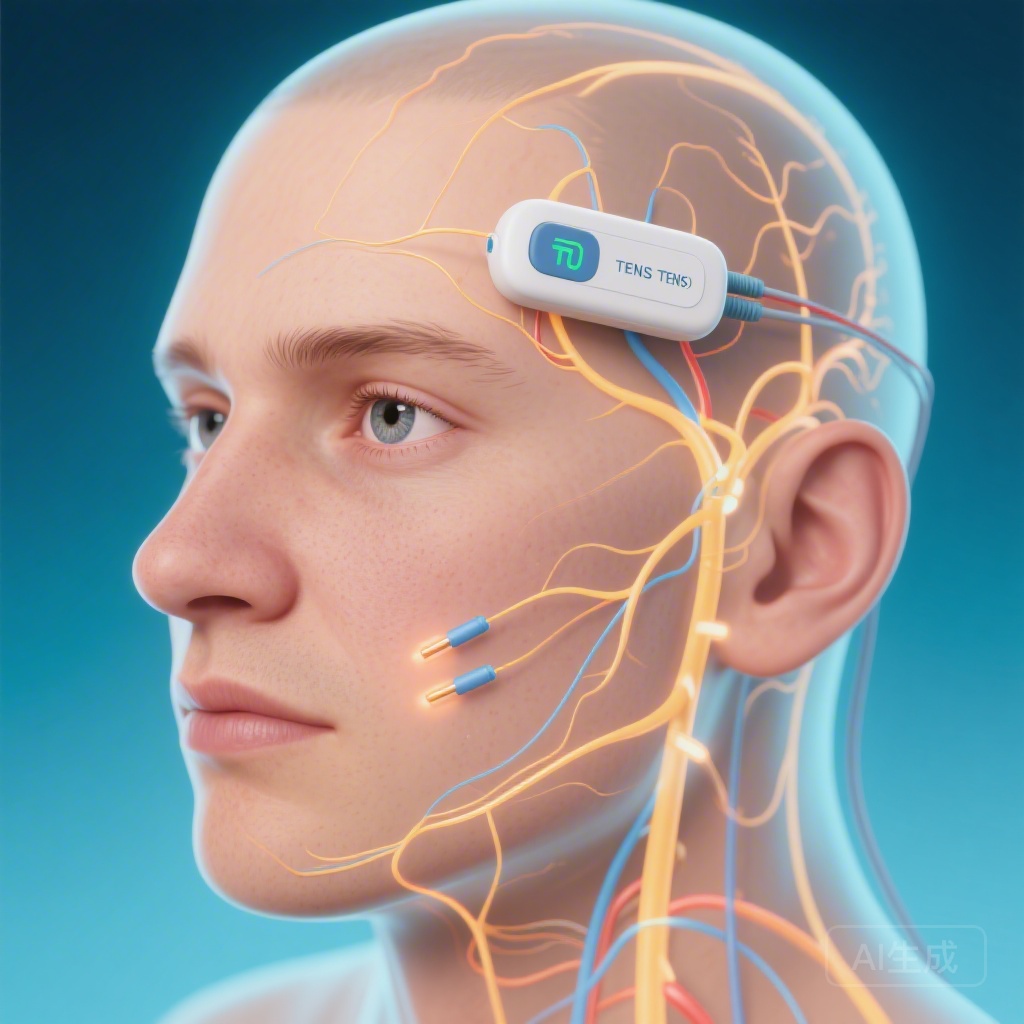
The intervention was delivered via electrodes placed on the forehead, targeting the supraorbital and supratrochlear branches of the trigeminal nerve. Each session lasted 20 minutes, and participants underwent treatments three times per week for a total duration of six months.
Outcome Measures
The primary endpoint was the change in pain intensity as measured by a 0-10 numerical rating scale (NRS). Secondary endpoints included the Neuropathic Pain Symptom Inventory modified for the eye (NPSI-Eye), which assesses specific pain qualities like burning, pressing, and paroxysmal (stabbing) pain. Furthermore, the researchers utilized quantitative sensory testing (QST) to measure cutaneous thermal and mechanical thresholds, providing a window into the patients’ central pain processing state.
Key Findings: Acute vs. Sustained Relief
The results of this pilot study provide a nuanced view of how electrical stimulation interacts with the ocular pain pathways.
Acute Analgesia
Both hfTENS and lfTENS were successful in providing immediate relief. Within 24 hours of the first session, participants reported a significant reduction in generalized eye pain intensity. This suggest that even a single session of TENS can temporarily dampen the nociceptive signals reaching the brain, likely through the gate control theory of pain, where non-painful electrical input inhibits the transmission of pain signals at the spinal (or in this case, trigeminal) level.
Long-term Efficacy (3 to 6 Months)
The most striking findings occurred at the three-month mark. While generalized NRS scores did not show a statistically significant difference from baseline across the entire group, the NPSI-Eye subscores revealed that hfTENS significantly reduced specific types of pain. Pressing pain scores dropped from 2.50 to 1.50 (p=0.03), and paroxysmal pain—the sudden, stabbing sensations often reported by NOP patients—dropped from 1.50 to 0.00 (p=0.02). Interestingly, these benefits were not sustained at the six-month mark, suggesting that the therapeutic effect might plateau or that the nervous system may adapt to the stimulus over long periods.
Ocular Signs vs. Symptoms
Crucially, neither hfTENS nor lfTENS had any impact on physical ocular signs. Corneal staining, tear breakup time, and other traditional dry eye metrics remained unchanged. This confirms that TENS acts as a pure neuromodulator, altering the perception of pain without modifying the underlying health of the ocular surface tissue. This distinction is vital for clinicians when explaining the treatment’s purpose to patients.
Predictors of Treatment Response
One of the study’s most valuable contributions is the identification of baseline characteristics that predict who will benefit most from TENS. Patients who entered the study with lower NPSI-Eye scores and lower sensitivity to noxious heat stimuli (measured via QST) were more likely to respond to the treatment. This suggests that patients with less severe central sensitization—those whose pain pathways are not yet fully “rewired” or hyper-excitable—are better candidates for TENS. Conversely, patients with extreme heat sensitivity may have such profound disruption of their central pain modulatory mechanisms that TENS, at these parameters, is insufficient to override the signal.
Expert Commentary and Mechanistic Insights
The success of hfTENS in addressing paroxysmal and pressing pain points to its potential role in stabilizing trigeminal nerve activity. High-frequency stimulation is thought to work primarily through the Gate Control Theory, whereas low-frequency stimulation (3 Hz) is often associated with the release of endogenous opioids. The fact that hfTENS showed superior results at three months suggests that for ocular pain, the mechanism of high-frequency “gating” might be more clinically relevant than opioid-mediated pathways.
However, the lack of persistence at six months warrants further investigation. It is possible that the “dosage” of TENS (three times per week) needs adjustment over time, or that NOP requires a multimodal approach combining TENS with pharmacological agents like gabapentinoids or tricyclic antidepressants. The study also highlights the importance of QST in clinical practice; by identifying patients with normal heat thresholds, clinicians can better select those likely to experience the 3-month “honeymoon period” of relief observed in this trial.
Conclusion
This randomized pilot study serves as a proof-of-concept for TENS in the management of neuropathic ocular pain. While not a permanent cure, hfTENS offers a valuable, non-invasive tool for reducing specific, debilitating pain qualities that are often refractory to topical eye drops. Future larger-scale trials should focus on optimizing the frequency of sessions and exploring whether TENS can be used as an adjunct to systemic neuromodulators to provide more durable relief.
Funding and Registration
This study was registered at ClinicalTrials.gov (NCT05531643) under the title “Pilot Study of TENS for Ocular Pain.” The research was supported by institutional grants and focused on expanding the therapeutic horizon for chronic ocular pain management.
References
1. Shields C, Qazi S, Zaldivar A, et al. Randomized Pilot Study of Transcutaneous Electrical Nerve Stimulation for Neuropathic/Nociplastic Ocular Pain. American Journal of Ophthalmology. 2026; PMID: 41812852.
2. Galor A, Levitt RC, Felix ER, et al. Neuropathic ocular pain: an important yet underevaluated feature of dry eye. Eye (Lond). 2015;29(3):301-312.
3. Cruccu G, Garcia-Larrea L. Role of TENS in Neuropathic Pain: A Review of Evidence and Mechanisms. Journal of Pain Research. 2021;14:213-225.