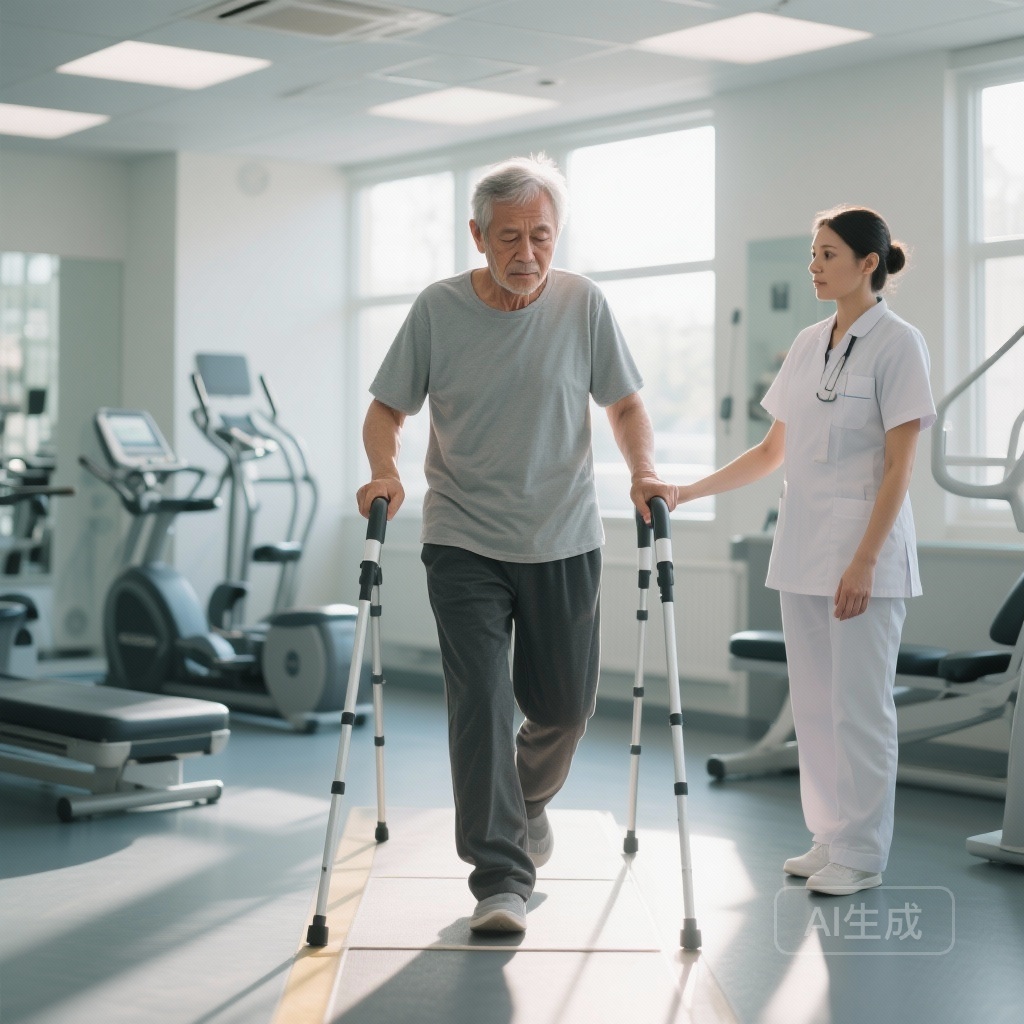
Highlights
1. The HiWalk program, delivering 43 hours of walking training over three weeks, proved highly feasible with a 91% adherence rate and a 98% retention rate among chronic stroke survivors.
2. While the overall cohort showed modest gains, a significant subgroup effect was observed: participants not currently enrolled in other rehabilitation saw a fast walking speed increase of 0.24 m/s (95% CI, 0.06-0.43).
3. Safety was a hallmark of the intervention, with only 0.4 minor adverse events per week, suggesting that high-intensity community-based programs are viable for those 6 months to 8 years post-stroke.
Background and the Challenge of Chronic Stroke Recovery
Restoring and maintaining walking ability is a primary goal for individuals post-stroke, yet the transition from subacute rehabilitation to community living often marks a period of functional stagnation or decline. For many stroke survivors, access to intensive physiotherapy diminishes significantly once they enter the chronic phase, typically defined as six months or more post-stroke. Current healthcare models often prioritize the acute and subacute windows, leaving a gap in long-term functional maintenance.
Clinical evidence suggests that the brain remains plastic well into the chronic phase, but the ‘dose’ of exercise required to trigger functional gains is often higher than what is available in standard community care. The High-Dose Walking Booster Program (HiWalk) trial was designed to address this unmet need, testing whether a concentrated burst of motor training—a ‘booster’—could be feasibly delivered and whether it could translate into meaningful clinical improvements in walking speed and self-efficacy.
Study Design and Methodology
The HiWalk trial was a multisite, assessor-blinded, Phase II randomized feasibility trial conducted across several centers in Australia between June 2023 and July 2024. The study targeted a specific demographic of stroke survivors: those between 6 months and 8 years post-stroke who could walk unaided but exhibited gait deficits (walking speeds between 0.4 m/s and 1.0 m/s).
Intervention vs. Usual Care
Participants were randomized into two groups. The experimental group received the HiWalk intervention plus usual care. HiWalk consisted of group-based motor training specifically focused on walking, totaling 43 hours of training delivered over a concentrated 3-week period. This represents a significantly higher ‘dose’ than typical outpatient therapy. The control group continued with ‘usual care,’ which varied based on the individual’s current access to community services.
Primary and Secondary Endpoints
The primary focus of this Phase II trial was feasibility, measured by recruitment rates, retention, adherence to the 43-hour protocol, and safety (adverse events). Clinical outcomes were secondary and included preferred and fast walking speeds over 5 meters, the 6-minute walk test, and a 30-point self-efficacy scale. Evaluations were performed at baseline, 1 month, and 6 months post-intervention.
Key Findings: Feasibility and Clinical Efficacy
The trial results provide a robust foundation for the feasibility of high-dose interventions in the community. Of the 82 individuals screened, 47 were enrolled, representing a refusal rate of only 27%. This indicates a high level of interest among stroke survivors for intensive training programs.
Feasibility Metrics
The adherence to the program was exceptional; participants attended an average of 91% of the sessions once they commenced the program. Retention at the 1-month mark was 98%, and data completeness was equally high. From a safety perspective, the intervention was well-tolerated. Only minor adverse events (such as muscle soreness or fatigue) occurred at a rate of 0.4 per week, with no serious adverse events reported related to the high-intensity nature of the training.
Clinical Outcomes
At the 1-month follow-up, the HiWalk group showed a statistically significant improvement in self-efficacy, with a mean difference of 3.0 points (95% CI, 0.1-5.9) compared to the control group. This suggests that the intensive, group-based nature of the program bolstered participants’ confidence in their mobility.
Regarding walking speed, the overall mean effect on fast walking speed was a modest increase of 0.05 m/s (95% CI, -0.09 to 0.19). While this did not reach statistical significance for the entire cohort, the exploratory subgroup analysis yielded a critical insight: for participants who were not already undertaking other forms of rehabilitation, the effect on walking speed was 0.24 m/s (95% CI, 0.06-0.43). This exceeds the established Minimal Clinically Important Difference (MCID) of 0.1 m/s for walking speed in stroke survivors.
Expert Commentary and Clinical Interpretation
The HiWalk trial highlights a pivotal nuance in neurorehabilitation: the timing and context of ‘booster’ doses. The fact that the most significant gains were seen in those not currently in rehabilitation suggests a ceiling effect or a ‘saturation’ point for those already receiving therapy. Conversely, for those who had ‘graduated’ from formal care, the high-dose intervention acted as a powerful stimulus to overcome functional plateaus.
Biological Plausibility
The success of the 43-hour dose likely stems from the principles of experience-dependent plasticity. High-repetition, task-specific training is required to reorganize neural circuits. By concentrating this dose into three weeks, the HiWalk program may have induced more potent neuroplastic changes than the same number of hours spread over six months would have achieved.
Limitations and Generalizability
As a Phase II feasibility trial, the sample size (n=47) limits the ability to generalize the walking speed results to the broader stroke population without a larger Phase III trial. Furthermore, the participants were already capable of walking unaided (0.4-1.0 m/s), meaning these results may not apply to more severely impaired individuals who require physical assistance to stand or step.
Conclusion and Future Directions
The HiWalk booster program is a feasible, safe, and potentially highly effective model for delivering intensive mobility training to chronic stroke survivors in community settings. The trial successfully demonstrated that stroke survivors are willing and able to engage in high-dose training long after their initial injury.
The finding that benefits were concentrated in the subpopulation no longer receiving rehabilitation is a vital signal for health policy and clinical practice. It suggests that ‘booster’ programs should be strategically timed to coincide with the cessation of standard rehabilitation. Future Phase III research should specifically target this ‘post-rehab’ cohort to confirm the efficacy of the 0.24 m/s gain and evaluate the long-term sustainability of these improvements.
Funding and Registration
This trial was registered at the Australian New Zealand Clinical Trials Registry (ANZCTR): ACTRN12623000316606. Details regarding funding can be found in the primary publication.
References
Scrivener K, Ball AE, Dean C, Glinsky J, Ada L, Graham P, Campbell J, Felton K, Lannin NA. High-Dose Walking Booster Program Is Feasible for People After Stroke: A Phase II Randomized Trial. Stroke. 2026 Jan;57(1):5-11. doi: 10.1161/STROKEAHA.125.051997. Epub 2025 Sep 18. PMID: 40964710; PMCID: PMC12721604.