Highlights
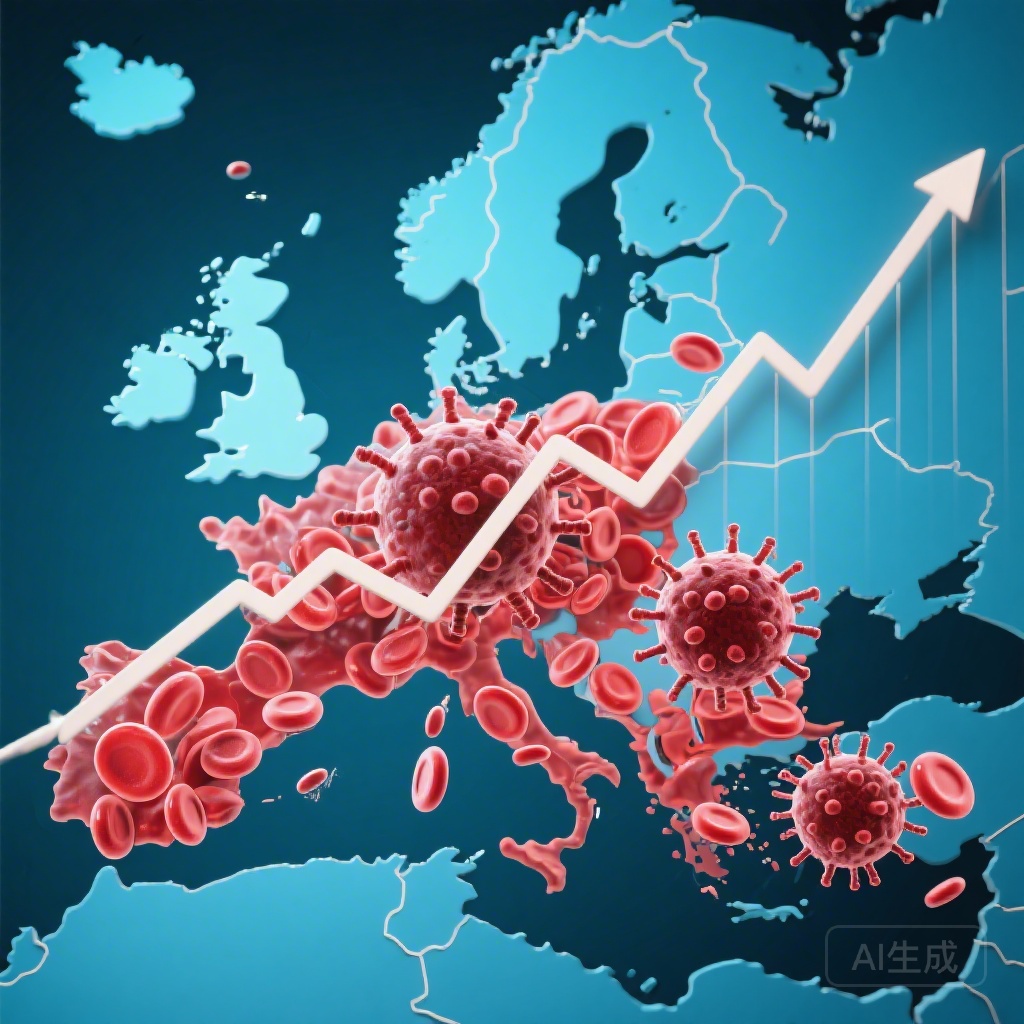
- Recorded mortality rates for haemophagocytic lymphohistiocytosis (HLH) in Europe rose from 3.9 to 6.6 per 10 million person-years between 2011 and 2021.
- Mortality follows a bimodal distribution, peaking in infants (0-4 years) and the elderly (80-85 years).
- A significant sex disparity exists, with males exhibiting a 1.5 times higher mortality rate than females.
- Wide variations in age-standardized mortality between countries suggest significant under-recognition of HLH in lower-reporting regions.
Introduction: The Rising Challenge of Haemophagocytic Lymphohistiocytosis
Haemophagocytic lymphohistiocytosis (HLH) represents one of the most aggressive challenges in modern clinical immunology and hematology. Characterized by a devastating “cytokine storm,” HLH is a syndrome of pathological immune activation involving excessive proliferation of activated lymphocytes and macrophages. This leads to multi-organ failure and, if untreated, high mortality rates. Historically, HLH was viewed primarily as a pediatric genetic disorder (primary HLH), but it is increasingly recognized in adults (secondary HLH) as a complication of infections, malignancies, or autoimmune diseases.
Despite advancements in our understanding of the pathophysiology of hyperinflammation, mortality remains high. Recent evidence has suggested that the incidence of HLH is increasing across Europe, yet until now, a comprehensive, international analysis of mortality trends remained absent. Understanding these trends is critical for identifying gaps in care, improving diagnostic vigilance, and standardizing treatment protocols across diverse healthcare systems.
Study Design and Methodology
In this retrospective, international, population-based descriptive study, researchers utilized mortality data from 29 European countries. The primary source of data was the EUROSTAT database, which provides publicly available death certificate information. The study period spanned from January 1, 2011, to December 31, 2021.
The investigators defined HLH mortality based on the International Classification of Diseases, 10th Revision (ICD-10) codes D76.1 (haemophagocytic lymphohistiocytosis) and D76.2 (haemophagocytic syndrome, infection-associated). To ensure accuracy, crude, age-specific, and sex-specific death registration rates were calculated. Poisson regression models were employed to compare Europe-wide mortality rates over time, and direct standardization was used to enable fair comparisons between countries with different population structures.
A unique aspect of this study was the correlation of mortality data with research activity. The team searched Scopus Analytics to quantify the number of HLH-related publications per country from 2000 to 2024. This allowed the researchers to investigate whether higher recorded mortality rates were linked to increased scientific awareness and diagnostic activity.
Key Findings: A Decade of Increasing Mortality
The study analyzed a total of 3,345 deaths attributed to HLH. The findings reveal a stark upward trend: crude HLH mortality in Europe increased from 3.9 per 10 million person-years in 2011 to 6.6 per 10 million person-years in 2021. This represents a near-doubling of the recorded death rate in just one decade.
Demographic Disparities: Age and Sex
The data demonstrated a distinct bimodal age distribution for HLH mortality. The highest crude mortality rates were observed in infants aged 0-4 years (17.5 per 10 million) and in elderly adults aged 80-85 years (15.6 per 10 million). This reflects the traditional understanding of primary HLH manifesting in early childhood, while secondary HLH—often triggered by malignancy or chronic infection—predominates in older populations.
The study also identified a significant sex disparity. Mortality was consistently higher in males than in females, with an adjusted rate ratio of 1.5 (95% CI 1.4–1.6). While the biological reasons for this male predominance in HLH mortality are not fully elucidated, it aligns with broader trends seen in other hyperinflammatory and infectious conditions.
Geographical Heterogeneity and Research Correlation
The age-sex-standardized mortality rate across Europe was 4.7 per 10 million person-years, but this figure masked massive regional variations. France reported the highest standardized rate at 10.1, whereas Romania reported the lowest at just 0.5. These discrepancies are unlikely to reflect a true difference in disease prevalence alone; rather, they suggest profound differences in diagnostic awareness and coding practices.
Supporting this hypothesis, the researchers found a positive correlation between mortality rates and HLH-related research activity (Pearson’s correlation coefficient 0.4968; p=0.012). Countries with higher academic output regarding HLH tended to record higher mortality rates, suggesting that increased clinician awareness leads to better identification of HLH as the underlying cause of death.
Expert Commentary: Interpreting the Data
The nearly 100% increase in recorded HLH mortality over ten years is a dual-edged finding. On one hand, it likely reflects an improvement in the recognition of a complex syndrome that was previously misdiagnosed as simple sepsis or multi-organ failure. On the other hand, it highlights the growing burden of a disease that remains exceptionally lethal. The fact that countries with lower research output report significantly lower mortality suggests that HLH is being under-recognized and under-reported in many parts of Europe.
Clinicians must maintain a high index of suspicion for HLH in patients presenting with unexplained fever, cytopenias, and high ferritin levels. The bimodal peak reinforces that HLH is not solely a pediatric concern; geriatricians and adult hematologists must be equally vigilant. The male predominance identified in this study also warrants further mechanistic investigation into the roles of sex hormones and X-linked genetic factors in hyperinflammatory responses.
One limitation of this study is its reliance on death certificate data. Mortality statistics are only as good as the clinician’s ability to recognize the syndrome before or at the time of death. In many cases, HLH may be the terminal event for a patient with lymphoma or a severe viral infection, yet it may not be recorded as the primary cause of death, leading to potential underestimation of the true burden.
Conclusion: Moving Toward Improved Survival
This population-based study provides the most comprehensive look at HLH mortality in Europe to date. The rising trends and significant geographical disparities underscore the urgent need for standardized, evidence-based guidelines for the diagnosis and treatment of HLH. Early intervention with immunosuppressive or immunomodulatory therapies—such as corticosteroids, etoposide, or newer biologics like emapalumab—is vital to improving outcomes.
To bridge the gap between high-reporting and low-reporting nations, international collaboration and medical education must be prioritized. By increasing awareness among frontline clinicians in the ICU, emergency departments, and hematology wards, we can move toward a future where HLH is caught early enough to prevent mortality.
Funding and References
This study was funded by the Medical Research Council Rare Disease Platform Node for Histiocytic Disorders.
Reference: Gumber L, Omidvar R, Gonnelli F, et al. Trends in mortality due to haemophagocytic lymphohistiocytosis across 29 European countries from 2011 to 2021: a retrospective, international, population-based study. Lancet Rheumatol. 2026 Feb;8(2):e108-e115. doi: 10.1016/S2665-9913(25)00292-9.