Highlights
- Minimally invasive surgery (MIS) for liver and pancreas resections is associated with significantly lower hospital charges compared to traditional open surgery.
- Robotic surgery adoption in hepatopancreatic procedures increased from 1.7% to 4.2% between 2016 and 2020, yet open surgery remains the dominant modality (87.7%).
- Laparoscopic pancreatic resections yield the highest cost savings, with a reduction in adjusted charges of approximately $52,120 relative to open approaches.
- The presence of postoperative complications and late discharge timing are the most potent predictors of increased hospital charges, adding over $80,000 to the median cost.
Background
Hepatopancreatic (HPB) surgery represents a cornerstone in the management of primary and metastatic malignancies of the liver and pancreas. Traditionally, these procedures have been associated with high morbidity, prolonged hospitalizations, and substantial financial burdens on healthcare systems. While the shift toward minimally invasive surgery (MIS)—including laparoscopic and robotic-assisted techniques—has revolutionized many surgical disciplines, its adoption in the HPB field has been tempered by perceptions of higher intraoperative costs, equipment expenses, and procedural complexity.
As healthcare systems transition toward value-based care, understanding the total economic landscape—including hospital charges beyond the operating room—is critical. Current evidence suggests that the higher front-end costs of MIS platforms may be offset by superior clinical outcomes, reduced systemic stress, and faster recovery times. However, data comparing all three modalities (open, laparoscopic, and robotic) across a nationwide scale have been limited until recently.
Key Content
National Trends in Surgical Modality
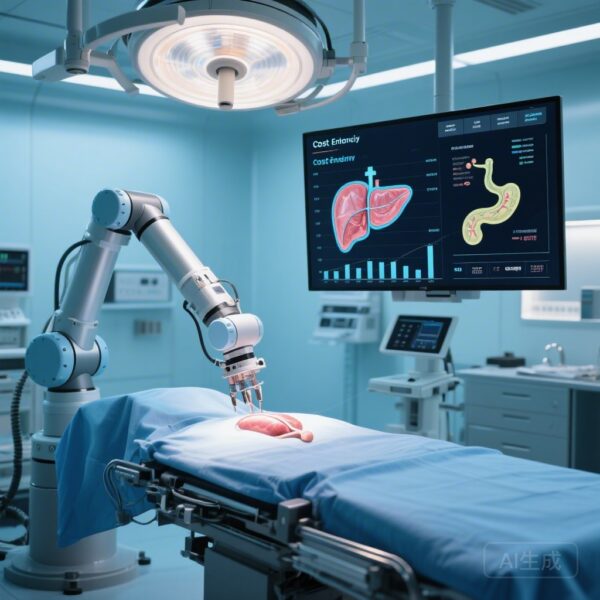
Analysis of the Nationwide Readmissions Database (2016-2020), encompassing 54,174 adult patients, reveals a persistent reliance on the open approach (87.7%) for elective hepatic and pancreatic resections. Despite this, there is a clear upward trajectory in the utilization of robotic-assisted surgery, which grew from 1.7% in 2016 to 4.2% in 2020. Laparoscopic surgery accounts for roughly 9.3% of the surgical volume. This data suggests that while MIS is gaining traction, it remains significantly underutilized given its potential clinical and economic benefits.
Comparative Economic Outcomes: Liver Surgery
In liver-specific models, both laparoscopic and robotic approaches demonstrate a clear economic advantage over open surgery. Multivariable quantile regression indicates that laparoscopic liver surgery is associated with an overall reduction in adjusted charges of -$23,564 (95% CI: -$26,014 to -$21,114). Interestingly, the economic benefit of the laparoscopic approach is most pronounced in patients with early discharge (β -$14,140), suggesting that the clinical efficiency of the technique translates directly into financial savings. Robotic liver surgery also yields lower charges compared to open surgery (β -$8,430), challenging the notion that robotic technology is prohibitively expensive in the inpatient setting.
Comparative Economic Outcomes: Pancreatic Surgery
The financial impact of MIS is even more significant in pancreatic resections. Laparoscopic pancreatic surgery was associated with the most substantial reduction in charges, with a β coefficient of -$52,120. Robotic pancreatic surgery followed with a reduction of -$30,758. These figures underscore the high value of MIS in managing complex pancreatic pathologies, where the open approach often incurs heavy costs due to intensive postoperative care requirements.
Predictors of High Hospital Charges
The primary drivers of increased hospital charges are not the surgical technology itself, but rather the postoperative course. Multivariable analysis identified two dominant predictors of cost inflation:
- Complications: The occurrence of a postoperative complication adds a median of +$83,816 to the total hospital charge.
- Late Discharge: Delayed discharge beyond the expected clinical window increases charges by a median of +$82,039.
Because MIS is associated with lower complication rates and shorter lengths of stay (as seen in supplementary studies of frailty and outcomes), the reduction in total charges is largely mediated by these improved clinical metrics.
Translational and Methodological Advances
The integration of advanced technology extends beyond the surgical platform. Recent studies have highlighted the role of adjunctive tools like Indocyanine Green (ICG) fluorescence angiography, which can reduce direct per-patient costs by ~$1,000 by decreasing anastomotic leak rates in related gastrointestinal surgeries. Furthermore, the development of tabular foundation models for risk prediction offers a new standard for local surgical risk stratification, allowing clinicians to better select patients who will derive the most benefit from MIS based on their specific physiological profile, including frailty indices.
Expert Commentary
The findings from the Nationwide Readmissions Database provide a compelling argument for the wider adoption of MIS in HPB surgery. The discrepancy between the high prevalence of open surgery and the clear economic benefits of laparoscopic and robotic techniques suggests a “valuation gap” in current surgical practice. Critics often point to the high capital cost of robotic systems, but this focus frequently ignores the downstream savings achieved through reduced morbidity.
A significant controversy remains regarding the “learning curve” associated with MIS. While MIS reduces charges on a national aggregate, these savings may not be realized in low-volume centers where operative times and complication rates remain high during the adoption phase. Therefore, the promotion of MIS must be paired with structured training programs and potentially the centralization of complex HPB procedures to high-volume centers of excellence. Additionally, patient-specific factors such as frailty and tumor biology (e.g., recurrence potential in pancreatic adenocarcinoma) must continue to guide the choice between restorative and total resections, as the oncologic outcome remains the primary goal.
Conclusion
Minimally invasive approaches to liver and pancreatic surgery are not only clinically viable but are economically superior to open surgery in a nationwide context. By reducing postoperative complications and accelerating hospital discharge, laparoscopic and robotic techniques significantly lower total hospital charges. Future efforts should focus on overcoming barriers to MIS adoption, refining risk-stratification models using AI and frailty indices, and investigating the long-term cost-effectiveness of these modalities, particularly in the context of cancer recurrence and survivorship.
References
- Alizai Q, et al. Trends and predictors of hospital charges in liver and pancreatic surgery: A comparative analysis of open, laparoscopic, and robotic approaches. Surgery. 2026;193:110121. PMID: 41791351.
- Aarons C, et al. Analyzing costs versus savings using fluorescence angiography with indocyanine green for colorectal surgery in the United States. Surgery. 2025;192:110072. PMID: 41619433.
- Yoo D, et al. Clinical outcomes of completing total pancreatectomy for isolated recurrence of pancreatic ductal adenocarcinoma. Surgery. 2026;192:110088. PMID: 41679124.
- Luo J, et al. Tabular foundation models as a new portable standard in local surgical risk prediction. Surgery. 2025;192:110078. PMID: 41666517.
- Rashed A, et al. The impact of frailty on postoperative outcomes of veterans with stage I non-small cell lung cancer. Surgery. 2026;192:110089. PMID: 41679123.