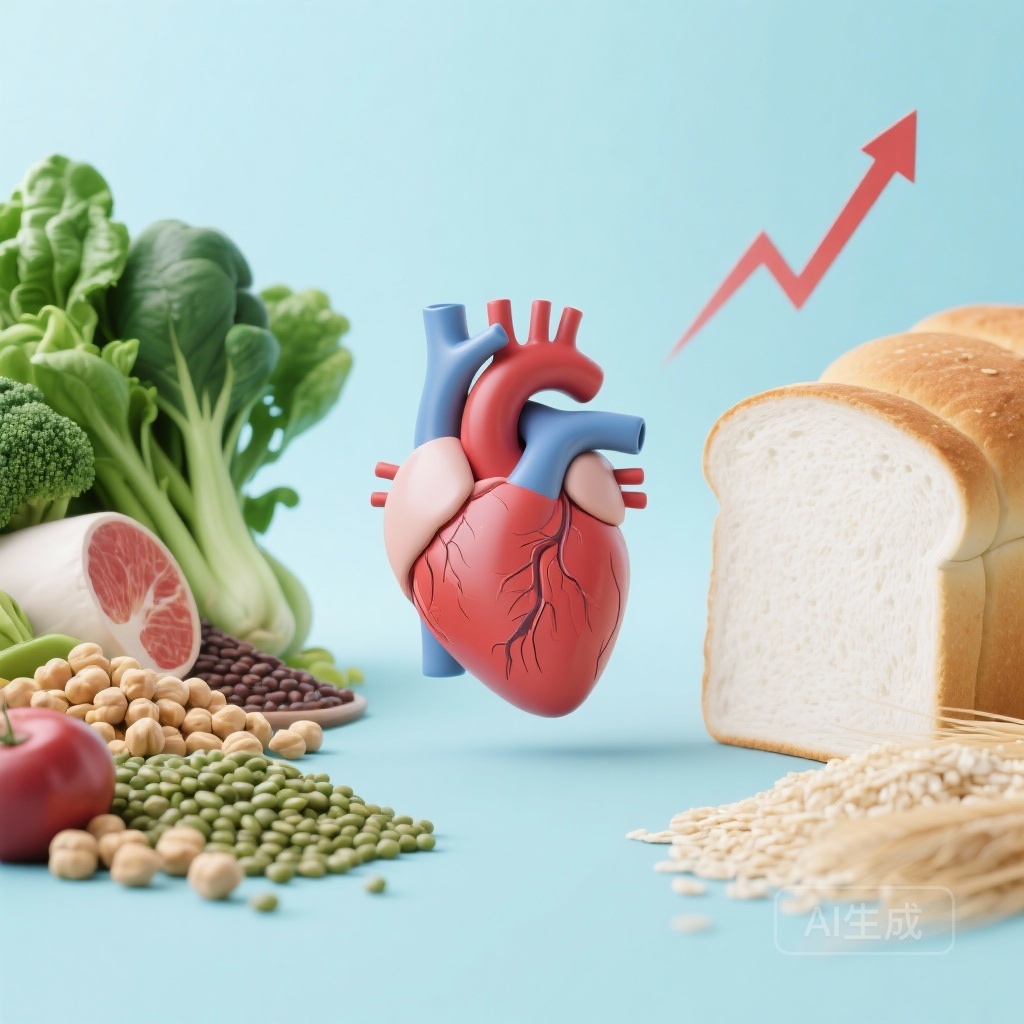
Highlighting the Impact of Dietary Quality on Heart Failure Outcomes
Clinical management of heart failure (HF) has traditionally focused on pharmacological interventions and sodium/fluid restriction. However, evidence regarding the impact of specific food groups on long-term clinical outcomes has remained remarkably sparse. New evidence from the Global Congestive Heart Failure (G-CHF) registry substudy, published in JACC: Heart Failure, provides a robust evaluation of how food quality—specifically the intake of legumes, vegetables, and refined grains—influences the prognosis of patients living with chronic heart failure.
Key Highlights:
- Higher legume intake (≥0.5 serving per day) was associated with a 20% reduction in the risk of the primary composite outcome of death or heart failure hospitalization.
- Moderate vegetable intake (1 to <3 servings per day) significantly lowered the risk of heart failure hospitalization compared to low intake (<1 serving).
- High refined grain consumption (>3 servings per day) was associated with a 76% increased risk of heart failure hospitalization.
- Global dietary patterns reveal that food quality, rather than a single index like the mAHEI, may be more predictive of HF outcomes in diverse populations.
The Unmet Need for Evidence-Based Nutrition in Heart Failure
Heart failure remains a global public health challenge characterized by high rates of readmission and mortality. While the Mediterranean diet and the DASH (Dietary Approaches to Stop Hypertension) diet are well-established for the primary prevention of cardiovascular disease, their efficacy in altering the clinical course of established heart failure is less clear. Most clinical guidelines emphasize limiting sodium and fluid, yet these recommendations often lack the support of large-scale, prospective data.
There is a growing recognition that the overall quality of the diet—specifically the balance between nutrient-dense plant foods and pro-inflammatory refined carbohydrates—may play a more critical role in managing systemic inflammation, oxidative stress, and metabolic health in HF patients. The G-CHF registry substudy sought to address this gap by examining dietary habits across a geographically and socioeconomically diverse population.
Study Design and Methodology
This analysis utilized data from the multinational G-CHF registry, involving 3,798 participants from 25 countries. The cohort represented a broad spectrum of heart failure patients, providing a unique global perspective that is often missing from single-region studies. Dietary data were collected using validated food frequency questionnaires (FFQs).
Researchers examined the associations between 11 common food categories and clinical outcomes. These included:
Plant-based foods:
Fruits, vegetables, legumes, nuts, whole grains, and refined grains.
Animal-based foods:
Fish, poultry, unprocessed red meat, eggs, and dairy.
The primary endpoint was a composite of all-cause mortality or heart failure hospitalization. Secondary endpoints included the individual components of the composite. Additionally, the study assessed the modified Alternative Healthy Eating Index (mAHEI) to determine if a standardized healthy eating score correlated with better outcomes in this specific population.
Key Findings: The Protective Power of Legumes and Vegetables
The study recorded 1,236 primary outcome events during the follow-up period, including 890 deaths and 593 heart failure hospitalizations. The results highlighted a clear divergence in outcomes based on the type of carbohydrates and plant proteins consumed.
The Benefit of Legumes
Legumes emerged as a potent protective factor. Compared to those consuming less than 0.1 serving per day, participants consuming 0.1 to <0.5 serving per day had a hazard ratio (HR) of 0.85 (95% CI: 0.73-0.99). Those with the highest intake (≥0.5 serving per day) saw an even greater benefit, with an HR of 0.80 (95% CI: 0.65-0.98). This suggests a dose-response relationship where even modest increases in legume consumption can improve prognosis.
Vegetable Intake and Hospitalization
Vegetable consumption also showed a significant association with reduced morbidity. Moderate intake (1 to <3 servings per day) was associated with a lower risk of HF hospitalization (HR: 0.77; 95% CI: 0.61-0.97) compared to low intake (<1 serving per day). Interestingly, the association with mortality was neutral, suggesting that vegetables may play a larger role in maintaining clinical stability and preventing acute decompensation.
The Risk of Refined Grains
Conversely, refined grain intake was strongly associated with adverse outcomes. Participants consuming 1-3 servings per day had a 56% higher risk of HF hospitalization (HR: 1.56; 95% CI: 1.19-2.05), while those consuming more than 3 servings per day faced a 76% higher risk (HR: 1.76; 95% CI: 1.30-2.39).
Neutral Findings
Associations with fruits, nuts, whole grains, and animal-based proteins (meat, fish, dairy, eggs) were neutral regarding the primary outcome. Furthermore, the overall mAHEI score did not significantly correlate with outcomes, indicating that for heart failure patients, specific food group choices—rather than a broad, generic healthy eating index—may be more clinically relevant.
Mechanistic Insights and Clinical Commentary
The protective effects of legumes and vegetables are likely multifactorial. Legumes are rich in plant protein, fiber, and micronutrients such as magnesium and potassium, which are crucial for myocardial function and blood pressure regulation. Fiber intake is also known to modulate the gut microbiome; dysbiosis in the gut has been increasingly linked to the systemic inflammation seen in heart failure (the “gut-heart axis”).
The detrimental impact of refined grains is equally plausible. High refined carbohydrate intake leads to rapid spikes in blood glucose and insulin, promoting oxidative stress and systemic inflammation. These factors can exacerbate myocardial stiffness and endothelial dysfunction, leading to the clinical decompensation that necessitates hospitalization.
Experts note that the G-CHF study’s global nature is a major strength, as it accounts for dietary diversity across different cultures. However, the study is observational, and the use of FFQs can be subject to recall bias. Additionally, the neutral results for whole grains were unexpected and may be due to the relatively low consumption of true whole grains in many of the participating regions, potentially limiting the power to detect a benefit.
Conclusion: Shifting the Nutritional Paradigm
The findings from the G-CHF registry substudy suggest a need to move beyond restrictive dietary advice in heart failure and toward a more proactive, quality-focused approach. Clinicians should emphasize the inclusion of legumes and vegetables while counseling patients to significantly reduce refined grain consumption. This “substitution strategy”—replacing white bread and processed cereals with lentils, beans, and fresh produce—may offer a low-cost, high-impact intervention to reduce the burden of hospitalizations in this vulnerable population.
References
Joseph P, Dehghan M, Ezekowitz JA, et al. Diet and Clinical Outcomes in a Heart Failure Population. JACC Heart Fail. 2025 Oct 29:102728. doi: 10.1016/j.jchf.2025.102728.