Introduction
Distant metastases to the head and neck region from primary sites located below the clavicle (infraclavicular) are rare, yet they represent a significant diagnostic challenge for otorhinolaryngologists and oncologists. Identifying these metastases is crucial for the staging and management of primary tumors. This report analyzes a large cohort to characterize the clinical presentation, etiology, and diagnostic significance of these secondary malignancies.
Patient Information
Between the years 2000 and 2023, a total of 1735 patients were recorded in a comprehensive tumor database. Of these, 136 cases (7.8%) presented with head and neck metastases from infraclavicular origins. The cohort consisted of 78 men and 58 women, with a median age of 64 years. The majority of these patients presented with an indolent (painless) swelling in the head and neck region, which prompted clinical investigation.
Diagnosis
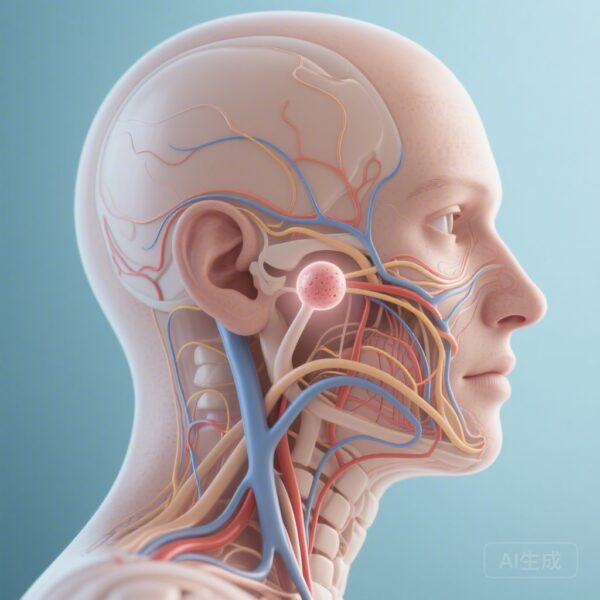
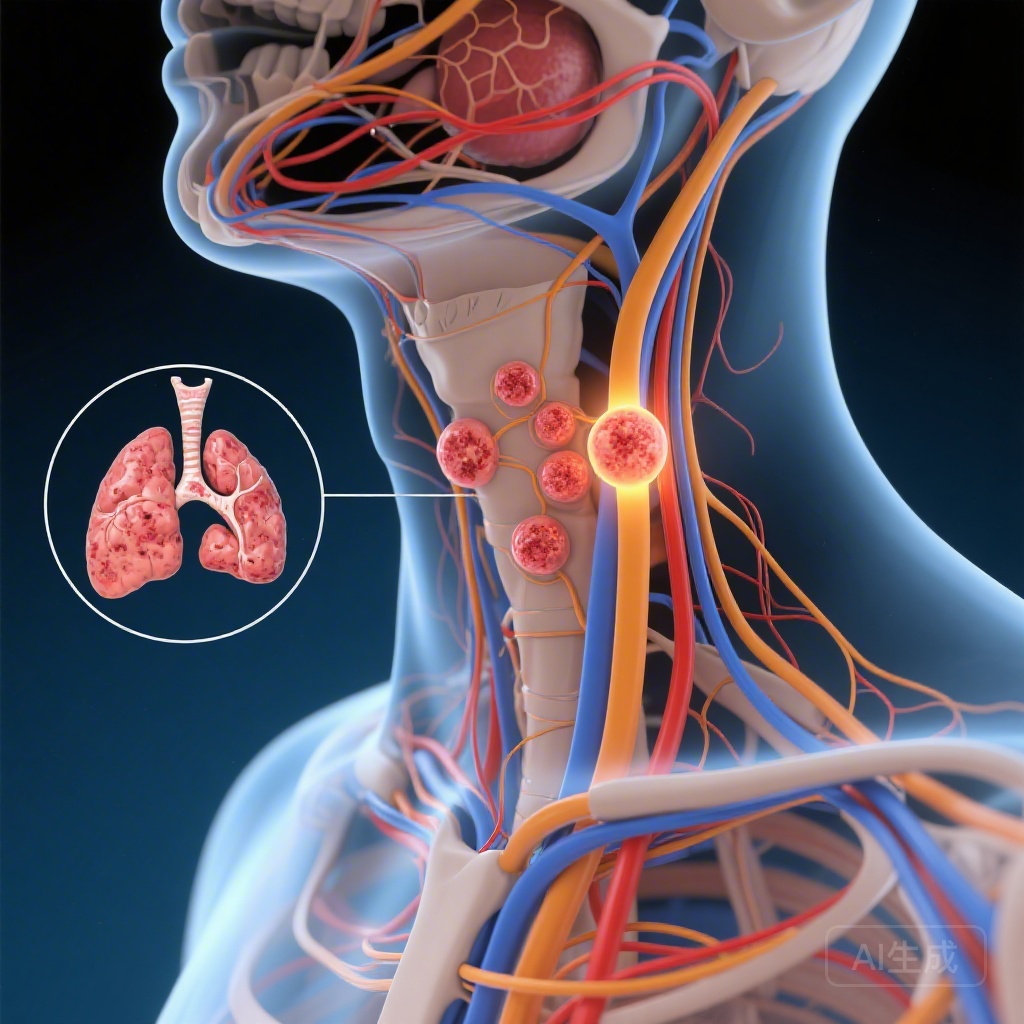
Diagnostic evaluation involved clinical examination, imaging, and histological confirmation. The study found that metastases were overwhelmingly located in the cervical lymph nodes (86.8%). In cases where organ-specific metastases occurred, the parotid gland was the most frequent site, affected in 38.9% of organ involvement. Histological analysis was pivotal; adenocarcinomas were the most frequently diagnosed histological type (40.4%). The most common primary tumor sites identified were the lungs (33.1%), followed by mammary (breast) and renal cell carcinomas. Remarkably, in 91 cases (66.9%), the discovery of the head and neck metastasis was the first clinical manifestation of the primary tumor, which had previously been asymptomatic.
Differential Diagnosis
When evaluating a patient with a neck mass, clinician must differentiate between:
- Primary head and neck squamous cell carcinoma (HNSCC).
- Distant metastasis from infraclavicular sites (e.g., lung, breast, kidney, GI tract).
- Lymphoma.
- Benign lymphadenopathy (infectious or inflammatory).
A key finding in this analysis is that a supraclavicular location of the mass and a histological finding other than squamous cell carcinoma (such as adenocarcinoma) strongly indicate a remote primary tumor rather than a local head and neck primary.
Treatment and Management
Management strategies for these 136 patients were tailored based on the primary tumor type and the extent of metastatic spread. Because distant cervical metastasis often indicates advanced (Stage IV) systemic disease, therapy was frequently palliative or multi-modal, involving chemotherapy, radiotherapy, or targeted therapies directed at the primary infraclavicular source. In some cases, localized surgery (such as parotidectomy or neck dissection) was performed for diagnostic purposes or local disease control. The high rate of metastatic detection via cervical biopsy highlights the ease of accessibility for this diagnostic intervention.
Outcome and Prognosis
The presence of distant cervical metastasis is generally a poor prognostic indicator, signifying advanced tumor progression. In this series, only 7 cases presented with isolated cervical metastasis, while the vast majority showed more extensive systemic involvement. While individual outcomes varied based on the primary tumor (e.g., renal cell vs. lung), the clinical focus remained on systemic management given that the head and neck findings were usually markers of late-stage disease.
Discussion
This analysis underscores the clinical importance of supraclavicular masses. The fact that nearly 67% of cases were the first sign of an unknown infraclavicular cancer suggests that the head and neck surgeon often acts as the first point of contact for systemic malignancy. Clinicians should maintain a high index of suspicion for remote primaries when encountering non-squamous cell histology in the neck. The cervical lymph nodes serve as an ‘early warning system’ due to their easy accessibility for biopsy and early clinical manifestation. The study confirms that adenocarcinoma in the supraclavicular region should immediately trigger an intensive search for primary tumors in the chest or abdomen.
References
- Franzen AM, Buchali A, Quadt C, Coordes A. Head and Neck Metastases From Infraclavicular Primary Tumors: Analysis of 136 Cases. The Laryngoscope. 2026. PMID: 41832667.
- Ferlito, A., et al. (2001). Metastatic cancer to the parotid gland from distant sites. Thorax.
- Kelly, A. B., et al. (2018). Supraclavicular lymphadenopathy: A diagnostic algorithm. American Family Physician.