Highlights
The randomized clinical trial comparing device-assisted versus standard Valsalva Maneuver (VM) for supraventricular tachycardia (SVT) yielded several critical insights for clinical practice:
- The use of a handheld Valsalva assist device resulted in a 63.2% success rate for cardioversion compared to only 29.2% with the standard maneuver.
- The device-assisted approach showed a fourfold increase in the odds of successful sinus rhythm restoration (OR 4.16; 95% CI, 2.36-7.47).
- Standardization of intrathoracic pressure through biofeedback appears to be the primary driver of improved clinical outcomes in terminating SVT.
Background: The Challenge of Vagal Maneuvers in SVT
Supraventricular tachycardia (SVT) is a common cardiac arrhythmia encountered in both emergency departments and primary care settings. While generally not life-threatening in the absence of structural heart disease, it causes significant symptomatic distress, including palpitations, chest pressure, and lightheadedness. Current clinical guidelines from organizations such as the American College of Cardiology (ACC) and the European Society of Cardiology (ESC) recommend the Valsalva maneuver as the first-line non-pharmacological intervention for stable SVT.
The physiology of the Valsalva maneuver involves four distinct phases, with the goal of increasing vagal tone to the atrioventricular (AV) node, thereby interrupting the re-entrant circuit. However, the real-world success rate of the standard VM is notoriously low, often cited between 5% and 20% in various studies. This low efficacy is largely attributed to the difficulty patients face in achieving and maintaining the specific intrathoracic pressure (typically 40 mmHg for 15 seconds) required to trigger a robust vagal response. Without a standardized method to measure or guide this pressure, the maneuver is frequently performed inconsistently, leading to treatment failure and early escalation to intravenous adenosine or electrical cardioversion.
Study Design and Methodology
To address this clinical gap, researchers conducted a single-center, open-label randomized clinical trial at Beijing Anzhen Hospital. The study, conducted between April 2022 and April 2023, enrolled 212 patients aged 16 to 80 years who were undergoing electrophysiological (EP) studies. This controlled environment allowed for precise induction of SVT and immediate 12-lead ECG monitoring to confirm rhythm changes.
Participants and Randomization
Patients were randomized in a 1:1 ratio to either the device-assisted VM group (n = 106) or the standard VM group (n = 106). The mean age of the participants was 48.4 years, and approximately 54.8% were female. Inclusion criteria focused on patients with confirmed SVT during their EP procedure, ensuring that the intervention was tested against a documented re-entrant mechanism.
The Intervention
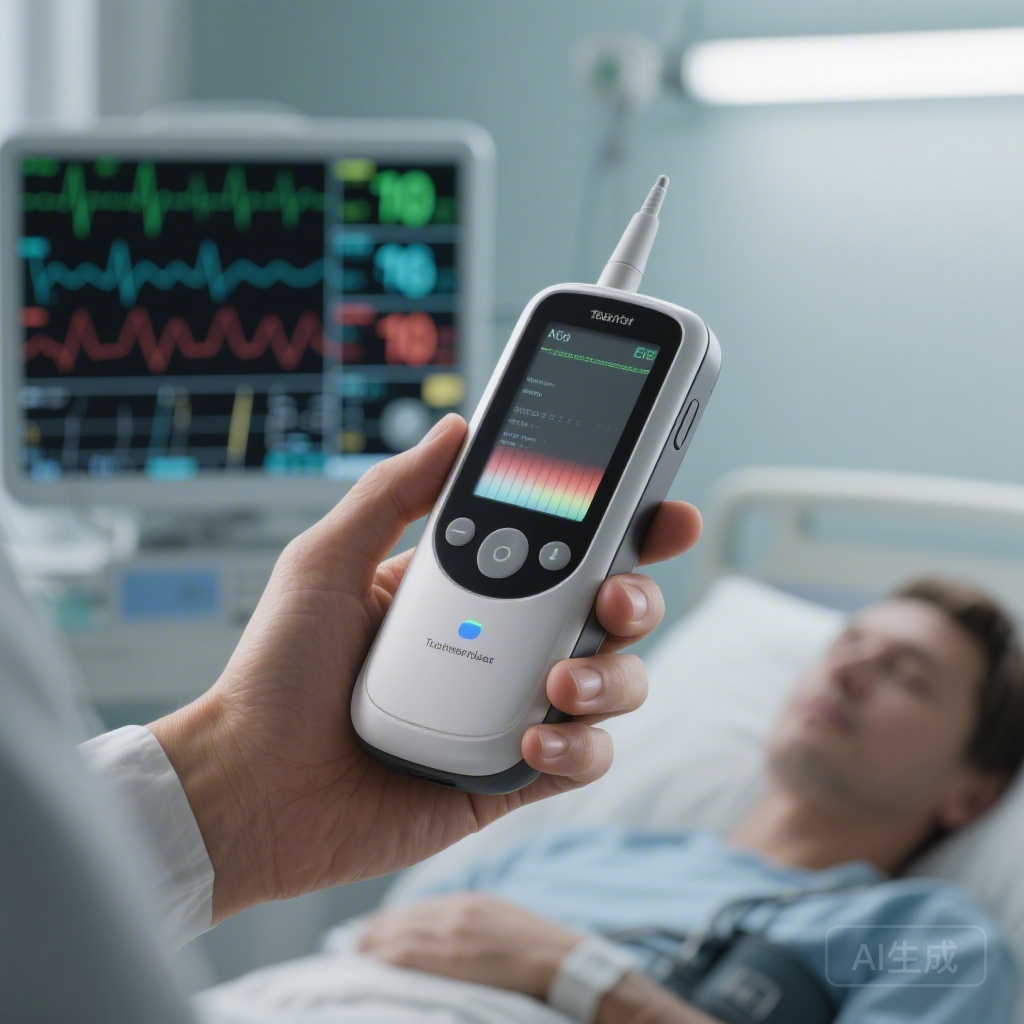
The experimental group utilized a novel, handheld Valsalva assist device. This device provides visual or tactile feedback to the patient, ensuring they reach the target pressure of 40 mmHg and maintain it for the recommended duration. In contrast, the control group performed the standard VM, where patients were instructed to blow into a syringe or perform a forced expiration against a closed glottis without standardized pressure feedback.
Primary Outcome
The primary endpoint was immediate cardioversion success, defined as the restoration of sinus rhythm within one minute of the intervention, as confirmed by a 12-lead ECG. The analysis followed an intention-to-treat (ITT) framework.
Key Findings: A Significant Leap in Efficacy
The results of the trial, published in JAMA Cardiology, demonstrate a stark difference in therapeutic success between the two groups. Data analysis, completed between January 2024 and January 2025, revealed that the device-assisted group outperformed the standard group by a wide margin.
Primary Efficacy Results
After two attempts at the maneuver, 67 out of 106 participants (63.2%) in the device-assisted group successfully converted to sinus rhythm. In the standard VM group, only 31 out of 106 participants (29.2%) achieved cardioversion. The calculated odds ratio (OR) was 4.16 (95% CI, 2.36-7.47), with a highly significant P-value of less than .001. This suggests that the device not only improves outcomes but does so with high statistical reliability.
Physiological Insights
The study highlights that the primary limitation of the standard VM is not the physiological principle itself, but the execution. By providing a tool that assists in achieving and maintaining target intrathoracic pressures, the device ensures that the baroreceptor reflex is sufficiently stimulated. This mechanical consistency translates directly into higher rates of AV-nodal blockade and subsequent termination of the arrhythmia.
Expert Commentary: Moving Toward Precision Vagal Maneuvers
The findings from this trial represent a significant advancement in the bedside management of SVT. While the “Modified Valsalva Maneuver” (incorporating leg elevation) gained popularity following the REVERT trial, the use of a pressure-guided device addresses the root cause of maneuver failure: inconsistent pressure generation.
Clinical Implications
For emergency physicians and cardiologists, these results suggest that the equipment available for VM matters as much as the technique. A standardized assist device removes the guesswork from the procedure. Furthermore, the portability of such a device raises the possibility of patient-led management. If patients with recurrent SVT are provided with these devices, they may be able to terminate episodes safely at home, potentially reducing emergency department visits and the need for pharmacological intervention.
Limitations and Considerations
Despite the impressive results, certain limitations must be acknowledged. This was a single-center study conducted in a tertiary hospital’s EP lab. The success rates in a controlled EP setting, where SVT is induced and the patient is already monitored, may be higher than those seen in the chaotic environment of an emergency department or in a home setting. Additionally, the study was open-label, though the primary endpoint (ECG-confirmed sinus rhythm) is objective and less prone to bias.
Conclusion and Future Directions
The Beijing Anzhen Hospital trial provides robust evidence that a handheld Valsalva assist device significantly enhances the effectiveness of the Valsalva maneuver in terminating SVT. By doubling the success rate compared to standard methods, this device offers a simple, non-invasive, and highly effective solution for a common clinical problem.
Future research should focus on the utility of these devices in the pre-hospital setting and their impact on long-term healthcare utilization. As medical technology continues to move toward precision and patient empowerment, tools like the Valsalva assist device represent a logical step in refining traditional maneuvers for the modern clinical era.
Funding and Clinical Trial Information
This study was supported by institutional grants from Beijing Anzhen Hospital. The trial is registered at ClinicalTrials.gov with the identifier: NCT06622772.
References
- Huang L, Sang C, Gao M, et al. Device-Assisted vs Standard Valsalva Maneuver for Terminating Supraventricular Tachycardia: A Randomized Clinical Trial. JAMA Cardiol. 2026 Feb 11:e255489. doi:10.1001/jamacardio.2025.5489.
- Appelboam A, Reuben A, Mann C, et al. Postural modification to the standard Valsalva manoeuvre for 25. emergency treatment of supraventricular tachycardias (REVERT): a randomised controlled trial. Lancet. 2015;386(10005):1747-1753.
- Page RL, Joglar JA, Caldwell MA, et al. 2015 ACC/AHA/HRS Guideline for the Management of Adult Patients With Supraventricular Tachycardia. J Am Coll Cardiol. 2016;67(13):e27-e115.