Highlights
Graded sensorimotor retraining significantly reduces pain intensity in patients with chronic nonspecific low back pain compared to sham procedures and attention controls. The primary trial demonstrated a statistically significant reduction in pain intensity at 18 weeks, though the effect size was modest. A post hoc secondary analysis suggests that the intervention’s effectiveness is largely independent of baseline factors such as pain catastrophizing, kinesiophobia, or medication use. Impaired back perception emerged as a potential long-term treatment effect modifier, suggesting that those with greater sensory-perceptual deficits may derive specific long-term benefits from this approach.
Introduction: The Challenge of Chronic Nonspecific Low Back Pain
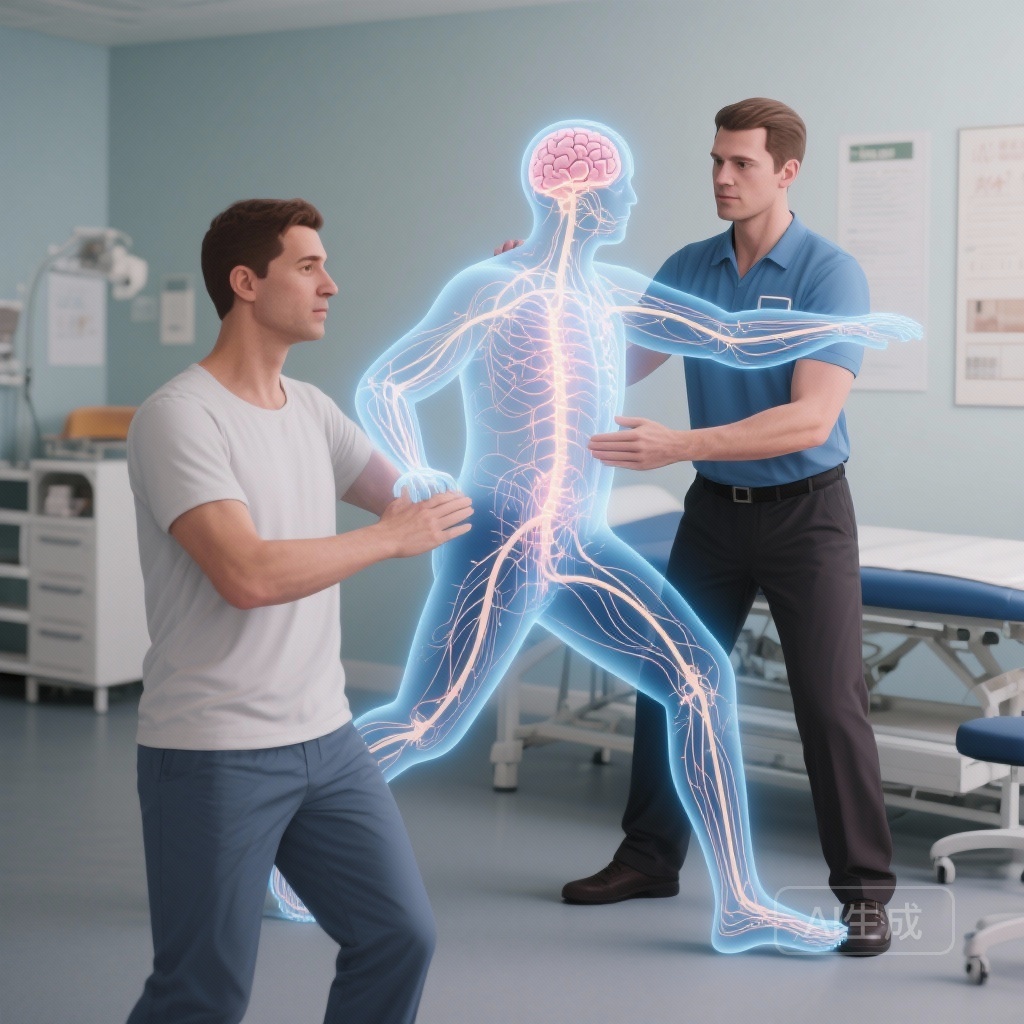
Chronic nonspecific low back pain (LBP) remains one of the most significant challenges in modern clinical medicine. It is the leading cause of years lived with disability globally, often resisting conventional treatments focused solely on structural pathology. Emerging research has shifted the focus from the ‘hardware’ of the spine to the ‘software’ of the central nervous system. In many patients with chronic LBP, the brain’s representation of the back—the somatosensory cortex—undergoes reorganization, leading to altered perception, reduced tactile acuity, and a loss of motor control precision. Graded sensorimotor retraining, such as the RESOLVE program, aims to address these neural plastic changes by ‘re-wiring’ the brain’s relationship with the back.
The RESOLVE Trial: Reimagining Pain Through Sensorimotor Retraining
The RESOLVE randomized clinical trial sought to evaluate whether a dedicated sensorimotor retraining package could outperform a robust sham control in reducing pain and disability. Conducted in Sydney, Australia, the trial recruited 276 adults aged 18 to 70 with chronic nonspecific LBP (lasting 12 weeks or longer). This population represents the typical patient seen in primary care: individuals with significant pain (at least 3/10 on the Numerical Rating Scale) and varying levels of functional impairment.
Study Design and Methodology
Participants were randomized 1:1 into two groups. The treatment group received the RESOLVE intervention, which consisted of 12 weekly clinical sessions focusing on three core pillars: pain science education, premovement training (sensory discrimination), and graded movement and loading. The goal was to help patients understand that pain does not always equal tissue damage and to improve the precision of their back’s sensory and motor maps. The sham control group also participated in 12 weekly sessions but received sham laser therapy, sham shortwave diathermy, and sham noninvasive brain stimulation. This attention-controlled design was particularly rigorous, ensuring that any observed benefits in the treatment group were likely due to the specific sensorimotor components rather than just clinical contact or placebo effects.
Primary Outcomes: A Modest but Meaningful Shift
The primary results of the trial, published in JAMA in 2022, showed that the sensorimotor retraining group experienced a significant improvement in pain intensity. At the 18-week primary endpoint, the mean pain intensity was 3.1 in the intervention group compared to 4.0 in the control group. The estimated between-group mean difference of -1.0 point (95% CI, -1.5 to -0.4; P = .001) favored the sensorimotor intervention. While a 1.0-point difference on an 11-point scale is often considered the threshold for the minimum clinically important difference (MCID), the fact that this benefit was maintained relative to an active sham control suggests that sensorimotor retraining offers a distinct therapeutic advantage over standard attention and placebo.
Secondary Analysis: Identifying the Ideal Candidate
A critical question in pain management is ‘who benefits most?’ To answer this, a secondary analysis led by Venter et al. (2026) investigated whether specific patient characteristics acted as effect modifiers. The researchers looked at eight baseline variables: psychoactive medication use, pain intensity, disability level, beliefs about back pain consequences, kinesiophobia (fear of movement), pain catastrophizing, pain self-efficacy, and back perception.
The Role of Effect Modifiers
The results of the secondary analysis were largely negative regarding traditional psychological modifiers. Factors that often complicate pain treatment—such as high levels of catastrophizing or low self-efficacy—did not significantly change the effectiveness of the sensorimotor retraining. This is a vital finding for clinicians, as it suggests that sensorimotor retraining can be applied broadly across a diverse patient population without the need for complex psychological subgrouping.
Back Perception and Long-Term Outcomes
Interestingly, the analysis identified impaired back perception as a potential modifier of pain intensity at the 52-week follow-up. Using the Fremantle Back Awareness Questionnaire, researchers found that participants who started the trial with more distorted perceptions of their back (e.g., feeling like their back is ‘out of place’ or ‘not belonging to them’) might respond differently to the retraining over the long term. Additionally, hypothesis-generating evidence suggested that kinesiophobia and baseline disability levels might influence the intervention’s impact on pain and function at different time points, although these did not reach the same level of statistical certainty as the primary findings.
Expert Commentary: Clinical Implications
The RESOLVE trial and its subsequent analysis provide a compelling case for incorporating sensorimotor retraining into the multidisciplinary management of chronic LBP. For years, clinicians have struggled with patients who do not respond to traditional physical therapy or exercise. By addressing the cortical representation of the back, RESOLVE offers a novel pathway for these ‘refractory’ cases.
Mechanistic Insights: Cortical Remapping and Sensory Precision
The biological plausibility of sensorimotor retraining rests on the concept of neuroplasticity. In chronic pain states, the ‘map’ of the body in the brain becomes blurred. By engaging in sensory discrimination tasks (such as identifying where a clinician is touching the back without looking) and graded movement, patients improve the ‘resolution’ of this map. This increased precision is thought to reduce the brain’s ‘protective’ pain response, which is often overactive in chronic conditions. The secondary analysis’s finding regarding back perception as a modifier reinforces this mechanism—those with the most ‘blurred’ maps may have the most to gain from a treatment specifically designed to sharpen them.
Strengths and Limitations
The strengths of the RESOLVE trial include its large sample size, high follow-up rate (95% at 18 weeks), and the use of a sophisticated sham control. However, limitations must be noted. The effect size, while statistically significant, was small. Furthermore, the trial was conducted at a single center, which may limit the generalizability of the findings to different healthcare systems or cultures. Future research should focus on whether a more intensive or personalized version of the sensorimotor program could yield larger effect sizes.
Conclusion
Graded sensorimotor retraining represents a significant step forward in the movement toward brain-based therapies for chronic pain. The RESOLVE trial demonstrates that this approach is effective and that its benefits are not confined to a narrow subgroup of patients. While the search for definitive treatment effect modifiers continues, the current evidence supports the use of sensorimotor retraining as a versatile tool in the clinical management of chronic nonspecific low back pain. Clinicians should consider these findings as they work to develop personalized, evidence-based care plans for their patients.
Funding and Clinical Trial Information
The RESOLVE trial was supported by funding from the National Health and Medical Research Council (NHMRC) of Australia. The trial is registered with the Australian New Zealand Clinical Trials Registry (ANZCTR Identifier: ACTRN12615000610538).
References
1. Bagg MK, Wand BM, Cashin AG, et al. Effect of Graded Sensorimotor Retraining on Pain Intensity in Patients With Chronic Low Back Pain: A Randomized Clinical Trial. JAMA. 2022;328(5):430-439. doi:10.1001/jama.2022.9930
2. Venter M, McAuley JH, Hansford HJ, et al. Effect Modifiers of Graded Sensorimotor Retraining for Chronic Low Back Pain: A Secondary Analysis of the RESOLVE Randomized Trial. JAMA Netw Open. 2026;9(1):e2552787. doi:10.1001/jamanetworkopen.2025.52787