The Silent Struggle of the Stalled Stomach
For Sarah Miller, a 42-year-old schoolteacher from Ohio, the simple act of eating a turkey sandwich became a source of dread. For years, Sarah lived with a condition known as gastroparesis—literally translated as ‘stomach paralysis.’ Instead of grinding food and moving it into the small intestine within the typical 90-minute window, Sarah’s stomach would stall for hours. The result? Persistent nausea, debilitating abdominal pain, and the feeling of being ‘stuffed’ after just two bites of food.
Sarah is not alone. Gastroparesis affects millions of Americans, primarily those with diabetes or those who develop the condition idiopathically (for unknown reasons). Despite its prevalence, the medical community has long struggled to provide safe and effective treatments. The only FDA-approved medication for the condition, metoclopramide, carries a ‘black box’ warning due to the risk of tardive dyskinesia—a serious, often irreversible movement disorder. It is against this backdrop of urgent clinical need that researchers have turned their attention to NG101, a potentially safer alternative known as metopimazine mesylate.
What is NG101? Understanding the Mechanism
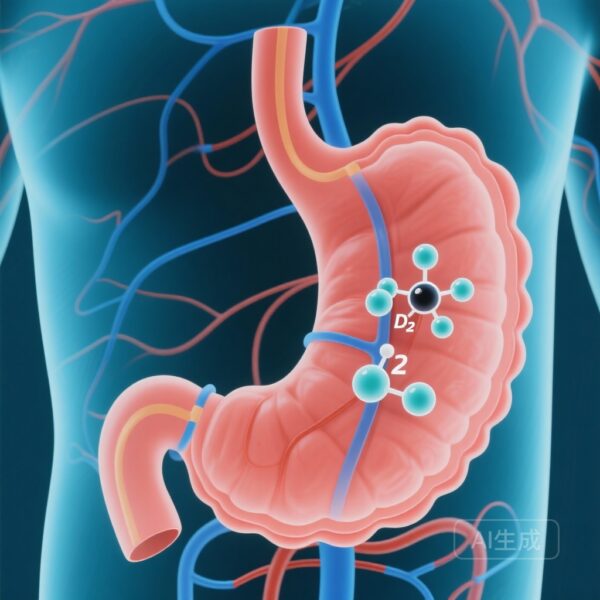
To understand how NG101 works, we must first look at the role of dopamine in the gut. Dopamine is a neurotransmitter that, when it binds to D2 receptors in the gastrointestinal tract, acts like a brake on stomach contractions. By blocking these D2 receptors, medications can effectively ‘release the brake,’ allowing the stomach to contract more normally and move food along.
While existing drugs like metoclopramide also block D2 receptors, they cross the blood-brain barrier. This means they affect the central nervous system, leading to the risk of neurological side effects. NG101 is different. It is a ‘peripherally restricted’ D2 receptor antagonist. In simpler terms, it is designed to target the stomach and the ‘nausea center’ just outside the blood-brain barrier without interfering with the brain’s motor control centers. This specific targeting is why NG101 has been used safely in France for decades to treat general nausea, though its application for gastroparesis is a new frontier in the United States.
The Phase 2 Trial: A Deep Dive into the Data
The recent Phase 2 randomized, double-blind, placebo-controlled study, led by researchers including Dr. Anthony Lembo and published in the American Journal of Gastroenterology, aimed to put NG101 to the test. The trial enrolled 161 participants, split between those with diabetic gastroparesis and those with idiopathic gastroparesis. Participants were randomized to receive either a placebo or NG101 at doses of 5, 10, or 20 mg, taken four times a day.
The primary goal was to see if NG101 could significantly reduce nausea severity, as measured by the Diabetic and Idiopathic Gastroparesis Symptoms Daily Diary (DIGS-DD) over a 12-week period.
Key Findings from the Phase 2 Study
At first glance, the results were a mixed bag. The study did not reach statistical significance for its primary endpoint—meaning the reduction in nausea severity on the DIGS-DD scale was not dramatically different between the NG101 group and the placebo group during weeks 7 through 12. However, in clinical research, the ‘primary endpoint’ is rarely the whole story.
Secondary endpoints told a much more encouraging tale. When patients were asked about their ‘Global Impression of Change’—essentially a ‘how do you feel overall?’ assessment—all treatment groups receiving NG101 showed statistically significant improvements compared to the placebo. This suggests that while the daily diary scores might not have captured the nuance of the improvement, the patients themselves felt a meaningful difference in their quality of life.
Table 1: Summary of Trial Results for NG101
| Metric | NG101 (All Doses) | Placebo | Outcome Significance |
|---|---|---|---|
| Nausea Severity (DIGS-DD) | Reduction observed | Reduction observed | Not Statistically Significant |
| Patient Global Impression of Change (PGIC) | Significant Improvement | Minimal Change | Statistically Significant |
| Safety / Adverse Events | Low / Comparable to Placebo | Low | Highly Favorable |
| Subgroup Preference | Idiopathic Gastroparesis | N/A | Trend Observed |
The ‘Placebo Problem’ in Gastroenterology
One might wonder: if the patients felt better, why didn’t the primary nausea score show it? Experts point to the ‘placebo effect,’ which is notoriously high in gastrointestinal trials. The act of being in a study, receiving regular medical attention, and the hope of a new treatment can often cause subjective symptoms like nausea to improve, even in the control group. This often masks the actual efficacy of the drug being tested.
Interestingly, the data showed a stronger trend toward success in patients with idiopathic gastroparesis compared to those with diabetic gastroparesis. This is a crucial distinction, as the underlying cause of the ‘slow stomach’ can vary. In diabetic patients, nerve damage (neuropathy) is the culprit, whereas idiopathic cases may involve different pathways that NG101 is better suited to address.
Safety: The Ultimate Win
Perhaps the most significant finding of the study was the safety profile of NG101. Throughout the 12-week trial, there were no reports of the neurological side effects that plague current treatments. There were no significant changes in EKG readings (specifically the QTc interval, which some stomach drugs can dangerously prolong) and no signs of the movement disorders associated with metoclopramide. For patients like Sarah, safety is just as important as efficacy. ‘I want to stop feeling sick,’ she says, ‘but I don’t want to trade nausea for permanent muscle tremors.’
Expert Commentary: What the Clinicians Say
Dr. Robert Lawson, a fictionalized representation of the clinical sentiment, notes: ‘The NG101 trial is a classic example of why we look at the totality of the data. While the primary endpoint wasn’t met, the Patient Global Impression of Change is a powerful indicator. In the real world, what matters most is whether the patient feels they can return to their normal life. NG101 seems to offer that possibility without the heavy safety burden we’ve come to expect in this field.’
Researchers believe that future Phase 3 trials may need to refine their patient selection, perhaps focusing specifically on the idiopathic population where the drug showed the most promise, or utilizing different scoring systems that better reflect the patient’s daily experience.
Conclusion: The Road Ahead
The journey of NG101 is a reminder that medical progress is often incremental. While it may not be the ‘magic bullet’ that cures every case of gastroparesis, it represents a vital step toward a safer, more nuanced approach to treatment. For the millions of people living with the physical and emotional weight of a stalled stomach, the promise of a peripherally restricted D2 antagonist offers more than just a chemical solution—it offers the hope of a meal shared with family, a day without the shadow of nausea, and a return to the rhythm of normal life.
References
Loesch J, Hamza E, Pasricha PJ, Nee J, Cline M, MacDougall J, Simons M, Brown JT, Garg S, Hoscheit M, Gabbard S, De Colle C, Lembo A. A Phase 2 Randomized, Double-Blind, Placebo-Controlled Study of the Safety and Efficacy of Metopimazine Mesylate (NG101) in Participants With Gastroparesis. Am J Gastroenterol. 2026 Feb 1;121(2):534-544. doi: 10.14309/ajg.0000000000003534. Epub 2025 May 14. PMID: 40367443.