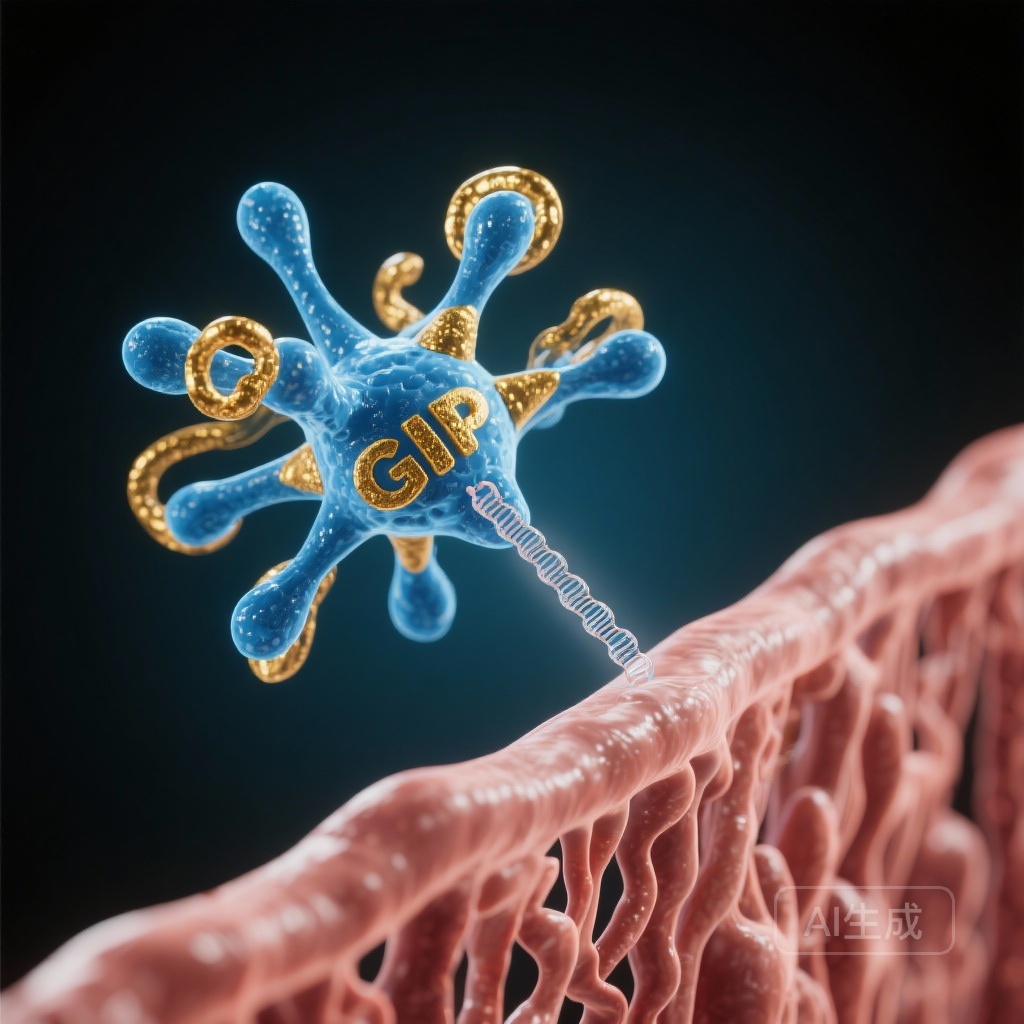
Introduction: The Evolution of Incretin-Based Therapies
The landscape of metabolic medicine has been fundamentally altered by the advent of incretin mimetics. While glucagon-like peptide-1 receptor (GLP-1R) agonists have long been the cornerstone of treatment for type 2 diabetes (T2D) and obesity, the recent success of dual and triple agonists—most notably the GIP/GLP-1 receptor agonist tirzepatide—has sparked intense scientific inquiry into the specific contributions of the glucose-dependent insulinotropic polypeptide (GIP) component. Historically, GIP was viewed with skepticism due to its attenuated insulinotropic effect in patients with T2D. However, emerging evidence suggests that GIP agonism may synergize with GLP-1 to enhance weight loss and glycemic control while potentially mitigating gastrointestinal side effects.
A pivotal new study published in Molecular Metabolism investigates LY3537021, a novel, long-acting GIP receptor (GIPR) agonist. This research provides a critical look at the effects of GIPR agonism in isolation, offering insights into its independent therapeutic potential and its role within the broader context of multi-agonist therapies.
Highlights of the LY3537021 Clinical Evaluation
- LY3537021 demonstrated superior potency compared to native GIP and high selectivity for the GIP receptor in preclinical models.
- Phase 1 clinical data showed dose-dependent weight loss in both healthy participants and those with T2D, with a mean loss of 3.14 kg at the highest dose over 57 days.
- The molecule possesses a long half-life of approximately 12 days, supporting a convenient once-weekly subcutaneous dosing regimen.
- Unlike GLP-1R agonists, LY3537021 did not appear to delay gastric emptying, suggesting a distinct mechanism for its weight loss effects and a potentially better gastrointestinal tolerability profile.
Background: The GIP Paradox and Therapeutic Re-emergence
GIP is an incretin hormone secreted from enteroendocrine K-cells in response to nutrient ingestion. Its primary physiological role involves stimulating insulin secretion in a glucose-dependent manner. In the early stages of incretin research, GLP-1 became the primary focus because its insulinotropic effects remained relatively preserved in T2D, whereas the response to GIP was significantly blunted. This led to the “GIP paradox,” where the hormone seemed less viable as a monotherapy for diabetes.
However, the narrative shifted when preclinical studies suggested that GIP might play a more complex role in energy homeostasis and lipid metabolism, particularly within the central nervous system and adipose tissue. The clinical success of tirzepatide proved that GIP could indeed contribute to profound metabolic improvements when combined with GLP-1. LY3537021 was developed to isolate these effects and determine if a long-acting GIPR agonist could stand alone as a potent metabolic regulator.
Study Design: From Bench to Bedside
Preclinical Characterization
The development of LY3537021 began with rigorous in vitro characterization to ensure high potency and selectivity. Researchers utilized Long-Evans diet-induced obese (DIO) rats and Wistar rats to evaluate the molecule’s chronic effects on body weight and glycemic control. These animal models provided the foundational evidence that GIP agonism could drive weight reduction independently of GLP-1 activity.
Phase 1 Clinical Methodology
The clinical portion of the study was a Phase 1, randomized, placebo-controlled trial conducted in Singapore. It employed both Single Ascending Dose (SAD) and Multiple Ascending Dose (MAD) designs:
- Participants: 85 individuals were enrolled, including healthy volunteers and patients with T2D. The SAD cohort included 47 participants (ages 25–64), and the MAD cohort included 38 participants (ages 25–69). The average baseline BMI across groups ranged from 25.9 to 27.0 kg/m2.
- Intervention: Participants received subcutaneous injections of LY3537021 or placebo. In the MAD phase, doses were escalated to observe safety, pharmacokinetics (PK), and pharmacodynamics (PD).
- Endpoints: Primary objectives were safety and tolerability. Secondary objectives included PK parameters (Cmax, Tmax, half-life) and PD markers such as fasting blood glucose and body weight changes.
Key Findings: Efficacy and Pharmacokinetics
Weight Loss Trajectory
The most striking result from the MAD phase was the dose-dependent reduction in body weight. In participants with T2D treated with the 25 mg dose of LY3537021, a mean weight loss of 3.14 kg was observed by day 57. This was statistically significant compared to the placebo group, which saw a negligible reduction of 0.36 kg (p < 0.05). Notably, these weight loss effects were sustained; even 35 days after the final dose was administered, participants had not returned to their baseline weight, highlighting the prolonged metabolic impact of the agonist.
Glycemic Control
In terms of glucose regulation, LY3537021 induced transient reductions in fasting blood glucose levels. While these improvements were significant during the early stages of treatment in the T2D cohorts, they were not sustained through to day 29 in a manner that significantly differed from placebo. This suggests that while GIP agonism contributes to glycemia, its primary clinical strength in this specific formulation may lie more heavily in weight management and metabolic rate modulation than in sustained fasting glucose lowering as a monotherapy.
Pharmacokinetics and Dosing
The pharmacokinetic profile of LY3537021 is highly favorable for clinical use. The time to maximum concentration (Tmax) ranged from 8 to 96 hours. The estimated half-life was approximately 12 days for both healthy and T2D cohorts at the 25 mg dose. This long half-life is a critical differentiator, as it confirms the feasibility of a once-weekly dosing schedule, mirroring the convenience of modern GLP-1 therapies.
Safety and Gastric Emptying
A key concern with incretin therapies is gastrointestinal distress, often linked to delayed gastric emptying. Interestingly, LY3537021 at doses up to 25 mg showed no significant delay in gastric emptying. This is a major finding, as it suggests that the weight loss observed with GIPR agonists is mediated through mechanisms other than the slowing of digestion (likely central nervous system pathways). Furthermore, the drug was well tolerated, with gastrointestinal adverse events reported as infrequent and generally mild.
Expert Commentary: Mechanistic Insights and Clinical Implications
The data from the LY3537021 trial offer a nuanced perspective on the incretin system. By isolating GIPR agonism, this study confirms that GIP is not merely a “helper” to GLP-1 but a potent metabolic signaling molecule in its own right. The lack of gastric emptying delay is particularly intriguing for clinicians. It suggests that a GIP-based approach might offer a therapeutic window for weight loss in patients who are highly sensitive to the nausea and vomiting frequently associated with GLP-1R agonists.
However, some limitations must be noted. The study population in this Phase 1 trial had a relatively low baseline BMI (averaging around 26-27 kg/m2). While the weight loss was significant, the absolute magnitude might differ in populations with higher degrees of obesity (BMI > 35 kg/m2). Additionally, the transient nature of the fasting glucose reduction suggests that for optimal glycemic control in advanced T2D, GIPR agonists may still perform best in combination with other agents, such as GLP-1 or insulin.
From a physiological standpoint, the weight loss achieved without slowing gastric emptying points toward the GIP receptor’s role in the hypothalamus and other brain regions involved in appetite regulation and energy expenditure. This strengthens the rationale for the “twincretin” and “tri-agonist” strategies currently dominating the pipeline of metabolic pharmacology.
Conclusion: A New Chapter for GIP
The Phase 1 study of LY3537021 successfully demonstrates that long-acting GIPR agonism is safe, well-tolerated, and effective at reducing body weight in humans. By providing a clear pharmacokinetic profile and evidence of metabolic efficacy without significant GI disturbance, this research validates GIP as a primary therapeutic target. While further studies in more diverse and higher-BMI populations are necessary to fully realize its potential, LY3537021 represents a significant step forward in our understanding of how to harness the incretin system to combat the global twin epidemics of T2D and obesity.
Funding and Trial Information
This study was funded by Eli Lilly and Company. Clinical trial registration can be found at ClinicalTrials.gov under the identifier NCT04586907.
References
Roell W, Alsina-Fernandez J, Qu H, Coskun T, Benson C, Haupt A, Kelly RP, O’Farrell L, Sloop KW, Steele JP, Ficorilli J, Regmi A, Rettiganti M, Urva S, Mather KJ, Pratt E. Long-acting GIPR agonist LY3537021 reduces body weight and fasting blood glucose in patients with T2D: Preclinical development and phase 1 randomized ascending dose studies. Mol Metab. 2026 Jan;103:102298. doi: 10.1016/j.molmet.2025.102298. Epub 2025 Dec 12. PMID: 41391569.