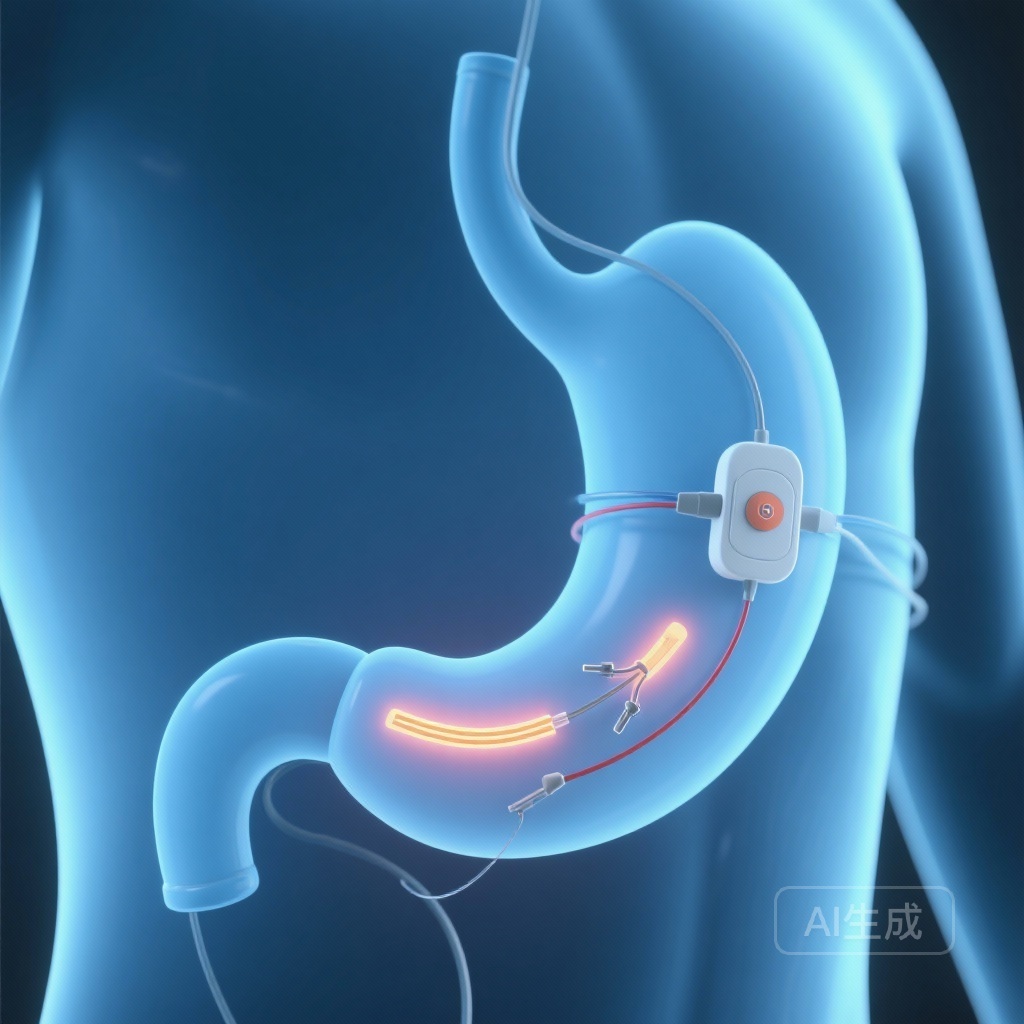
Introduction: Addressing the Refractory Nature of Gastroparesis
Gastroparesis is a debilitating chronic condition characterized by delayed gastric emptying in the absence of mechanical obstruction. For patients who fail standard medical therapies, such as prokinetics and antiemetics, the management of symptoms like intractable nausea, vomiting, and abdominal pain becomes a significant clinical challenge. Surgical interventions have historically focused on two primary pathways: improving gastric drainage through pyloroplasty (PP) or modulating gastric neural activity via gastric electrical stimulation (GES). Until recently, clinicians often debated whether these procedures should be performed sequentially or in isolation.
A landmark randomized clinical trial published in JAMA Network Open by Sarosiek et al. (2025) provides high-level evidence that a combined approach—simultaneous implantation of a GES device and performance of a pyloroplasty—yields outcomes significantly superior to pyloroplasty alone. This study marks a critical shift in the surgical management of medication-refractory gastroparesis, offering a more robust therapeutic strategy for this complex patient population.
Highlights of the Trial
The study highlights several key clinical takeaways for the management of gastroparesis:
- Superior Symptom Reduction: The addition of Gastric Electrical Stimulation (GES) to Pyloroplasty (PP) resulted in a significantly greater reduction in the Gastroparesis Cardinal Symptom Index (GCSI) compared to PP alone.
- Improved Healthcare Utilization: Combined therapy led to a dramatic reduction in hospital length of stay, highlighting its potential for reducing the economic burden of the disease.
- Dissociation of Motility and Symptoms: While both groups showed improved gastric emptying, the GES-ON group experienced significantly better symptom control, suggesting that neuromodulation addresses sensory or neural pathways beyond simple mechanical drainage.
- Excellent Safety Profile: The simultaneous performance of both procedures was found to be safe, with no significant increase in adverse events reported during the follow-up period.
Study Design and Patient Population
This double-blind randomized clinical trial was conducted at a US academic gastrointestinal motility clinic between January 10, 2017, and September 20, 2023. The study included 38 patients suffering from either diabetic or idiopathic gastroparesis who had failed conventional medical management. The cohort had a mean age of 46.7 years and was predominantly female (63.2%). Diabetic gastroparesis accounted for 81.6% of the participants.
All participants underwent simultaneous surgical intervention involving the implantation of a GES device and a pyloroplasty. Following surgery, patients were randomized into two groups:
1. PP + GES-ON Group (n = 19)
In this group, the gastric electrical stimulator was activated immediately following the surgical procedure.
2. PP + GES-OFF Group (n = 19)
In this group, the device remained deactivated for the first three months post-surgery (serving as the control for the effect of pyloroplasty alone). At the 3-month mark, the device was turned on for the subsequent three months of follow-up.
The primary endpoints included the Gastroparesis Cardinal Symptom Index (GCSI), the Total Symptom Score (TSS), gastric emptying breath tests, and hospitalization data. Comparisons were made at baseline, 3 months, and 6 months.
Key Findings: The Power of Combined Therapy
The results at the 3-month primary endpoint demonstrated a clear therapeutic advantage for the combined therapy group. Patients in the PP + GES-ON group showed a median reduction in GCSI of -2.2, compared to only -0.9 in the PP + GES-OFF group (median difference, -1.33; 95% CI, -2.34 to -0.33; P = .01). Similarly, the Total Symptom Score (TSS) showed a median improvement of -15.0 in the ON group versus -3.0 in the OFF group (median difference, -12.00; 95% CI, -17.49 to -6.51; P = .005).
One of the most intriguing findings was related to gastric emptying. Both groups exhibited significantly faster and nearly identical gastric emptying results compared to baseline. This suggests that while pyloroplasty is highly effective at mechanically facilitating the passage of food from the stomach to the duodenum, the mechanical improvement alone is often insufficient to resolve the complex sensory and autonomic symptoms associated with gastroparesis. The addition of GES appears to bridge this gap, likely through its neuromodulatory effects on the central nervous system and the enteric nervous system.
When the devices in the PP + GES-OFF group were finally activated at the 3-month mark, these patients experienced a rapid and significant improvement in symptoms by the 6-month follow-up. By the end of the study, their symptom scores (GCSI and TSS) were comparable to those who had the device on from the beginning. Furthermore, the 6-month data revealed a significant reduction in hospital length of stay, dropping from a baseline median of 4.1 days to 0 days, emphasizing the clinical and economic impact of the intervention.
Clinical Significance and Mechanistic Insights
The success of combined GES and PP highlights the multifaceted nature of gastroparesis. The condition is not merely a failure of the stomach to empty; it involves visceral hypersensitivity, impaired gastric accommodation, and dysregulated signaling between the gut and the brain. Pyloroplasty addresses the pyloric resistance—a common physiological finding in these patients—thereby improving transit. However, GES, which delivers low-energy, high-frequency electrical pulses, is believed to act as a neuromodulator that reduces the perception of nausea and vomiting at the level of the brainstem and the vagal pathways.
For clinicians, these findings suggest that for patients requiring surgical intervention, the “all-in-one” approach may be more effective than a staged approach. Performing both procedures simultaneously reduces the need for multiple surgeries and provides the patient with the best chance of comprehensive symptom relief from the outset.
Expert Commentary and Limitations
While the results are robust, experts note that the sample size of 38 patients is relatively small, though the double-blind, randomized design adds significant weight to the findings. The predominance of diabetic gastroparesis in the cohort also raises questions about whether the same magnitude of benefit would be seen in a larger idiopathic or post-surgical gastroparesis population. Additionally, while the 6-month follow-up is encouraging, long-term data over several years will be necessary to determine the durability of these combined effects and the lifespan of the GES hardware in this setting.
The study also highlights the importance of patient selection. Not every patient with gastroparesis requires surgery, but for those who are medication-refractory, the data now supports a dual-modality surgical strategy. Future research should focus on identifying biomarkers or motility patterns that can predict which patients will benefit most from this specific combination.
Summary: A Shift in the Treatment Algorithm
The randomized clinical trial by Sarosiek et al. provides compelling evidence that combining Gastric Electrical Stimulation with Pyloroplasty is superior to Pyloroplasty alone in managing refractory gastroparesis. By addressing both the mechanical outflow obstruction and the sensory-neural dysfunction of the stomach, this combined approach significantly reduces symptom severity and healthcare utilization. As the medical community continues to refine the treatment of motility disorders, this study serves as a cornerstone for optimizing surgical decision-making and improving the quality of life for patients with this challenging condition.
Funding and Trial Registration
This study was supported by clinical research funds and conducted under the oversight of US academic institutions. Trial registration: ClinicalTrials.gov Identifier: NCT03123809.
References
Sarosiek I, Bashashati M, Davis BR, et al. Combined Gastric Electrical Stimulation and Pyloroplasty in Gastroparesis: A Randomized Clinical Trial. JAMA Netw Open. 2025;8(12):e2546332. doi:10.1001/jamanetworkopen.2025.46332.