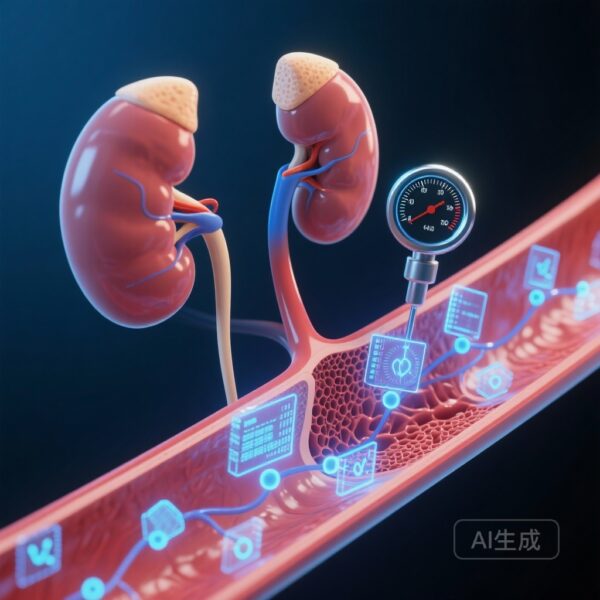
The Silent Intersection: Diabetes and the Kidneys
For millions of people worldwide, living with type 2 diabetes (T2D) is a delicate balancing act of managing blood sugar, diet, and lifestyle. However, one of the most significant threats to long-term health isn’t just the glucose levels themselves, but the silent damage they inflict on the vascular system and the kidneys. Chronic Kidney Disease (CKD) is a common and serious complication of diabetes, often leading to a progressive loss of organ function that can culminate in the need for dialysis or a kidney transplant. In recent years, a new class of drugs known as non-steroidal mineralocorticoid receptor antagonists (MRAs) has emerged as a beacon of hope. Finerenone is the leading agent in this class, having already demonstrated its ability to protect the heart and kidneys in large clinical trials. Yet, until recently, the exact biological mechanism by which it achieves these feats remained a subject of scientific debate. The FIVE-STAR trial, a randomized, placebo-controlled mechanistic study, has finally shed light on this mystery.
Meet Robert: A Journey Through Diabetic Kidney Disease
To understand the importance of these findings, consider the case of Robert Miller, a 68-year-old retired accountant from Indianapolis. Robert has lived with type 2 diabetes for over fifteen years. Despite being diligent with his medications, his last few checkups revealed a concerning trend: his urinary albumin-to-creatinine ratio (UACR) was rising, indicating that protein was ‘leaking’ through his kidneys. For patients like Robert, this protein leakage is more than just a lab value; it is a harbinger of potential heart failure and kidney decline. Robert’s doctor mentioned a new medication, finerenone, which might help. Robert, being a man of numbers, wanted to know exactly how it worked. ‘Is it fixing my stiff arteries?’ he asked. ‘Or is it doing something directly in the filters of my kidneys?’ The FIVE-STAR trial was designed to answer exactly those types of questions.
The Mechanism Mystery: What is Finerenone?
Before diving into the trial results, it is essential to understand what finerenone does. In the body, a hormone called aldosterone binds to mineralocorticoid receptors (MR). While this process is vital for salt and water balance, overactivation of these receptors—common in patients with diabetes and CKD—leads to inflammation, scarring (fibrosis), and damage to both the heart and the kidneys. Traditional MRAs, like spironolactone, have been used for decades but often come with side effects like high potassium levels or hormonal imbalances. Finerenone is different. Because it is non-steroidal, it is much more selective and distributes more evenly between the heart and kidneys. While previous trials like FIDELIO-DKD and FIGARO-DKD proved that finerenone reduces the risk of kidney failure and cardiovascular events, scientists still needed to know if its primary benefit came from making the body’s large arteries more flexible or from local changes within the kidney’s internal pressure systems.
Inside the FIVE-STAR Trial: Data and Methodology
The FIVE-STAR trial (Effects of finerenone on arterial stiffness and cardiorenal biomarkers in patients with type 2 diabetes and chronic kidney disease) was an investigator-initiated, multicenter study conducted at 13 sites in Japan. The researchers enrolled 102 patients with T2D and CKD, with an average age of 73. These patients were randomly assigned to receive either finerenone or a placebo for 24 weeks. The researchers used two primary metrics to evaluate the drug’s impact:
1. **CAVI (Cardio-Ankle Vascular Index):** A measure of arterial stiffness that is independent of blood pressure.
2. **UACR (Urinary Albumin-to-Creatinine Ratio):** A measure of how much protein is leaking through the kidneys’ filtration units (glomeruli).
The researchers also utilized advanced proteomics, testing 181 different circulating proteins associated with inflammation and cardiovascular health, to see if the drug changed the ‘chemical signature’ of the blood.
The Results: Arteries vs. Albuminuria
The results of the FIVE-STAR trial provided a clear and perhaps surprising answer to the mechanism of finerenone. Despite its known cardiovascular benefits, finerenone did not significantly change arterial stiffness (CAVI) compared to the placebo. However, its effect on the kidneys was profound and immediate.
| Metric | Finerenone Group | Placebo Group | Significance (P-value) |
|---|---|---|---|
| Change in CAVI (Arterial Stiffness) | -0.023 | 0.011 | 0.760 (Not Significant) |
| UACR Reduction (at 24 weeks) | 29% Reduction | Minimal Change | 0.046 (Significant) |
| eGFR (Kidney Filtration Rate) | Early, sustained decline | Stable | Hemodynamic Effect |
As shown in the table, the 29% reduction in albuminuria (UACR) suggests that finerenone’s primary ‘magic’ happens within the kidney itself. The study also noted an early drop in the estimated glomerular filtration rate (eGFR). While a drop in filtration might sound scary, it is actually a positive sign in this context. It indicates that the drug is lowering the ‘intraglomerular pressure’—essentially turning down the high-pressure hose that damages the delicate filters of the kidney.
The Pressure Principle: Understanding Intraglomerular Changes
To visualize this, imagine the kidney’s filtration unit, the glomerulus, as a delicate coffee filter. In diabetic patients, the ‘water pressure’ entering that filter is too high. Over time, this high pressure tears the filter, allowing large proteins (albumin) to leak through into the urine. This process eventually causes the filter to scar and fail. Finerenone appears to work by relaxing the vessels and modulating the pressure inside these filters. By reducing the ‘stress’ on the filtration membrane, it prevents further damage. Importantly, the FIVE-STAR trial found that this drop in eGFR was not accompanied by any increase in biomarkers of ‘acute tubular injury.’ In other words, the kidney wasn’t being injured; it was being ‘rested.’
Expert Insights and Commentary
Dr. Robert Miller’s physician might explain it this way: ‘We used to think we had to fix the whole plumbing system—the large arteries—to save the kidneys. But the FIVE-STAR trial tells us that finerenone is like a precision pressure valve right at the entry point of the kidney’s filters. It protects the organ by managing that internal stress, even if it doesn’t significantly change the stiffness of the larger blood vessels.’ Clinicians are particularly excited about the exploratory proteomic analysis. Out of 181 proteins tested, 11 showed nominal changes in expression. This suggests that while finerenone’s main act is hemodynamic (pressure-related), it may also be quietly dampening specific inflammatory pathways that contribute to long-term scarring.
Conclusion: A Focused Path Forward
The FIVE-STAR trial is a pivotal piece of the puzzle in cardiorenal medicine. It confirms that the primary clinical benefits of finerenone in patients with T2D and CKD are driven by a reduction in albuminuria and the management of intraglomerular pressure, rather than a systemic remodeling of arterial stiffness. For patients like Robert, this provides clarity and confidence. It means that medications like finerenone are doing the heavy lifting where it matters most: inside the microscopic filters that keep us healthy. As we continue to refine our approach to diabetic care, the focus is shifting toward these precision mechanisms that offer organ protection and a better quality of life.
References
1. Tanaka A, Vaduganathan M, et al. Effects of finerenone on arterial stiffness and cardiorenal biomarkers in patients with type 2 diabetes and chronic kidney disease: a randomised placebo-controlled mechanistic trial (FIVE-STAR). Cardiovasc Diabetol. 2025;24(1):454.
2. Agarwal R, Filippatos G, et al. Cardiovascular and Kidney Outcomes with Finerenone in Patients with Type 2 Diabetes and Chronic Kidney Disease: The FIDELIO-DKD Trial. N Engl J Med. 2020;383:2213-2224.
3. Pitt B, Filippatos G, et al. Finerenone and Cardiovascular Outcomes in Patients with Chronic Kidney Disease and Type 2 Diabetes: The FIGARO-DKD Trial. N Engl J Med. 2021;385:2252-2263.