Highlights
- Recombinant factor VIIa (rFVIIa) administered within 2 hours of symptom onset significantly reduced the expansion of both intracerebral haemorrhage (ICH) and intraventricular haemorrhage (IVH).
- Despite the reduction in hematoma growth, there was no significant improvement in 180-day functional outcomes as measured by the modified Rankin Scale (mRS).
- The trial was stopped early for futility following a planned interim analysis.
- Treatment with rFVIIa was associated with a higher risk of life-threatening thromboembolic complications compared to placebo (5% vs 1%).
Background: The Challenge of Intracerebral Haemorrhage
Spontaneous intracerebral haemorrhage (ICH) remains one of the most devastating forms of stroke, characterized by high rates of mortality and long-term disability. Unlike ischaemic stroke, where reperfusion therapies have revolutionized care, the therapeutic landscape for ICH has been marked by decades of neutral or negative clinical trials. A critical driver of poor outcomes in ICH is hematoma expansion, which occurs in approximately one-third of patients within the first few hours of symptom onset. This expansion is independently associated with neurological deterioration and increased mortality.
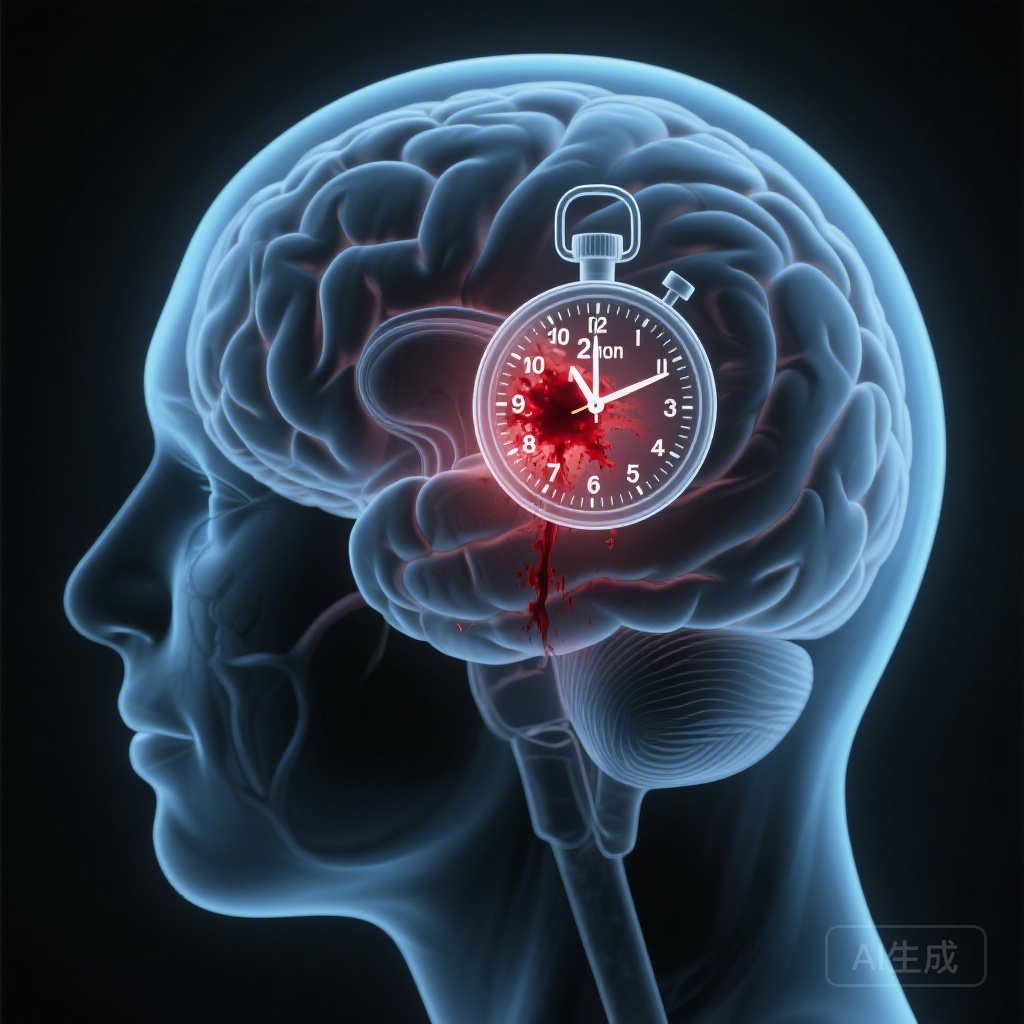
Recombinant factor VIIa (rFVIIa) emerged as a promising hemostatic agent due to its ability to initiate the extrinsic coagulation pathway at the site of tissue injury. Earlier studies, most notably the Phase 2 FAST trial, showed that rFVIIa could reduce hematoma growth. However, the subsequent Phase 3 FAST trial failed to translate this physiological effect into improved clinical outcomes, leading researchers to hypothesize that the treatment window might have been too wide or the patient population too heterogeneous. The FASTEST trial (Recombinant Factor VIIa for Spontaneous Intracerebral Haemorrhage Within 2 Hours of Onset) was designed to test whether ultra-early administration—within 120 minutes of onset—could finally bridge the gap between hemostatic efficacy and clinical recovery.
Study Design and Methodology
The FASTEST trial was a multicentre, prospective, double-blind, randomised, placebo-controlled, adaptive, phase 3 trial conducted at 93 sites across the USA, Japan, Canada, Spain, Germany, and the UK. The trial targeted a specific subgroup of patients thought most likely to benefit from rapid hemostasis.
Inclusion and Exclusion Criteria
Eligible participants were adults aged 18–80 years with a spontaneous ICH volume of 2–60 mL. To ensure the trial focused on salvageable tissue, patients with massive intraventricular haemorrhage (IVH) or a Glasgow Coma Scale (GCS) score below 8 were excluded. Crucially, all participants had to be treated within 2 hours of stroke onset or the time they were last known to be well. Patients with recent ischaemic stroke, myocardial infarction, or those on anticoagulant medication were excluded to minimize confounding safety risks.
Intervention and Primary Endpoints
Participants were randomly assigned in a 1:1 ratio to receive either 80 μg/kg of rFVIIa or an identical placebo, administered as an intravenous bolus over 2 minutes. The primary outcome was functional status at 180 days, evaluated using the modified Rankin Scale (mRS) with a focus on scores 0–2 (favourable), 3, and 4–6 (poor). The primary safety outcome was the occurrence of life-threatening thromboembolic events within the first 4 days post-administration. Secondary endpoints included the change in ICH and IVH volume between baseline and 24 hours.
Key Findings: Hemostatic Success vs. Clinical Futility
Between December 2021 and October 2025, 3288 patients were screened, and 626 were ultimately randomised (298 to placebo, 328 to rFVIIa). The cohort had a mean age of 61 years and was predominantly male (65%). The mean time from symptom onset to drug administration was exceptionally fast, averaging 100 minutes, successfully achieving the ultra-early window intended by the investigators.
Primary Outcome: Functional Recovery
The trial met prespecified stopping criteria for futility at the second interim analysis. There was no significant difference in the primary clinical outcome of mRS at 180 days between the groups. The adjusted common odds ratio was 1.09 (95% CI 0.79–1.51; p=0.61), indicating that the ultra-early administration of rFVIIa did not improve the odds of a better functional outcome compared to placebo.
Secondary Outcome: Hematoma Growth
In terms of physiological impact, rFVIIa performed as expected. Compared with the placebo group, patients receiving rFVIIa experienced significantly less hematoma growth. The mean difference in ICH volume growth at 24 hours was -3.7 mL (95% CI -5.4 to -1.9). When considering total volume (ICH plus IVH), the reduction was even more pronounced at -5.2 mL (95% CI -7.6 to -2.8). This confirms that rFVIIa is a potent hemostatic agent capable of limiting bleeding in the acute phase of ICH.
Safety Analysis: Thromboembolic Risks
Safety remains a paramount concern with the use of potent procoagulants. The FASTEST trial reported a statistically significant increase in life-threatening thromboembolic complications within the first 4 days of treatment. These events occurred in 15 participants (<5%) in the rFVIIa group compared to only 4 (1%) in the placebo group (relative risk 3.41 [95% CI 1.14–10.15]; p=0.020). While the absolute numbers were relatively low, the three-fold increase in risk highlights a critical trade-off when using rFVIIa in an unselected ICH population.
Expert Commentary: Interpreting the Hemostatic Paradox
The results of the FASTEST trial present what many neurologists call the hemostatic paradox: why does a drug that successfully stops a brain bleed fail to help the patient recover? Several factors may contribute to this outcome.
Firstly, the volume of blood saved (approximately 3.7 to 5.2 mL) may not be sufficient to alter the clinical trajectory for many patients. In the complex environment of the brain, the location of the bleed often matters as much as the volume. A small reduction in expansion might not prevent damage to critical white matter tracts or deep grey matter structures.
Secondly, the increase in thromboembolic events likely offset the benefits of reduced hematoma expansion. Even subclinical arterial or venous thromboses can complicate the recovery of a patient already suffering from acute brain injury.
Thirdly, the timing of the intervention, while ultra-early, may still be too late for some. By 100 minutes, much of the primary mechanical damage from the initial bleed has already occurred. Future research might need to focus on precision medicine—identifying patients with the highest risk of massive expansion using advanced imaging markers like the CT angiography spot sign, rather than treating all patients within a specific time window.
Conclusion
The FASTEST trial provides definitive evidence that ultra-early administration of recombinant factor VIIa within 2 hours of ICH onset does not improve functional outcomes at 180 days, despite a clear reduction in hematoma growth. The increased risk of life-threatening thromboembolic events further complicates its clinical utility. For clinicians, these results reinforce the current guidelines which do not recommend the routine use of rFVIIa for spontaneous ICH in non-coagulopathic patients. The search for an effective hemostatic therapy continues, with ongoing research focusing on more selective patient recruitment and potentially different pharmacological targets.
Funding and ClinicalTrials.gov
This study was funded by the National Institute of Neurological Diseases and Stroke (NINDS), the Japan Agency for Medical Research and Development, and Novo Nordisk. ClinicalTrials.gov Identifier: NCT03496883.
References
Broderick JP, Naidech AM, Elm JJ, et al. Recombinant factor VIIa versus placebo for spontaneous intracerebral haemorrhage within 2 h of symptom onset (FASTEST): a multicentre, double-blind, randomised, placebo-controlled, phase 3 trial. Lancet. 2026 Feb 4. doi: 10.1016/S0140-6736(26)00097-8.