Introduction: The Unmet Need in High-Risk NMIBC
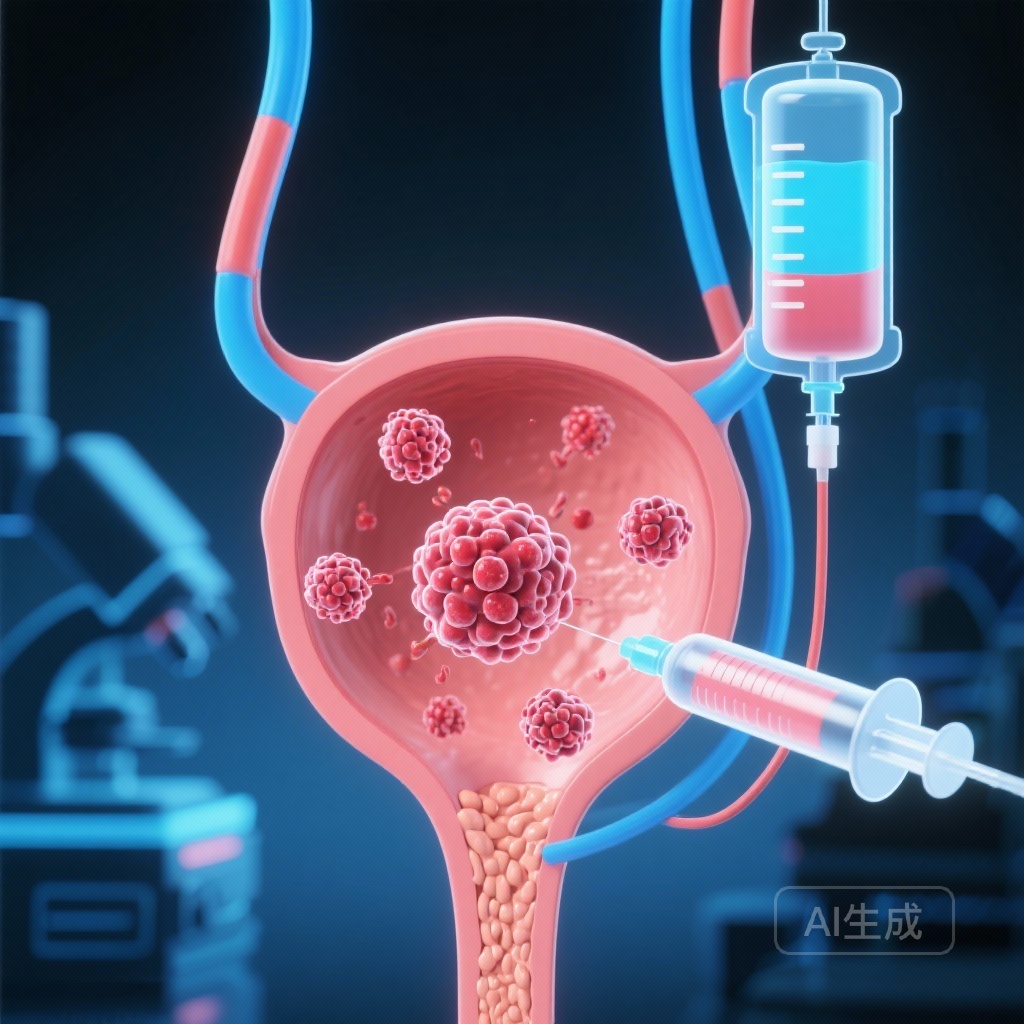
For decades, intravesical Bacillus Calmette-Guérin (BCG) therapy has remained the undisputed gold standard for patients with high-risk non-muscle-invasive bladder cancer (NMIBC) following transurethral resection of bladder tumor (TURBT). While highly effective in the short term, the clinical reality remains sobering: approximately 40% of patients experience disease recurrence or progression within the first two years of treatment. For these patients, the prognosis is often unfavorable, and the limited availability of bladder-sparing therapeutic options frequently necessitates radical cystectomy, a procedure associated with significant morbidity and quality-of-life impact.
In the era of precision medicine, the success of immune checkpoint inhibitors (ICIs) in metastatic urothelial carcinoma has naturally led to their investigation in the NMIBC setting. The biological rationale is compelling: BCG induces a local inflammatory response that upregulates PD-L1 expression, potentially creating a synergistic environment for PD-(L)1 blockade. This article synthesizes evidence from three landmark Phase 3 trials—POTOMAC, CREST, and ALBAN—to evaluate whether the addition of ICIs to BCG can finally break the therapeutic plateau in high-risk NMIBC.
Trial Design and Patient Populations
All three trials focused on BCG-naïve, high-risk NMIBC patients, yet they differed in the specific PD-(L)1 inhibitor used and the administration protocol.
The POTOMAC Trial (NCT03528694)
This randomized, open-label trial enrolled 1,018 patients across three arms: durvalumab plus BCG induction and maintenance (I+M), durvalumab plus BCG induction only, and BCG I+M alone. Durvalumab was administered intravenously every four weeks for 13 cycles. The primary endpoint was investigator-assessed disease-free survival (DFS).
The CREST Trial (NCT04165317)
CREST evaluated sasanlimab, a novel anti-PD-1 antibody administered subcutaneously. The trial randomized 1,055 patients into three arms: sasanlimab plus BCG I+M, sasanlimab plus BCG induction only, and BCG I+M alone. The primary endpoint was event-free survival (EFS).
The ALBAN Trial (GETUG-AFU 37)
This international trial randomized 517 patients to receive either intravenous atezolizumab (an anti-PD-L1 antibody) for one year in combination with BCG or BCG alone. Like the other trials, the primary endpoint was investigator-assessed EFS.
Synthesized Efficacy: A Tale of Two Outcomes
The synthesis of evidence from these trials, representing 2,590 patients, presents a nuanced picture of efficacy. The meta-analysis indicates that combination therapy involving BCG maintenance is associated with significantly better EFS compared to BCG alone (pooled HR 0.77, 95% CI 0.60-0.99).
Positive Signals: POTOMAC and CREST
Both the POTOMAC and CREST trials met their primary endpoints. In POTOMAC, the durvalumab plus BCG I+M group showed a 32% reduction in the risk of recurrence or death (HR 0.68; p=0.015) compared to the BCG-only group. Similarly, the CREST trial demonstrated a statistically significant prolongation of EFS for sasanlimab plus BCG I+M (HR 0.68; p=0.0095), with 36-month EFS rates of 82.1% versus 74.8% for the control group. Importantly, these benefits were observed across various subgroups, including those with carcinoma in situ (CIS) and T1 disease.
The ALBAN Disconnect
In stark contrast, the ALBAN trial failed to meet its primary endpoint. There was no significant difference in EFS between the atezolizumab plus BCG arm and the BCG-only arm (HR 0.98; p=0.9106). This negative result was consistent across all prespecified subgroups. The failure of ALBAN suggests that the benefits of combining ICIs with BCG may not be a class effect but rather specific to the agent, the dose, or the timing of administration.
Safety and Quality of Life Considerations
While the efficacy results are promising in two of the three trials, they come at a significant cost in terms of toxicity. The meta-analysis highlights a substantial increase in treatment-related adverse events (TRAEs) with combination therapy.
Grade 3 and 4 Toxicity
Grade ≥3 TRAEs were significantly more frequent in the combination arms. For patients receiving ICI plus BCG induction and maintenance, the risk ratio (RR) for high-grade toxicity was 3.97 (95% CI 2.54-6.21). In the POTOMAC trial, 21% of patients in the durvalumab plus BCG I+M arm experienced Grade 3 or 4 TRAEs, compared to only 4% in the BCG-only comparison group. While no treatment-related deaths were reported, the increased burden of severe toxicity cannot be ignored in a patient population that is often elderly and comorbid.
Patient-Reported Outcomes
Beyond clinical toxicity, the meta-analysis noted a moderate decline in patient-reported quality of life (QoL) in the ICI plus BCG maintenance arms. This decline reflects the systemic burden of immunotherapy added to the local side effects of intravesical BCG. For many patients with NMIBC, maintaining QoL is a primary goal of therapy, making these findings a critical component of the risk-benefit discussion.
Expert Commentary: Interpreting the Divergence
The discrepancy between the positive results of durvalumab and sasanlimab and the negative results of atezolizumab is the subject of intense debate among uro-oncologists. Several factors may explain this divergence:
1. Agent-Specific Efficacy: The biological activity of anti-PD-1 (sasanlimab) or specific anti-PD-L1 (durvalumab) antibodies may differ from atezolizumab in the NMIBC microenvironment.
2. Delivery and Duration: The route of administration (subcutaneous vs. intravenous) and the specific maintenance schedule may influence the local immune response within the bladder.
3. Biomarker Selection: Currently, there is no validated biomarker to predict which NMIBC patients will benefit from ICI addition. The ALBAN trial investigators emphasized that future research must focus on biomarker-driven patient selection to identify those truly likely to respond.
Clinically, these results suggest that while ICI plus BCG maintenance is a potential new treatment paradigm, it should not yet be considered a universal standard. The moderate-certainty evidence for EFS improvement must be weighed against the definitive increase in high-grade toxicity and the lack of overall survival (OS) benefit (pooled HR 0.92, 95% CI 0.67-1.26).
Conclusion and Future Directions
The integration of checkpoint inhibitors into the management of BCG-naïve high-risk NMIBC represents a significant milestone in urologic oncology. The POTOMAC and CREST trials provide strong evidence that durvalumab and sasanlimab can significantly delay disease recurrence when added to a standard BCG maintenance regimen. However, the negative findings from ALBAN serve as a cautionary reminder that therapeutic success in this space is complex and likely agent-specific.
At present, BCG monotherapy remains the benchmark for high-risk NMIBC. The addition of ICIs offers a meaningful EFS benefit but requires careful patient selection and a thorough discussion of the increased risk of systemic toxicity. As survival data mature and biomarker research evolves, clinicians will be better equipped to identify the specific patient subsets that will benefit most from this intensified approach.
Funding and Registration
– POTOMAC: Funded by AstraZeneca; ClinicalTrials.gov NCT03528694.
– CREST: Funded by Pfizer; ClinicalTrials.gov NCT04165317.
– ALBAN: Funded by Roche/Genentech; ClinicalTrials.gov NCT02844933.
References
1. Scilipoti P, et al. Efficacy and Safety of Checkpoint Inhibitors Combined with Bacillus Calmette-Guérin (BCG) in BCG-naïve High-risk Non-muscle-invasive Bladder Cancer: Synthesis of Evidence from the ALBAN, CREST, and POTOMAC Trials. Eur Urol. 2025.
2. De Santis M, et al. Durvalumab in combination with BCG for BCG-naive, high-risk, non-muscle-invasive bladder cancer (POTOMAC): final analysis of a randomised, open-label, phase 3 trial. Lancet. 2025.
3. Shore ND, et al. Sasanlimab plus BCG in BCG-naive, high-risk non-muscle invasive bladder cancer: the randomized phase 3 CREST trial. Nat Med. 2025.
4. Roupret M, et al. ALBAN (GETUG-AFU 37): a phase III, randomized, open-label international trial of intravenous atezolizumab and intravesical Bacillus Calmette-Guérin (BCG) versus BCG alone in BCG-naive high-risk, non-muscle-invasive bladder cancer (NMIBC). Ann Oncol. 2026.