Highlights
• In the multicentre randomized ENDURO trial (n=98), EUS‑guided gastroenterostomy (EUS‑GE) led to earlier resumption of solid oral intake than surgical gastroenterostomy (median 1 vs 3 days; HR 2.21, 95% CI 1.43–3.42; p=0.0003).
• EUS‑GE was non‑inferior to surgery for persistent or recurrent obstructive symptoms requiring re‑intervention (10% vs 12%; risk difference 1.6%; upper 90% CI 8.9%, within 20% margin).
• Overall adverse event rates and mortality were comparable; single‑center/operator experience was required for trial participation, which affects generalizability.
Background: clinical problem and unmet need
Malignant gastric outlet obstruction (GOO) is a frequent and debilitating complication of advanced upper gastrointestinal and pancreaticobiliary malignancies. Patients develop persistent nausea, vomiting, weight loss and inability to tolerate oral intake, which impairs quality of life and complicates systemic cancer therapies. Palliative interventions aim to relieve obstruction and restore oral intake with minimal morbidity and durable symptom control.
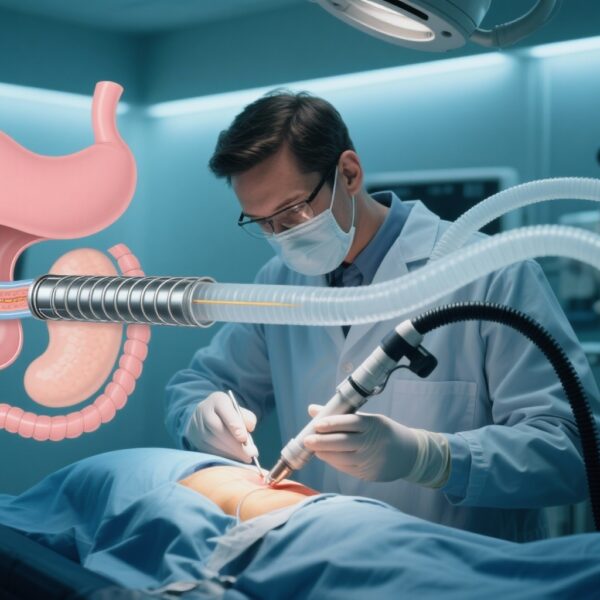
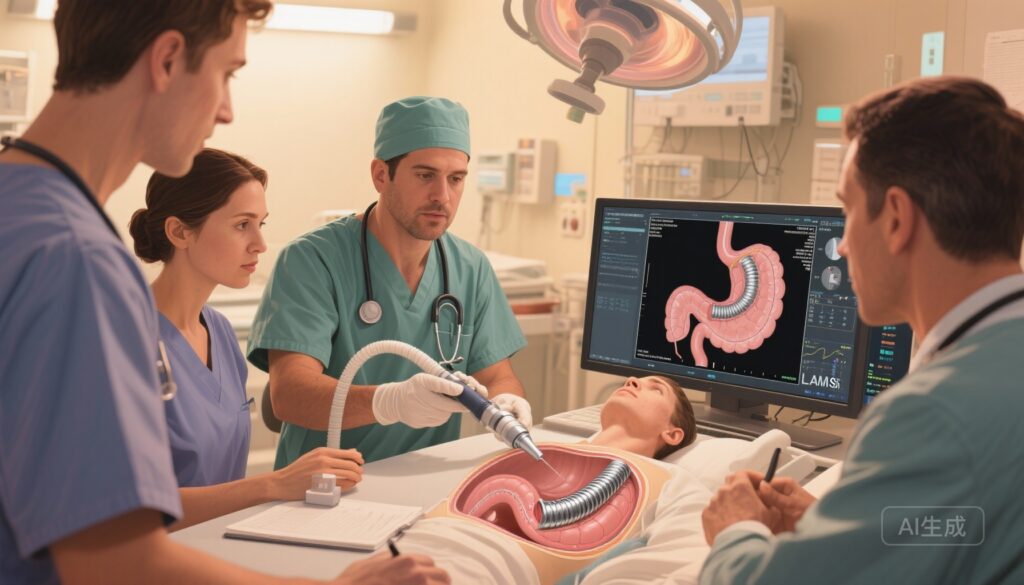
Historically, surgical gastrojejunostomy (open or laparoscopic) has been the standard to bypass obstruction. More recently, endoscopic ultrasound‑guided gastroenterostomy (EUS‑GE) using lumen‑apposing metal stents (LAMS) has emerged as a less invasive alternative that creates an anastomosis between stomach and small bowel under EUS guidance. Observational series suggested faster recovery and comparable symptom control with EUS‑GE, but randomized evidence has been scarce.
Study design and methods (ENDURO trial)
ENDURO was a multicentre, randomized controlled trial across 12 Dutch academic and teaching hospitals. Eligible adults had symptomatic malignant GOO managed in a palliative setting. Centres performing EUS‑GE were required to have prior experience (≥20 LAMS placements overall, ≥10 EUS‑GE cases) and institutional approval for competency, a design choice to ensure procedural quality.
Participants were randomized 1:1 to EUS‑GE or surgical gastrojejunostomy. Randomization was stratified by WHO performance status (0–1 vs 2–3) and used permuted blocks. The trial analyzed all randomized patients (intention‑to‑treat).
Co‑primary outcomes were: (1) time to resumption of solid oral intake defined as Gastric Outlet Obstruction Scoring System (GOOSS) score ≥2, and (2) non‑inferiority of EUS‑GE versus surgery for persistent or recurrent obstructive symptoms requiring re‑intervention, with a predefined non‑inferiority margin of 20% (risk difference).
Key results
Between February 2022 and February 2024, 98 patients were randomized (48 to EUS‑GE and 50 to surgery). Baseline demographics were balanced; 44% female and 56% male participants.
Primary outcomes
Time to solid oral intake: Patients receiving EUS‑GE resumed solid food earlier than those undergoing surgery. Median time to GOOSS ≥2 was 1 day (IQR 1–3) for EUS‑GE versus 3 days (IQR 1–6) for surgery. The hazard ratio for earlier intake was 2.21 (95% CI 1.43–3.42), p=0.0003, indicating a robust and clinically meaningful advantage for the endoscopic approach.
Persistent or recurrent obstructive symptoms requiring re‑intervention: Rates were low and similar between arms—5/48 (10%) after EUS‑GE versus 6/50 (12%) after surgery. The observed risk difference was 1.6% (upper limit of the 90% CI 8.9%), which met the prespecified non‑inferiority margin of 20%, supporting that EUS‑GE provides comparable short‑term durability to surgical bypass within the trial’s follow‑up.
Safety and secondary outcomes
Overall adverse events were reported in 28 (58%) of EUS‑GE patients and 32 (64%) of surgical patients (relative risk 0.91, 95% CI 0.66–1.25), indicating similar overall complication burdens. Fatal events occurred in one patient in the EUS‑GE arm and three patients in the surgical arm. The trial did not report major differences in serious adverse events that would favor one approach unequivocally.
Interpretation and clinical implications
ENDURO provides the first large randomized head‑to‑head comparison showing that EUS‑GE enables faster return to oral intake than surgical gastrojejunostomy while achieving non‑inferior rates of recurrent obstruction requiring re‑intervention. For patients in a palliative setting—where rapid symptom relief and short recovery are particularly important—these results support EUS‑GE as the preferred first‑line palliative option when performed by experienced endoscopists.
Faster resumption of oral intake can translate into earlier nutritional rehabilitation, improved quality of life, reduced hospital length of stay, and potentially quicker access to systemic cancer treatments—outcomes highly relevant for this population.
Strengths of the trial
ENDORU’s randomized design minimizes selection bias and provides high‑quality comparative data. Requiring participating centres to meet minimum EUS‑GE experience levels strengthens internal validity by reducing operator‑dependent variability. Co‑primary endpoints were clinically meaningful: time to oral intake and requirement for re‑intervention capture immediate recovery and short‑term durability.
Limitations and considerations
Operator and centre experience: The trial’s requirement for prior procedural experience improves safety but limits generalizability. Centers with lower EUS‑GE volume or less LAMS experience may not replicate these outcomes initially; training pathways and proctorship remain essential for safe dissemination.
Follow‑up duration and long‑term durability: Although re‑intervention rates were low in the trial period, longer follow‑up is necessary to fully assess late complications such as stent occlusion, migration, buried stents, or need for delayed surgical conversion. Many patients with malignant GOO have limited life expectancy; nonetheless, understanding longer‑term device performance informs decisions in patients with longer prognoses.
Patient selection and anatomy: EUS‑GE requires favorable anatomy (a reachable jejunal loop adjacent to the stomach) and may be technically limited by intervening vasculature, ascites, or extensive peritoneal carcinomatosis. Surgical bypass may remain preferable in selected patients (e.g., multi‑loculated ascites, extensive peritoneal disease, or concurrent indications for abdominal surgery).
Cost and resource implications: LAMS devices are expensive relative to some surgical procedures and hospital billing structures vary across health systems. A full cost‑effectiveness analysis incorporating shorter length of stay and faster return to function would be informative.
Practical recommendations
For clinicians managing malignant GOO in palliative settings, ENDURO supports offering EUS‑GE as the primary palliative intervention when:
- Experienced endoscopists and appropriate equipment (LAMS, EUS) are available.
- Patient anatomy is suitable and no contraindications (large volume ascites, unsafe intervening vasculature) are present.
- Patient priorities emphasize rapid recovery and minimal inpatient time.
Surgical gastrojejunostomy remains an important option when EUS‑GE is not feasible or when concurrent surgical indications exist.
Research and policy gaps
Key areas for further work include: registries and pragmatic studies to evaluate real‑world outcomes across variable operator experience; head‑to‑head cost‑effectiveness analyses; longer‑term follow‑up to capture late device‑related events; and trials incorporating patient‑reported outcomes and hospitalization metrics (length of stay, time to systemic therapy).
Conclusion
The ENDURO randomized trial demonstrates that EUS‑guided gastroenterostomy with LAMS enables faster resumption of solid oral intake and is non‑inferior to surgical gastrojejunostomy for short‑term need for re‑intervention in patients with malignant gastric outlet obstruction. When performed by experienced teams, EUS‑GE should be considered the preferred palliative approach for appropriate patients. Wider adoption should be accompanied by structured training, outcome monitoring, and economic evaluation to ensure safe and sustainable implementation.
Funding and trial registration
Funding: KWF Dutch Cancer Society. Trial registration: International Clinical Trials Registry Platform NL9592.
Reference
van de Pavert YL et al. Endoscopic versus surgical gastroenterostomy for palliation of malignant gastric outlet obstruction (ENDURO): a randomised controlled trial. Lancet Gastroenterol Hepatol. 2025 Oct 5:S2468-1253(25)00209-2. doi: 10.1016/S2468-1253(25)00209-2. Epub ahead of print. PMID: 41061719.