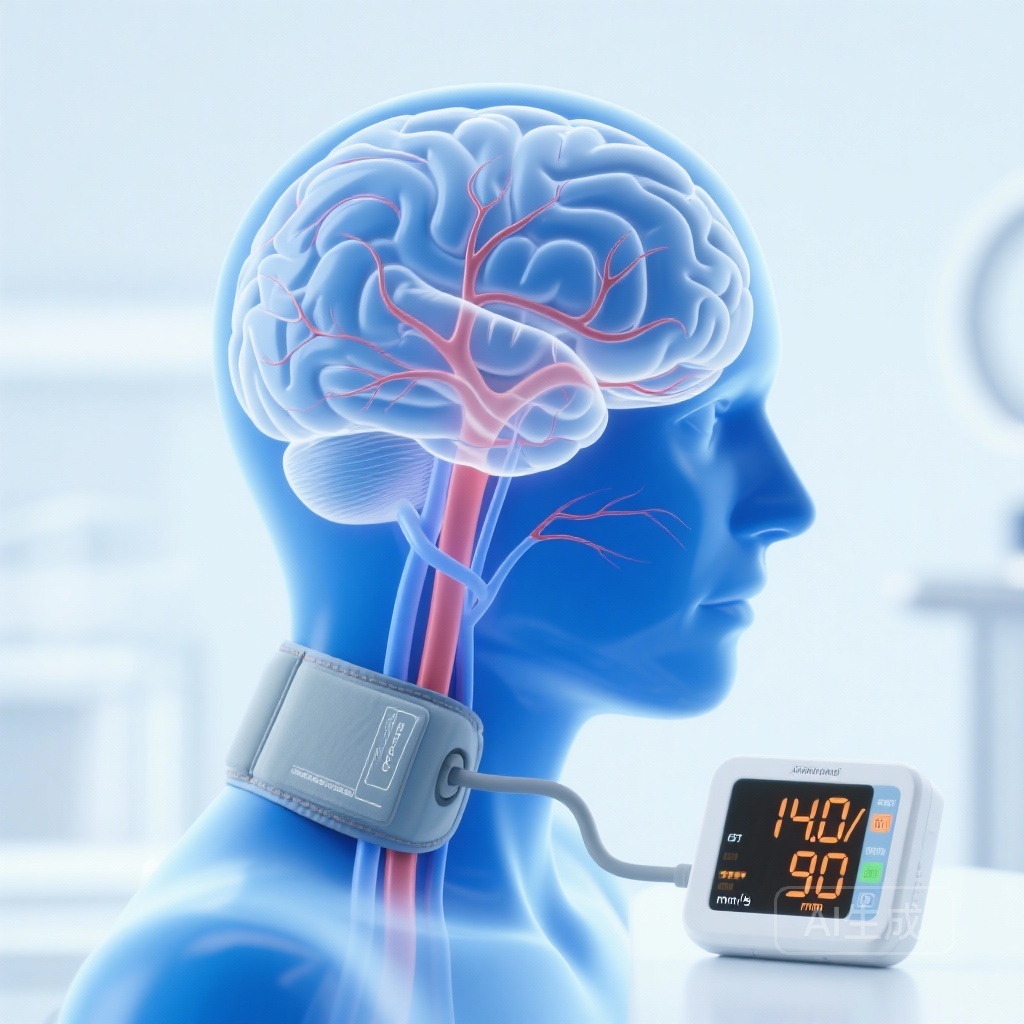
The Clinical Dilemma of Blood Pressure in Acute Stroke
Managing blood pressure (BP) during the acute phase of an ischemic stroke remains one of the most debated topics in vascular neurology. When a patient arrives at the hospital with an acute ischemic stroke (AIS), they often present with elevated blood pressure. This hypertension is frequently a physiological response to the ischemic event—an attempt by the body to maintain cerebral perfusion to the penumbra, the salvageable brain tissue surrounding the infarct core. Consequently, clinicians have long feared that aggressive lowering of blood pressure, or even the continuation of home antihypertensive medications, might inadvertently worsen the ischemia by reducing collateral flow.
Conversely, persistent high blood pressure is associated with an increased risk of hemorrhagic transformation, cerebral edema, and secondary cardiovascular events. For patients who were already taking antihypertensive medications prior to their stroke, the question is immediate: Should these medications be continued without interruption, or should they be held until the patient stabilizes? New data from a prespecified subgroup analysis of the CATIS and CATIS-2 trials, recently published in Hypertension, provides much-needed clarity on this common clinical scenario.
Highlights of the CATIS Subgroup Analysis
The analysis of these two major Chinese trials offers several critical takeaways for clinicians managing stroke patients:
1. Neutral Impact of Continuity: Among patients already on antihypertensive regimens, continuing treatment immediately versus delaying it did not change the odds of death or major disability at discharge or 90 days.
2. Consistency Across Populations: The lack of significant difference held true for both patients with and without prior antihypertensive use, suggesting that the ‘pre-stroke’ medication status should not necessarily dictate the timing of reinitiation.
3. Clinical Safety: Immediate continuation did not increase the risk of adverse clinical outcomes, suggesting it is a safe practice if the patient is otherwise stable.
4. Flexibility in Practice: The findings provide physicians with the flexibility to tailor BP management based on individual patient factors rather than a rigid ‘one-size-fits-all’ protocol for resuming home meds.
The Physiological Balance: Autoregulation and the Penumbra
To understand why these results are significant, one must consider the disruption of cerebral autoregulation. In healthy individuals, the brain maintains constant blood flow despite fluctuations in systemic blood pressure. However, in the setting of acute ischemia, this autoregulatory mechanism is often impaired. The brain becomes dependent on mean arterial pressure (MAP) to push blood through collateral vessels to save the penumbra.
Historically, the ENOS (Efficacy of Nitric Oxide in Stroke) trial suggested that continuing pre-existing antihypertensives might lead to worse outcomes, possibly due to hypotension. However, other trials like CHHIPS and ACCESS suggested a potential benefit or at least safety in modest BP lowering. The CATIS trials were designed to provide a more definitive answer within a large, controlled framework.
Study Design and Methodology
This study was a prespecified subgroup analysis of two large-scale randomized controlled trials: the China Antihypertensive Trial in Acute Ischemic Stroke (CATIS) and its successor, CATIS-2.
CATIS Trial Overview
The original CATIS trial randomized 4,071 patients with acute ischemic stroke who had elevated systolic blood pressure. The intervention group received immediate antihypertensive treatment aimed at reducing systolic BP by 10% to 25% within the first 24 hours, while the control group had their antihypertensive medications discontinued during the initial hospitalization period.
CATIS-2 Trial Overview
CATIS-2 involved 4,810 patients and focused on the timing of reinitiation. It compared early treatment (restarting or starting meds within 24–48 hours) with delayed treatment (waiting until day 8 of the stroke event).
The primary endpoint for both analyses was a composite of death and major disability, defined as a modified Rankin Scale (mRS) score of 3 or higher. This score indicates that the patient requires at least some assistance with daily activities, representing a clinically meaningful threshold for recovery.
Key Findings: Does Prior Use Matter?
The researchers specifically looked at whether the patient’s status as a ‘previous user’ of antihypertensives influenced the safety or efficacy of early treatment.
In the CATIS cohort, nearly half (49.1%) of the participants were taking BP medications at the time of their stroke. Among these patients, the odds ratio (OR) for the primary outcome when comparing immediate continuation to discontinuation was 1.07 (95% CI, 0.89-1.29). This result was statistically non-significant, indicating that continuing the meds did not help, but importantly, it did not hurt.
In the CATIS-2 cohort, 52.9% were prior users. When comparing early reinitiation (24-48 hours) to delayed reinitiation (day 8), the OR was 1.15 (95% CI, 0.89-1.48). Again, this showed no significant association with improved or worsened outcomes at the 90-day mark.
Furthermore, the researchers performed an interaction analysis to see if the effect of the intervention differed between those who were prior users and those who were not. The P-interaction was greater than 0.05 in both trials, confirming that the neutral effect of early antihypertensive treatment is consistent regardless of a patient’s prior medication history.
Expert Commentary and Clinical Interpretation
These results reinforce a growing consensus in stroke neurology: the ‘first 24 hours’ is a period of transition. While aggressive BP lowering is still avoided (unless the patient is a candidate for thrombolysis or has extreme hypertension >220/120 mmHg), the rigid fear of resuming a patient’s chronic medications appears to be unsupported by large-scale data.
Mechanism and Plausibility
Why did the trials show no benefit? It is possible that the ‘neutrality’ reflects a balance of forces. The potential benefit of preventing secondary cardiac events or hemorrhagic transformation may be perfectly offset by the potential risk of minor hypoperfusion in the penumbra. Alternatively, the degree of BP lowering achieved in these trials may not have been sufficient to cross the threshold of clinical harm or benefit in the majority of patients.
Generalizability
It is important to note that the CATIS trials were conducted in China. While the physiological mechanisms of stroke are universal, dietary habits (such as high salt intake) and the prevalence of different stroke subtypes (such as small-vessel disease) can vary by region. However, the large sample size and the rigorous randomized design make these findings highly relevant to global practice.
Conclusion: Practical Guidance for Clinicians
The CATIS and CATIS-2 subgroup analyses suggest that for the majority of patients with acute ischemic stroke, the decision to continue or briefly pause pre-existing antihypertensive therapy does not significantly impact long-term functional recovery.
For the clinician at the bedside, this means:
1. If a patient is stable and can swallow safely, continuing their home BP medications is unlikely to cause harm.
2. If there are concerns about dysphagia or fluctuating neurological status, holding medications for the first few days is also a safe and evidence-based strategy.
3. BP management should remain individualized, focusing on the specific needs of the patient, the subtype of the stroke, and the presence of comorbid conditions like heart failure or renal elective.
In summary, whether to continue or not is no longer a question of ‘right or wrong,’ but rather one of clinical judgment and patient stability.
Funding and Registration
The CATIS trials were supported by various provincial and national health grants in China. The trials are registered with ClinicalTrials.gov under the unique identifiers NCT01840072 (CATIS) and NCT03479554 (CATIS-2).
References
1. Zhong C, Wang M, Liu D, et al. Antihypertensive Treatments After Acute Ischemic Stroke: to Continue or Not? Hypertension. 2026 Feb;83(2):e25575. doi:10.1161/HYPERTENSIONAHA.125.25575.
2. He J, Zhang Y, Xu T, et al. Effects of Immediate Blood Pressure Reduction on Death and Major Disability in Patients With Acute Ischemic Stroke: The CATIS Randomized Clinical Trial. JAMA. 2014;311(5):479–489.
3. Robinson TG, Potter JF, Ford GA, et al. Effects of antihypertensive treatment after acute stroke in the Patients with Acute Stroke Hypertension Care (PASHC) trial. J Hypertens. 2010;28(3):577-585.
4. Powers WJ, Rabinstein AA, Ackerson T, et al. Guidelines for the Early Management of Patients With Acute Ischemic Stroke: 2019 Update to the 2018 Guidelines for the Early Management of Acute Ischemic Stroke. Stroke. 2019;50(12):e344-e418.