Introduction: The Rise of Endectocides in Global Health
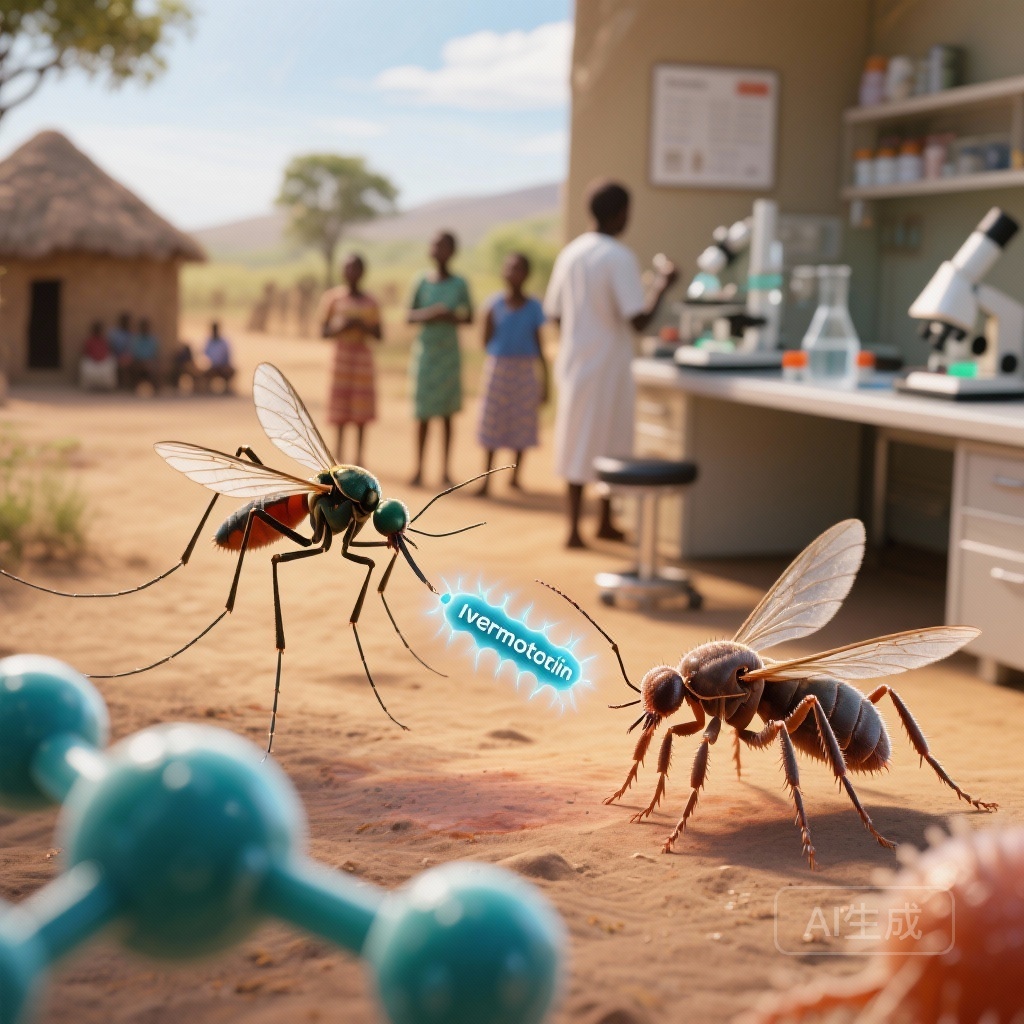
The fight against malaria and neglected tropical diseases (NTDs) like scabies has long been characterized by silos—separate funding, separate drugs, and separate delivery systems. However, the emergence of ivermectin as a potent endectocide—a drug that kills both internal parasites and external blood-sucking vectors—is challenging this paradigm. Recent evidence from the BOHEMIA trials in Mozambique and Kenya suggests that mass drug administration (MDA) of ivermectin, originally intended to control malaria vectors, offers significant collateral benefits by reducing the burden of scabies. For clinicians and public health experts, these findings represent a potential shift toward integrated disease management that maximizes the impact of single interventions.
Highlighting the Impact
The primary findings from these integrated studies include:
1. A 26% reduction in malaria incidence among children aged 5 to 15 years in high-coverage areas in Kenya.
2. A dramatic reduction in scabies prevalence in Mozambique, falling from 8.10% at baseline to 2.11% after three months of ivermectin MDA.
3. Clear evidence of indirect protection, where children too young to receive ivermectin still benefited from reduced community transmission of scabies.
4. A robust safety profile with no significant difference in serious adverse events compared to control groups.
The Clinical Context: Malaria and Scabies Co-endemicity
Malaria remains a leading cause of morbidity and mortality in Sub-Saharan Africa. Despite the widespread use of insecticide-treated nets (ITNs) and indoor residual spraying, transmission persists due to mosquito behavioral adaptation (outdoor biting) and rising insecticide resistance. Simultaneously, scabies, caused by the mite Sarcoptes scabiei, remains a neglected public health crisis, leading to secondary bacterial infections, renal complications, and significant social stigma. Ivermectin, which interferes with glutamate-gated chloride channels in invertebrates, provides a unique opportunity to address both conditions simultaneously.
Study Design and Methodology
The BOHEMIA (Broad One Health Endectocide-based Malaria Intervention in Africa) project utilized two distinct cluster-randomized trials to evaluate these effects.
The Kenya Malaria Trial
In Kwale County, Kenya, 84 clusters involving over 28,000 participants were randomized to receive either ivermectin (400 μg/kg) or albendazole (400 mg, active control) once monthly for three months. The trial focused on children aged 5 to 15, measuring the cumulative incidence of malaria infection over six months. This population is particularly relevant as they often serve as a significant reservoir for malaria transmission.
The Mozambique Scabies Substudy
In Mozambique, the trial evaluated three arms: ivermectin for humans only, ivermectin for both humans and livestock (a One Health approach), and albendazole for humans only. A nested substudy of 1,951 participants from 39 clusters focused specifically on scabies prevalence. The unique aspect of this substudy was the assessment of indirect protection in children under five years old, who were ineligible for ivermectin but lived within the treated clusters.
Key Findings: Malaria Control
The Kenyan trial demonstrated that ivermectin MDA can successfully augment existing control measures. Even in areas with high ITN use, the incidence of malaria was 2.20 per child-year in the ivermectin group compared to 2.66 in the albendazole group. This 26% reduction (aOR 0.74, 95% CI 0.58–0.95) suggests that ivermectin effectively shortens the lifespan of mosquitoes that feed on treated individuals, thereby interrupting the transmission cycle. This is particularly vital for targeting vectors that bite outdoors or early in the evening when people are not protected by bed nets.
Key Findings: Scabies Eradication and Indirect Protection
The results from Mozambique were even more striking regarding dermatological health. The odds of having scabies in ivermectin-treated clusters were 82% lower than in control clusters after three months (aOR 0.18, 95% CI 0.07–0.45).
Perhaps the most significant finding was the indirect effect. Children under five, who did not receive the drug, showed a similar reduction in scabies risk (aOR 0.17 at 3 months; aOR 0.21 at 6 months). This suggests that ivermectin MDA creates a herd-like protection by drastically reducing the mite reservoir in the older population, thereby preventing transmission to the most vulnerable, untreated household members. This phenomenon mirrors the herd immunity seen in vaccination programs and suggests that high-coverage MDA can clear scabies from entire communities.
Safety and Tolerability
At the dose of 400 μg/kg—which is higher than the standard 200 μg/kg used for many parasitic infections—ivermectin remained well-tolerated. In the Kenya trial, the incidence of serious adverse events did not differ significantly between the ivermectin and albendazole groups. In Mozambique, two deaths occurred in the ivermectin group, but neither was deemed related to the study drug. These results bolster confidence in the safety of using ivermectin at higher or more frequent doses for public health interventions.
Expert Commentary: A New Paradigm for Integrated Care
The BOHEMIA trials provide a proof-of-concept for ‘integrated endectocide-based’ interventions. Clinically, this means that malaria control programs could potentially be funded and executed alongside NTD programs, sharing the costs of logistics and drug delivery.
However, some limitations must be considered. The 26% reduction in malaria, while significant, is not a silver bullet; it must be part of a multi-modal strategy. Furthermore, the long-term sustainability of monthly MDA and the potential for the development of drug resistance in mites or mosquitoes require ongoing surveillance. The ‘One Health’ arm in Mozambique, which included livestock treatment, also opens a complex but promising door for reducing the environmental reservoir of parasites, though the human-only benefit was already substantial.
Conclusion: Moving Toward Policy Implementation
The evidence from these trials suggests that ivermectin MDA is a safe and effective tool that offers a ‘double win’ for public health. By reducing the incidence of malaria and essentially eliminating community scabies, ivermectin provides a high value-for-money proposition. Future policy should consider the timing of MDA to coincide with peak malaria transmission seasons while capitalizing on the collateral dermatological benefits to ensure high community participation and adherence.
Funding and Clinical Trial Registration
The BOHEMIA trials were funded by Unitaid. Mozambique substudy registration: ClinicalTrials.gov (NCT04966702) and Pan African Clinical Trial Registry (PACTR202106695877303). Kenya trial registration: ClinicalTrials.gov (NCT04966702).