

Introduction: The Clinical Challenge of Somatotroph Adenomas
Acromegaly is a chronic, debilitating multisystem disorder characterized by the excessive production of growth hormone (GH) and its downstream mediator, insulin-like growth factor 1 (IGF-1). In the vast majority of cases, this hormonal excess arises from a benign but clinically aggressive monoclonal expansion of pituitary somatotrophs. While familial syndromes such as MEN1 or Carney complex account for a small percentage of cases, the majority of somatotroph adenomas are non-familial or sporadic. Understanding the molecular landscape of these sporadic tumors is not merely an academic exercise; it is essential for refining diagnostic stratification and optimizing pharmacological interventions. Recent evidence suggests that the cyclic adenosine monophosphate (cAMP) signaling pathway acts as the central axis of pathogenesis, governing cell proliferation, hormone hypersecretion, and a paradoxical state of cellular senescence.
Highlights
Central Role of cAMP
Dysregulation of the GHRH-GHRHR-cAMP signaling axis is the primary driver of somatotroph proliferation and GH hypersecretion in sporadic adenomas.
Genomic Drivers
The GNAS oncogene mutation, found in approximately 40% of sporadic cases, creates a constitutively active Gsα protein, leading to persistent intracellular cAMP elevation.
The Senescence Signature
Chronic cAMP elevation induces DNA damage response (DDR) pathways, resulting in a senescent phenotype that limits tumor size but maintains high hormonal output.
Therapeutic Implications
Molecular insights into these pathways reinforce the efficacy of somatostatin receptor ligands (SRLs) which act specifically to inhibit adenylate cyclase and lower cAMP levels.
The Physiological Basis: The GHRH-Somatostatin Tug-of-War
In the healthy pituitary, somatotroph function is tightly regulated by the opposing actions of two hypothalamic hormones. Growth hormone-releasing hormone (GHRH) binds to its cognate G-protein coupled receptor (GHRHR) on the somatotroph surface, activating the stimulatory G-protein (Gs). This activation triggers adenylate cyclase to convert ATP into cAMP. cAMP then serves as a second messenger, activating protein kinase A (PKA), which phosphorylates transcription factors like PIT-1 (POU1F1), leading to GH gene transcription and somatotroph proliferation. Conversely, somatostatin provides a critical inhibitory brake by binding to somatostatin receptors (SSTR2 and SSTR5), which couple to inhibitory G-proteins (Gi) to suppress adenylate cyclase activity and reduce cAMP levels. In non-familial somatotroph adenomas, this delicate balance is shattered, typically favoring the stimulatory side of the equation.
Pathogenic Drivers: The GNAS Mutation and Beyond
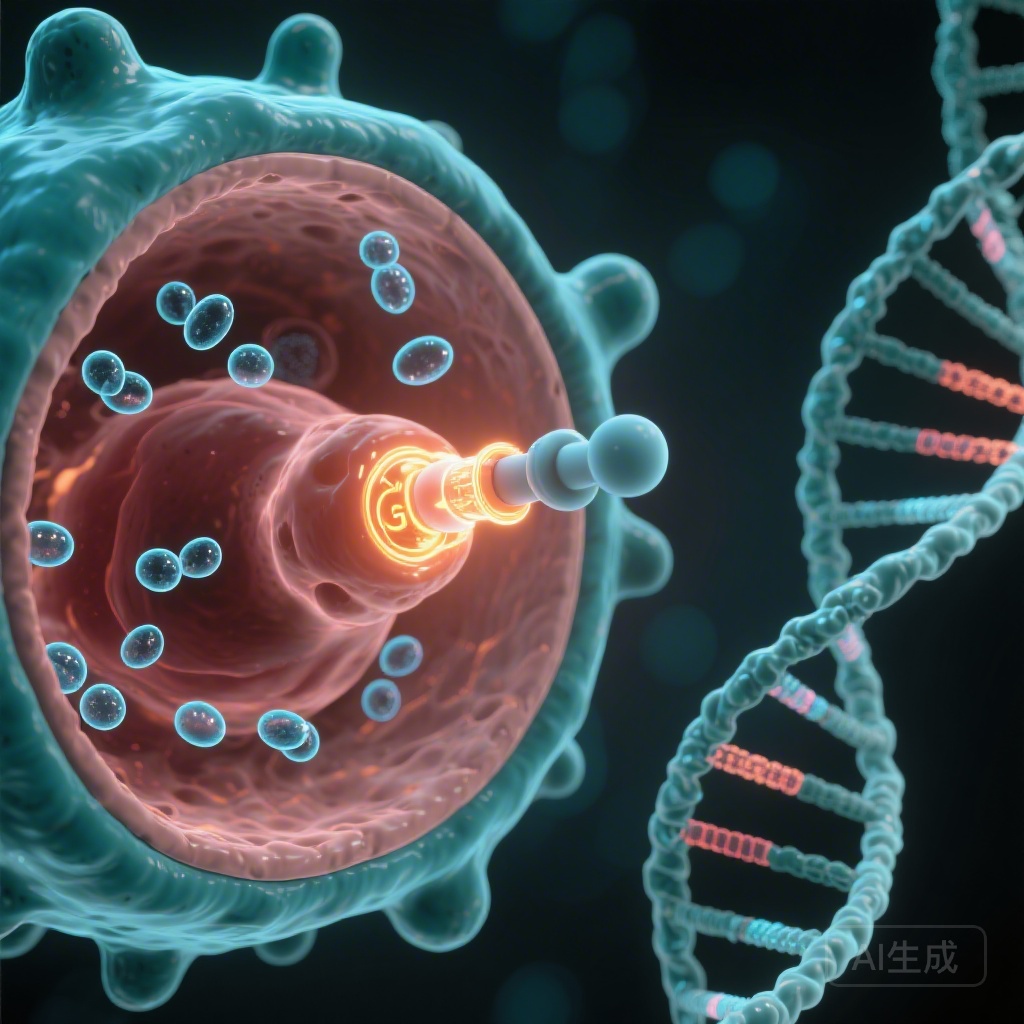
One of the most significant breakthroughs in the study of pituitary pathogenesis was the identification of the gsp oncogene, which involves somatic point mutations in the GNAS gene (encoding the Gsα subunit). These mutations, typically occurring at codons 201 or 227, inhibit the intrinsic GTPase activity of Gsα. As a result, the G-protein remains in a perpetually active, GTP-bound state, continuously stimulating adenylate cyclase regardless of GHRH presence.
Clinical observations have shown that GNAS-mutated tumors often present distinct biological characteristics. Patients with these mutations typically have smaller, more slowly growing tumors that nevertheless remain highly secretory, leading to pronounced clinical acromegaly. This decoupling of tumor size from hormonal potency is a hallmark of the Gsα-driven phenotype. In cases where GNAS mutations are absent, other mechanisms—such as epigenetic silencing of inhibitory regulators or overexpression of GHRHR—may contribute to the pathological elevation of cAMP.
The DNA Damage Response and Cellular Senescence
A fascinating aspect of somatotroph adenoma biology is the relative rarity of malignant transformation. Despite high levels of mitogenic signaling, these tumors remain benign. This is increasingly attributed to the induction of cellular senescence. Research indicates that persistent cAMP signaling and the subsequent increase in GH production generate oxidative stress and genomic instability. This triggers the DNA damage response (DDR) pathway, characterized by the activation of markers such as γH2AX and p53.
While senescence is traditionally viewed as a growth-arrest mechanism, in the context of somatotrophs, it creates a unique secretory profile. These senescent cells remain metabolically active and continue to hypersecrete GH, contributing to the systemic burden of acromegaly while restricting the tumor’s physical expansion. This explains why many somatotroph adenomas exhibit a low mitotic index (Ki-67 < 3%) despite significant clinical severity.
Clinical Implications and Expert Commentary
The dominance of the cAMP pathway provides a clear rationale for the current standards of medical care. Somatostatin receptor ligands (SRLs), such as octreotide and lanreotide, directly counteract the cAMP excess by mimicking the inhibitory action of endogenous somatostatin. Experts note that tumors with high SSTR2 expression and those driven by GNAS mutations often exhibit superior biochemical responses to these agents.
However, a subset of tumors remains resistant to traditional SRLs. This resistance may stem from the loss of SSTR expression or downstream mutations that bypass the inhibitory Gi-protein influence. In such cases, pasireotide—a multireceptor ligand with high affinity for SSTR5—or GH receptor antagonists like pegvisomant become necessary. The future of somatotroph adenoma management lies in precision medicine: identifying the specific molecular driver (e.g., GNAS status) to predict which patients will benefit most from early pharmacological intervention versus surgical resection.
Conclusion: A Framework for Future Research
The pathogenesis of non-familial somatotroph adenomas is a complex interplay of genomic mutations and aberrant signaling cascades, with the cAMP pathway serving as the primary conductor. The realization that cAMP drives both the hypersecretion of GH and the induction of a protective but metabolically active senescent state has fundamentally changed our understanding of acromegaly. Future research must continue to explore the non-genomic aberrations that sustain cAMP signaling in GNAS-wildtype tumors and investigate how the senescence-associated secretory phenotype might be manipulated to improve patient outcomes. By refining our understanding of these molecular frameworks, the clinical community moves closer to personalized therapeutic strategies that address the biological heterogeneity of this challenging disease.
References
- Ben-Shlomo A, Melmed S. Pathogenesis of Non-Familial Somatotroph Adenomas. The Journal of clinical endocrinology and metabolism. 2026. PMID: 41824769.
- Melmed S. Pituitary-Tumor Endocrinopathies. New England Journal of Medicine. 2020.
- Vila G, et al. Genetics and pathogenesis of pituitary adenomas. Reviews in Endocrine and Metabolic Disorders. 2022.
- Losa M, et al. Clinical implications of the GNAS gene mutation in somatotroph adenomas. Pituitary Journal. 2023.
