Introduction: The Quest for Drug-Free Maintenance in Pediatric IBD
For clinicians managing pediatric Crohn’s disease (CD), the therapeutic objective has shifted from mere symptom control to achieving deep mucosal healing while minimizing the long-term systemic consequences of pharmacological therapy. While Exclusive Enteral Nutrition (EEN) is globally recognized as a first-line therapy for the induction of remission in children—effectively avoiding the use of corticosteroids—maintaining that remission without escalating to immunomodulators or biologics remains a formidable challenge. The CD-HOPE trial, a multicenter randomized controlled trial conducted by the GETAID pédiatrique network, addresses this unmet need by investigating whether nutritional strategies can serve as a primary maintenance therapy.
Highlights of the CD-HOPE Trial
1. Superior Efficacy of Cyclic Intervention
Cyclic exclusive enteral nutrition (C-EEN) significantly outperformed daily partial enteral nutrition (PEN), reducing the risk of relapse by more than 70% over a 12-month period.
2. A Viable Drug-Free Pathway
Nearly half of the patients in the C-EEN group remained in clinical remission at one year without the use of any maintenance medications, offering a potential “drug holiday” or long-term alternative for select patients.
3. Safety and Tolerability
The nutritional interventions were well-tolerated, with serious adverse events linked exclusively to disease relapse rather than the nutritional formulas themselves.
Background: The Limitations of Current Maintenance Strategies
Standard maintenance therapy in pediatric Crohn’s disease often involves thiopurines or anti-TNF agents. While effective, these therapies carry risks of immunosuppression, infections, and rare but serious malignancies. Furthermore, many families and patients express a strong preference for non-pharmacological options. Previous studies have explored Partial Enteral Nutrition (PEN)—where a portion of the daily caloric intake is replaced by formula—with mixed results. The CD-HOPE trial sought to determine if a more intensive, periodic “reset” using 100% enteral nutrition could bridge the gap between induction and long-term stability.
Study Design and Methodology
The CD-HOPE trial was an open-label, endpoint-blinded, randomized controlled trial involving 21 specialized centers in France. The study population consisted of 100 children and adolescents (aged 6 to 17) who had successfully achieved clinical remission (defined by a weighted Pediatric Crohn’s Disease Activity Index [wPCDAI] ≤12.5) following an 8-to-12-week induction period of EEN.
Intervention Groups
Participants were randomized 1:1 into two distinct nutritional maintenance arms:
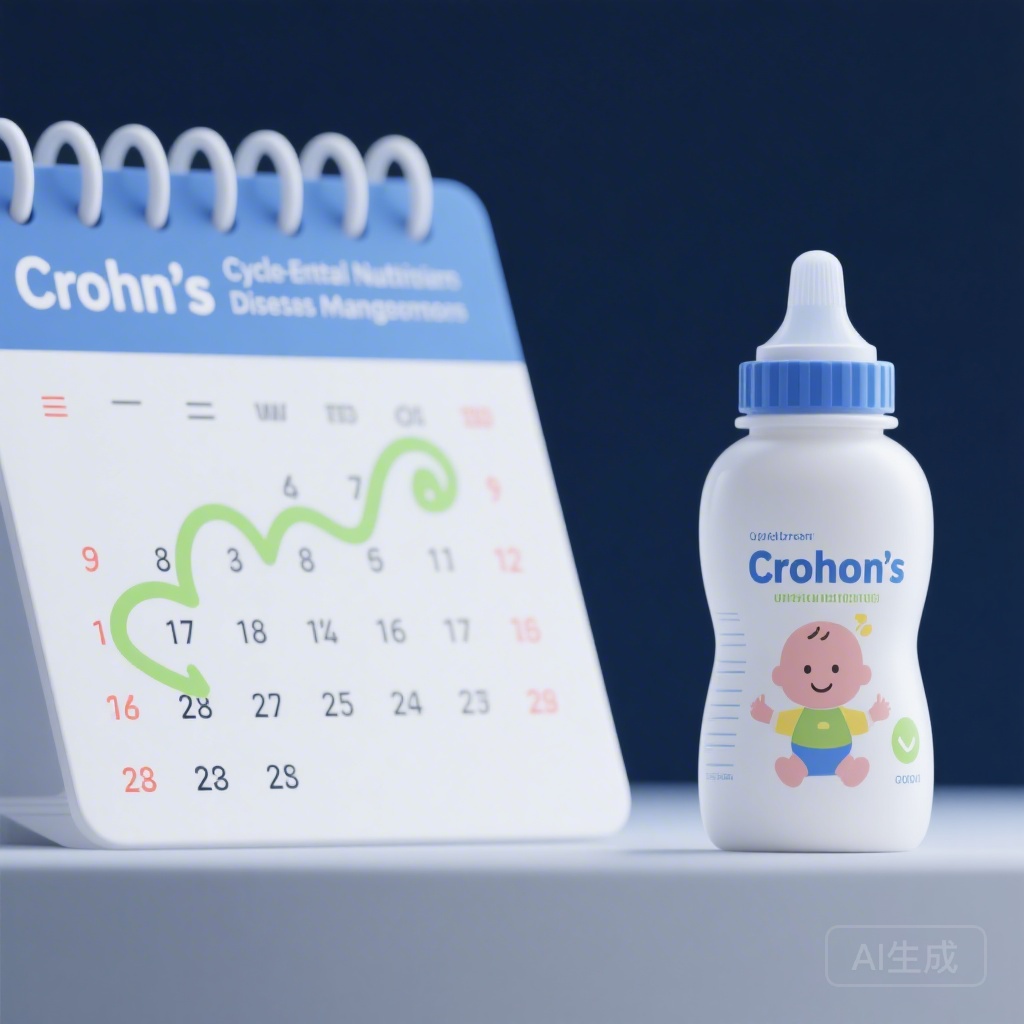
- Cyclic Exclusive Enteral Nutrition (C-EEN): Patients consumed 100% of their daily caloric requirements via the polymeric formula MODULEN IBD for two weeks, followed by six weeks of a normal unrestricted diet. This cycle was repeated every eight weeks for at least six cycles.
- Partial Enteral Nutrition (PEN): Patients consumed 25% of their daily caloric requirements via MODULEN IBD daily for the entire 52-week study period, with no restrictions on their remaining dietary intake.
Endpoints
The primary endpoint was the relapse rate at 12 months. Relapse was rigorously defined using the wPCDAI score, the need for rescue medication or surgery, or a Physician Global Assessment indicating moderate-to-severe disease activity.
Key Findings: C-EEN as a Potent Maintenance Tool
The results of the CD-HOPE trial provide high-level evidence for the efficacy of cyclic nutritional therapy. At the end of the 12-month follow-up period, the difference between the two groups was both statistically and clinically significant.
Primary Outcome: Relapse Rates
In the intention-to-treat analysis, 49% (24 of 49) of patients in the C-EEN group relapsed, compared to a staggering 76% (39 of 51) in the PEN group. The adjusted odds ratio (OR) was 0.29 (95% CI 0.13–0.70; p=0.0051), indicating that children on the cyclic exclusive regimen were significantly more likely to maintain their drug-free remission.
Safety and Adverse Events
The safety profile of both interventions was favorable. A total of 19 adverse events were reported in 17 patients. Importantly, the four serious adverse events (all in the PEN group) were hospitalizations necessitated by disease relapse rather than complications of the nutritional therapy. Minor adverse events related to the formula included transient vomiting, diarrhea, and anorexia in the C-EEN group, and nausea or skin infections in the PEN group. No deaths or malignancies occurred during the study.
Expert Commentary and Clinical Implications
The findings of the CD-HOPE trial challenge the conventional reliance on early biologics for all pediatric CD patients. By demonstrating that nearly 50% of patients can remain drug-free for a year using C-EEN, this study provides a concrete framework for “nutritional maintenance.”
Mechanistic Insights
Why is 100% enteral nutrition for two weeks superior to 25% daily? Researchers suggest that EEN works by inducing profound changes in the gut microbiota, reducing pro-inflammatory cytokines, and restoring the mucosal barrier. It is possible that the 25% caloric intake in the PEN group was insufficient to suppress the inflammatory triggers present in a standard Western diet. In contrast, the two-week “burst” of 100% formula in the C-EEN group may have acted as a periodic anti-inflammatory reset, clearing dietary antigens and allowing the gut mucosa to recover before symptoms could resurface.
Practical Considerations and Patient Adherence
While C-EEN is effective, clinicians must recognize the psychological and social burden of 100% enteral nutrition. Asking a teenager to abstain from solid food for two weeks every two months requires significant motivation and multidisciplinary support. However, for many families, this is a preferred trade-off compared to the potential side effects of thiopurines or the logistical burden of biologic infusions. The use of a specialized formula like MODULEN IBD, which contains transforming growth factor-beta 2 (TGF-β2), may also contribute to the anti-inflammatory effects observed.
Study Limitations
The trial was open-label, which is inherent to dietary studies, although the endpoint blinding helped mitigate bias. Additionally, the study did not mandate routine endoscopic assessment for mucosal healing at the 12-month mark, relying instead on clinical indices (wPCDAI). Future research should investigate whether C-EEN can maintain long-term endoscopic remission and prevent bowel damage over multiple years.
Conclusion: A New Tool in the Pediatric IBD Toolkit
The CD-HOPE trial establishes cyclic exclusive enteral nutrition as a superior strategy to low-dose daily partial enteral nutrition for maintaining drug-free remission in pediatric Crohn’s disease. For the subset of patients who respond well to EEN induction, C-EEN offers a validated, safe, and effective pathway to avoid or delay the use of immunosuppressive medications. This study marks a significant step forward in personalized, nutrition-centered care for children with inflammatory bowel disease.
Funding and Trial Registration
This study was funded by Assistance Publique-Hôpitaux de Paris and Nestlé Health Science. It is registered with ClinicalTrials.gov under the identifier NCT02201693.
References
Pigneur B, Martinez-Vinson C, Bourmaud A, et al. Cyclic exclusive enteral nutrition versus partial enteral nutrition to maintain long-term drug-free remission in paediatric Crohn’s disease (CD-HOPE): an open-label, endpoint-blinded, randomised controlled trial. Lancet Gastroenterol Hepatol. 2026;11(3):204-217. doi:10.1016/S2468-1253(25)00262-6.