

Highlights
- The Navigate-Kidney intervention resulted in a significant reduction of interdialytic weight gain (IDWG) by -0.46 percentage points compared to standard care over 180 days.
- Participants receiving community health worker (CHW) support experienced fewer shortened dialysis sessions, indicating improved treatment adherence.
- Patient activation scores improved significantly in the intervention group, suggesting a greater capacity for self-management of chronic kidney disease.
- The study highlights the efficacy of culturally responsive, framework-driven health navigation in addressing social determinants of health for minoritized populations.
The Clinical Challenge of Volume Management in Hemodialysis
For individuals with hemodialysis-dependent kidney failure, the period between dialysis sessions represents a high-risk window for cardiovascular instability. Interdialytic weight gain (IDWG), primarily caused by fluid accumulation, is a critical surrogate marker for patient outcomes. Excessive IDWG is strongly associated with left ventricular hypertrophy, hypertension, and increased rates of hospitalization and mortality. Despite its clinical importance, managing IDWG remains one of the most difficult aspects of renal replacement therapy, as it requires strict adherence to complex dietary and fluid restrictions.
Hispanic and Latino populations in the United States face a disproportionate burden of kidney failure and often encounter significant social barriers to care. These include language discordance, food insecurity, and a lack of culturally tailored health education. Traditional clinical models often fail to address these social determinants of health (SDOH), leading to persistent disparities in volume-related complications. The Navigate-Kidney Randomized Clinical Trial was designed to test whether a community health worker (CHW) intervention could bridge this gap by providing patient-centered support and culturally responsive education.
Study Design and Methodology
The Navigate-Kidney trial was a multicenter, community-partnered, unblinded randomized clinical trial conducted across five dialysis centers in Denver, Colorado. The study enrolled 139 self-identified Hispanic or Latino adults receiving in-center hemodialysis. Participants were randomized 1:1 to either the Navigate-Kidney intervention or standard care.
The Navigate-Kidney Intervention
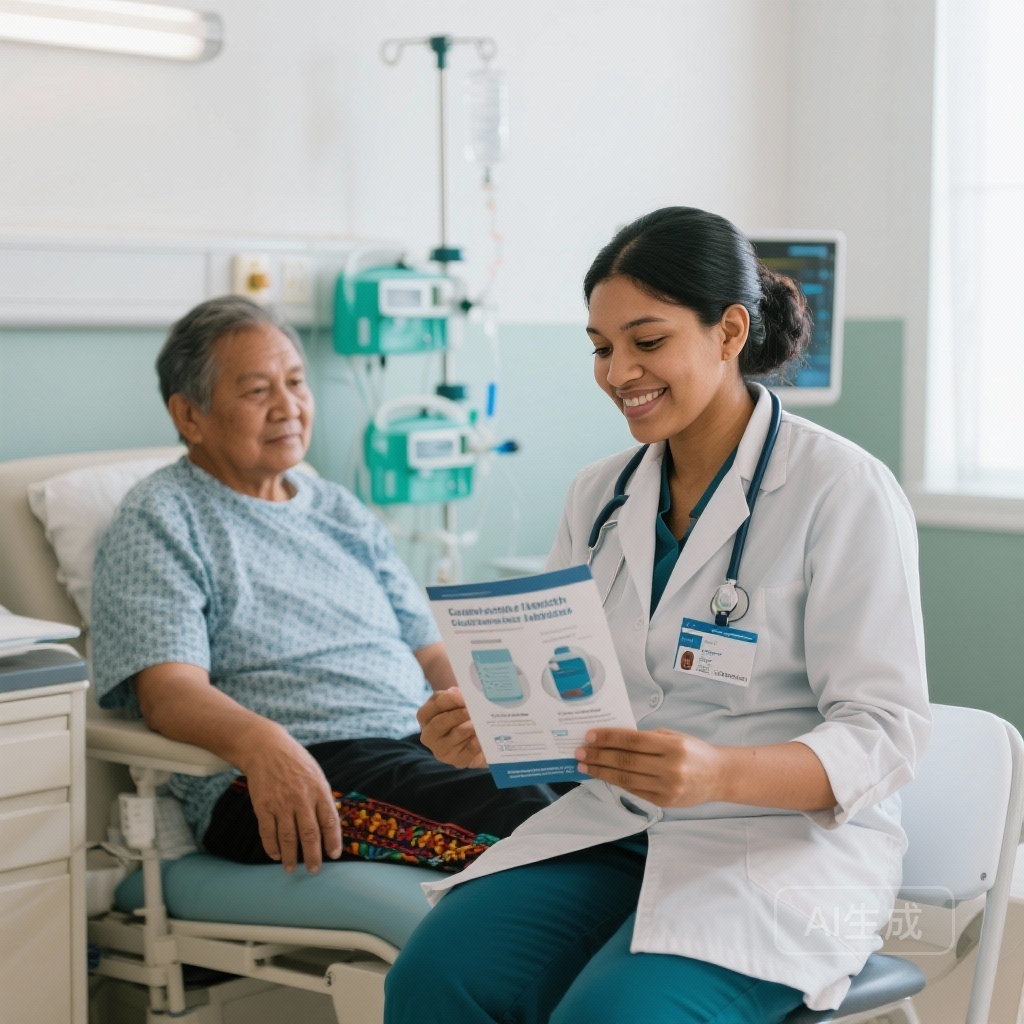
The intervention employed CHWs who followed a framework-driven, patient-centered protocol. This protocol was designed to address social needs, provide health navigation, and deliver culturally responsive kidney care education. Specifically, CHWs met with participants biweekly for a minimum of six visits. The education focused on practical strategies for dietary modification and fluid restriction, delivered in a manner that respected the cultural context of the participants. In contrast, the standard care group received routine dialysis care without additional culturally tailored navigation or CHW support.
Endpoints and Statistical Analysis
The primary outcome was the change in IDWG, calculated as a percentage of the patient’s estimated dry weight, comparing the 90-day pre-intervention period to the 180-day post-intervention period. Secondary outcomes were chosen to reflect broader aspects of care quality and patient engagement, including the frequency of missed or shortened dialysis sessions, overall healthcare utilization, and scores on the Patient Activation Measure (PAM). Piecewise linear mixed models were utilized to estimate the differences between groups.
Key Findings: Impact on IDWG and Adherence
The results of the trial, analyzed between 2024 and 2025, provide robust evidence for the utility of CHW-led interventions in this population. Of the 139 participants (mean age 56.8 years; 49% female), the intervention group showed clear improvements across several clinical and behavioral metrics.
Interdialytic Weight Gain (IDWG)
The primary analysis revealed a statistically significant difference in IDWG trends between the two groups. At the 180-day follow-up, the Navigate-Kidney group experienced a difference of -0.46 percentage points (95% CI, -0.78 to -0.14) in IDWG compared to the standard care group (P = .01). Specifically, the mean IDWG in the intervention group was 3.26%, while the standard care group averaged 3.72%. While a reduction of less than half a percentage point may seem modest, in the context of chronic volume management, such shifts can significantly reduce the cumulative cardiovascular strain over time.
Table 2. Primary Outcome for Patients Receiving Hemodialysis by Group.
| Primary outcome: interdialytic weight gaina | Mean (95% CI), % | Difference, pp | P value | |
|---|---|---|---|---|
| Intervention (n = 68) | Control (n = 71) | |||
| At 0 d | 3.74 (3.26 to 4.22) | 3.44 (2.96 to 3.92) | 0.30 (0.02 to 0.58) | .01b |
| At 90 d | 3.58 (3.15 to 4.00) | 3.53 (3.11 to 3.96) | 0.05 (−0.12 to 0.21) | |
| At 180 d | 3.42 (3.01 to 3.82) | 3.62 (3.22 to 4.03) | −0.21 (−0.40 to −0.02) | |
| At 270 d | 3.26 (2.83 to 3.68) | 3.72 (3.30 to 4.14) | −0.46 (−0.78 to −0.14) | |
| Difference between 180 and 90 d | −0.16 (−0.29 to −0.03) | 0.09 (−0.03 to 0.22) | −0.25 (−0.42 to −0.09) | NA |
| Difference between 270 and 90 d | −0.32 (−0.58 to −0.06) | 0.19 (−0.06 to 0.43) | −0.51 (−0.84 to −0.17) | NA |
| Difference between 270 and 180 d | −0.16 (−0.29 to −0.03) | 0.09 (−0.03 to 0.22) | −0.25 (−0.42 to −0.09) | NA |
Dialysis Adherence and Patient Activation
Adherence to the prescribed dialysis schedule is a cornerstone of effective treatment. The Navigate-Kidney group demonstrated fewer shortened dialysis sessions (median 0.1 vs 0.6; P = .02). This suggests that the support provided by CHWs helped patients overcome the logistical or psychological barriers that often lead to early termination of treatment sessions.
Furthermore, the intervention significantly bolstered patient activation. The Navigate-Kidney group showed a median improvement of 1.8 points in the Patient Activation Measure, whereas the standard care group actually saw a decline of 2.2 points (P = .005). This divergence is particularly noteworthy, as higher patient activation is consistently linked to better self-management behaviors and improved long-term health outcomes in chronic disease.
Expert Commentary and Clinical Implications
The Navigate-Kidney trial underscores a shifting paradigm in nephrology: the recognition that clinical outcomes are deeply intertwined with social and cultural factors. The success of the CHW model in this trial likely stems from the ‘bridge’ these workers provide between the rigid medical environment of the dialysis clinic and the complex daily lives of the patients.
Mechanistic Insights
The improvement in IDWG is likely multifactorial. By addressing social needs—such as transportation or food access—CHWs reduce the cognitive load on patients, allowing them to focus more effectively on fluid and dietary management. Additionally, culturally responsive education ensures that dietary advice is not just scientifically accurate but also practically applicable within the patient’s specific cultural and culinary traditions.
Limitations and Generalizability
While the results are encouraging, certain limitations must be considered. The study was conducted in a single geographic region (Denver), and the findings may vary in different urban or rural settings with different Hispanic and Latino sub-populations. Furthermore, the unblinded nature of the trial, though common in behavioral interventions, carries a risk of bias. However, the use of objective clinical data like IDWG helps mitigate this concern.
Conclusion
In conclusion, the Navigate-Kidney Randomized Clinical Trial provides high-quality evidence that integrating community health workers into the care team for Hispanic and Latino hemodialysis patients can lead to tangible clinical improvements. By modestly lowering IDWG and significantly improving treatment adherence and patient activation, this culturally tailored approach addresses critical gaps in standard nephrological care. As the healthcare system moves toward value-based care, models that incorporate CHWs offer a scalable and effective strategy for promoting health equity and improving the lives of individuals with kidney failure.
Funding and Trial Registration
This research was supported by various community and health partnerships. ClinicalTrials.gov Identifier: NCT03978806.
References
Cervantes L, Juarez-Colunga E, Powe NR, et al. Community Health Worker Support for Hispanic and Latino Individuals Receiving Hemodialysis: The Navigate-Kidney Randomized Clinical Trial. JAMA Intern Med. 2026;186(1):56-66. doi:10.1001/jamainternmed.2025.5305 IF: 23.3 Q1 .

1. Clinical Value
Effective Volume Management: The study demonstrates that #community health worker# (CHW) support leads to a significant reduction in #interdialytic weight gain# (IDWG), a critical surrogate marker for cardiovascular outcomes in dialysis patients.
Improved Adherence: Participants receiving the intervention experienced fewer shortened dialysis sessions, directly addressing a common clinical challenge in #hemodialysis# maintenance.
Enhanced Patient Self-Efficacy: Significant improvements in #patient activation# scores suggest that culturally tailored support empowers patients to better manage their #chronic kidney disease# (CKD) independently.
Addressing Health Inequities: By focusing on #Hispanic and Latino# populations, the research provides a scalable model for addressing #social determinants of health# (SDOH) that traditional clinical models often overlook.
2. Study Characteristics
Culturally Responsive Framework: The #Navigate-Kidney# intervention used a framework-driven protocol specifically designed to respect and integrate the cultural and culinary traditions of the target population.
Randomized Controlled Design: As a #randomized clinical trial#, the study provides high-quality evidence by minimizing selection bias through 1:1 randomization.
Community-Partnered Approach: The trial was multicenter and community-partnered, ensuring that the intervention was grounded in the real-world needs of the Denver-based cohort.
Multi-Dimensional Evaluation: The study measured not just clinical data (IDWG) but also behavioral outcomes (session adherence) and psychological metrics (patient activation).
3. Defects and Limitations
Geographic Specificity: Conducted only in Denver, Colorado, the findings may have limited generalizability to #Hispanic and Latino# sub-populations in rural areas or different urban settings.
Unblinded Nature: Due to the nature of behavioral interventions, the trial was unblinded, which introduces a potential risk of bias in self-reported data.
Modest Absolute Effect: While statistically significant, the reduction in #IDWG# was less than half a percentage point, though the cumulative cardiovascular benefit over time remains promising.
Short Duration: The follow-up period was limited to 180 days, leaving the long-term sustainability of these behavioral changes and their impact on #mortality# or hospitalization unknown.
4. Future Research Directions
Long-Term Outcome Validation: Future studies should focus on whether these improvements in #IDWG# translate into long-term reductions in left ventricular hypertrophy, #hospitalization#, and cardiovascular mortality.
Scalability and Cost-Effectiveness: Research is needed to evaluate the cost-benefit ratio of integrating #CHWs# into standard renal care across diverse geographic regions and healthcare systems.
Mechanistic Pathways: Further investigation into which specific components of the #CHW# support (e.g., social need resolution vs. health education) contribute most to clinical improvement could help refine future interventions.
Expansion to Other Minoritized Groups: Testing the #Navigate-Kidney# framework in other underserved populations could help develop a broader toolkit for achieving #health equity# in nephrology.