Introduction: Redefining the Boundaries of Neuroinflammation
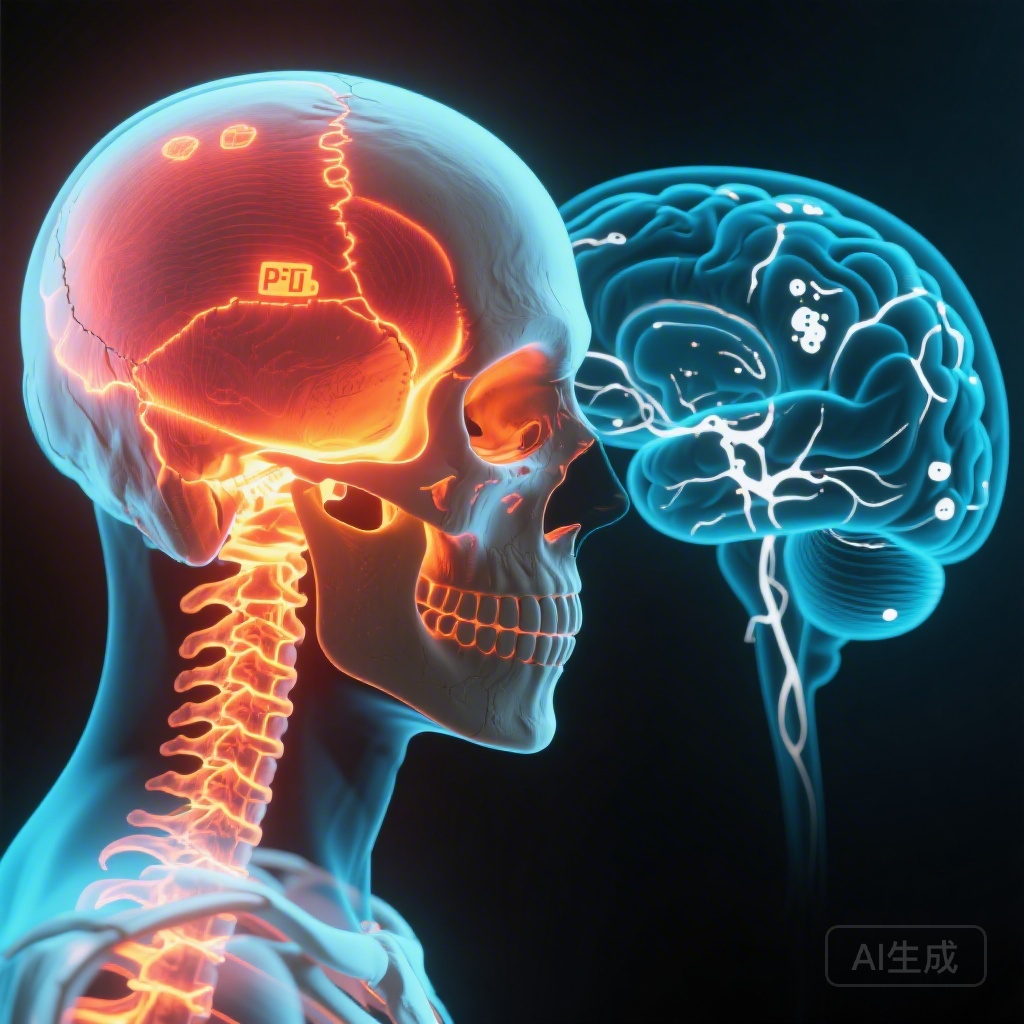
The traditional view of Multiple Sclerosis (MS) as a pathology confined strictly within the central nervous system (CNS) is undergoing a radical shift. While focal lesions and diffuse axonal loss remain hallmarks of the disease, the role of the surrounding anatomy—specifically the skull bone marrow—has recently emerged as a critical player in brain immune homeostasis. A groundbreaking study published in Brain by Corazzolla et al. (2026) provides the first in vivo evidence that the skull bone marrow is not merely a passive structural container but a dynamic immunological reservoir that reflects and perhaps drives MS progression. Using advanced hybrid MR-PET imaging, the researchers demonstrated that overexpression of the translocator protein (TSPO) within the skull bone marrow is independently linked to clinical disability and structural brain damage in MS patients.
The Skull-Meningeal Connection: A Novel Immune Gateway
The biological plausibility of this research rests on the recent discovery of skull-meningeal channels. These microscopic vascular and immune conduits allow for the bidirectional trafficking of immune cells between the skull bone marrow and the underlying dura mater. In healthy states, this system supports immune surveillance. However, in the context of neuroinflammatory disease, autoreactive T cells can migrate to the bone marrow, shifting its hematopoietic output toward increased myeloid differentiation. This influx of peripheral myeloid cells into the CNS is a known driver of chronic neuroinflammation. The study by Corazzolla et al. aimed to characterize this relationship in vivo using the TSPO radioligand 11C-PBR28, which targets a mitochondrial protein highly expressed in activated microglia, astrocytes, and peripheral myeloid cells.
Study Design and Methodology
The researchers conducted a comprehensive cross-sectional study involving 65 MS patients (46 with relapsing-remitting MS [RRMS] and 19 with secondary progressive MS [SPMS]) and 26 healthy controls. The cohort underwent simultaneous MR-PET imaging using 11C-PBR28. The primary objective was to quantify the standardized uptake value (SUV) maps of TSPO within the skull bone and correlate these findings with demographic data, clinical disability (as measured by the Expanded Disability Status Scale [EDSS] and Symbol Digit Modalities Test [SDMT]), and brain volumetric measures derived from anatomical MRI.
Voxel-Wise Analysis of Skull TSPO Signal
The study utilized voxel-wise analysis to assess group differences and associations. This high-resolution approach allowed for the identification of specific anatomical regions within the skull—such as the frontal, parietal, and occipital bones—where TSPO expression was most pronounced.
Key Findings: TSPO Overexpression and Disease Progression
The results revealed several significant insights into the pathophysiology of MS progression.
A Divergent Age Association
In healthy controls, the study found a negative correlation between age and skull TSPO signal (r=-0.67, p<0.001), particularly in the bilateral frontal and right parietal regions. This suggests a natural decline in bone marrow metabolic activity with age. Conversely, MS patients exhibited a positive correlation (r=0.44, p<0.001), where older patients—typically those further along in their disease course—showed higher TSPO signals in the bilateral parietal and occipital skull regions. This divergence highlights a disease-specific inflammatory process that overrides normal physiological aging.
Phenotypic Differences: SPMS vs. RRMS
The most striking findings occurred when comparing disease phenotypes. Patients with secondary progressive MS (SPMS) demonstrated widespread elevation in skull TSPO signals across the frontal, parietal, temporal, occipital, and skull base regions compared to both healthy controls and RRMS patients. Interestingly, no significant differences were detected between RRMS patients and healthy controls, suggesting that skull bone marrow inflammation may be a specific hallmark of the progressive phase of the disease.
Correlation with Clinical Disability and Brain Atrophy
The intensity of the skull TSPO signal was strongly associated with patient disability. Widespread TSPO expression positively correlated with EDSS scores (ρ=0.49, p<0.001) and negatively correlated with SDMT z-scores (r=-0.48, p<0.001), indicating that higher bone marrow inflammation is linked to poorer physical and cognitive performance. Furthermore, higher TSPO signals were associated with reduced white matter volume (r=-0.45, p<0.001), linking peripheral bone marrow activity to central neurodegeneration.
Multivariable Analysis: An Independent Marker
Perhaps the most impactful result of the study was the multivariable regression analysis. When accounting for various factors, both skull TSPO signal (β=6.63, p=0.001) and T2-hyperintense white matter lesion volume (β=0.34, p=0.020) were independently associated with clinical disability. Crucially, traditional MRI markers such as white matter, cortical gray matter, and subcortical gray matter volumes lost their statistical significance in this model. This suggests that skull TSPO imaging may capture a unique dimension of disease activity that traditional volumetric MRI misses.
Expert Commentary: Mechanistic Insights and Clinical Utility
The findings by Corazzolla et al. suggest that the skull bone marrow acts as a ‘smoldering’ reservoir of inflammation in progressive MS. In RRMS, where inflammation is often episodic and focal, the bone marrow might remain relatively stable. However, as the disease transitions to a progressive state, the skull-meningeal axis may become a site of chronic myeloid activation, feeding the CNS with pro-inflammatory cells that drive neurodegeneration.
Study Limitations
While the results are compelling, some limitations exist. The cross-sectional nature of the study prevents the establishment of causality—it is yet to be determined if bone marrow inflammation precedes or follows CNS damage. Additionally, while TSPO is a validated marker for myeloid activation, it is not perfectly specific and can be influenced by various biological factors, including genetic polymorphisms (though the researchers accounted for the rs6971 polymorphism in their analysis).
Conclusion: A New Frontier in MS Management
This study provides robust in vivo evidence that skull bone TSPO overexpression is a critical feature of MS progression. By linking skull bone marrow activity to clinical disability and structural brain damage, the research opens new avenues for both diagnosis and therapy. Skull TSPO could serve as a novel radiological marker to identify patients at risk of transitioning to progressive MS, or as a target for future immunomodulatory therapies designed to quench the inflammatory output of the bone marrow before it reaches the brain. As we move toward a more holistic understanding of MS as a systemic-neuro-immunological disorder, the skull bone marrow stands out as a vital piece of the puzzle.
References
1. Corazzolla G, Treaba CA, Mohammadian M, et al. Evidence of skull bone translocator protein overexpression linked to multiple sclerosis progression. Brain. 2026; PMID: 41802262.
2. Cugurra A, et al. Skull bone marrow channels as pathways for immune cell surveillance and inflammation. Nature Neuroscience. 2021.
3. Kolasny S, et al. The bone-brain axis in neurological disorders. Journal of Neuroinflammation. 2023.