Highlight
- First randomized clinical trial comparing video biofeedback to respiratory retraining therapy (RRT) for inducible laryngeal obstruction (ILO).
- Both interventions produced similar improvements in Dyspnea Index scores at one month.
- Biofeedback offers potential accessibility and cost advantages.
- Clinicians should tailor treatment recommendations based on patient-specific factors and resource availability.
Background
Inducible laryngeal obstruction (ILO), previously referred to as vocal cord dysfunction or paradoxical vocal fold motion, is characterized by episodic dyspnea—particularly during inhalation—due to inappropriate closure of the laryngeal inlet. Episodes can range from mild discomfort to severe, panic-inducing breathlessness. Although generally benign, ILO can mimic or coexist with asthma, leading to misdiagnosis and inappropriate therapy.
Respiratory retraining therapy (RRT) led by speech-language pathologists is the established standard of care. RRT focuses on functional breathing exercises and laryngeal relaxation techniques to mitigate episodes. However, clinical evidence supporting its efficacy is limited; the literature is dominated by small case series and observational studies. Video biofeedback, which provides visual guidance of laryngeal motion during breathing, offers a potentially engaging alternative, but its comparative effectiveness had not been evaluated in a randomized clinical trial prior to this study.
Study Design
This single-center pilot randomized clinical trial was performed at a tertiary laryngology clinic. Eligible participants were newly diagnosed with inhalational dyspnea attributed to ILO, confirmed during direct laryngeal visualization.
Participants were randomly assigned to receive either:
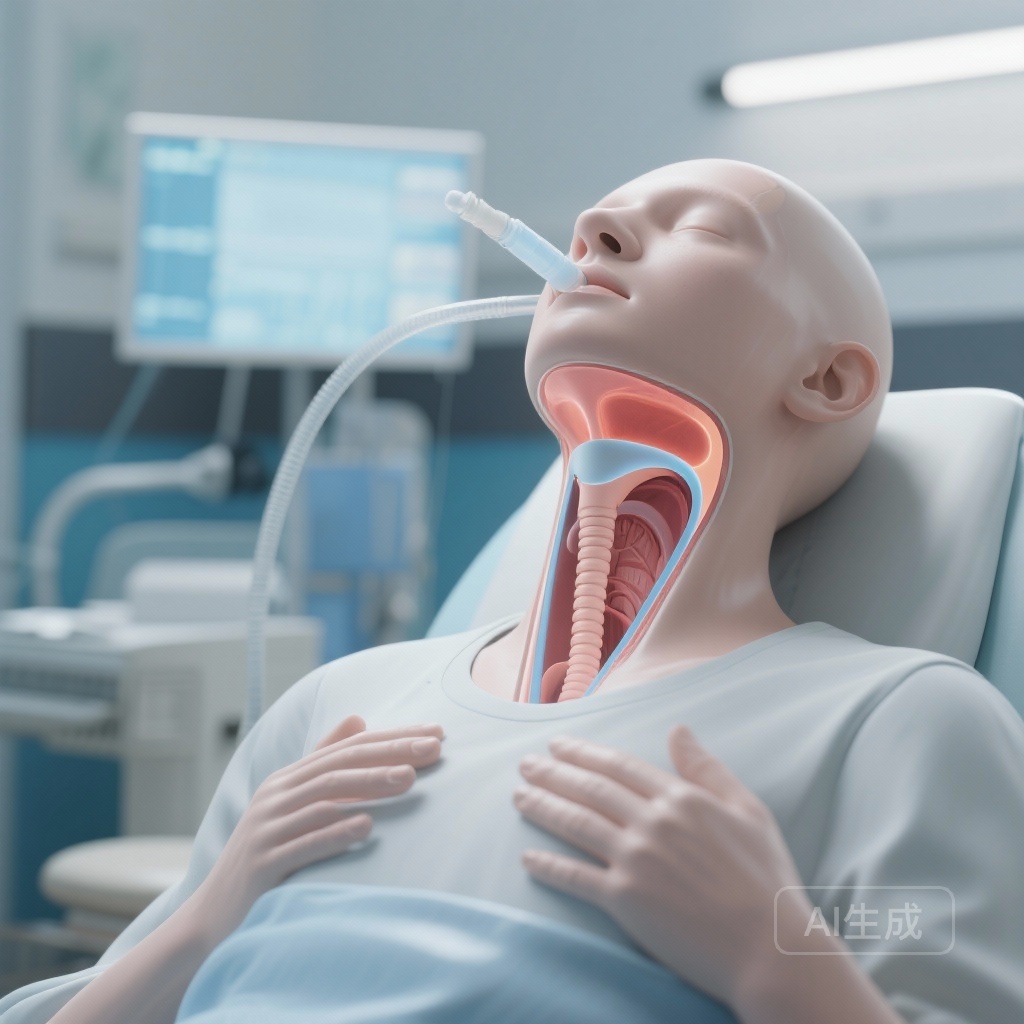
- Video Biofeedback: Real-time endoscopic visualization of the larynx while performing coached breathing exercises.
- Respiratory Retraining Therapy (RRT): Standard breathing retraining delivered by a speech-language pathologist, emphasizing diaphragmatic breathing and laryngeal relaxation.
The trial recruited and randomized 54 participants, collecting data between March 2023 and July 2024, with analysis completed by March 2025. The primary endpoint was the change in Dyspnea Index (DI) score from baseline to one month post-treatment. The secondary endpoint was patient-reported improvement on the Clinical Global Impressions–Improvement (CGI-I) scale. The trial is registered at ClinicalTrials.gov (NCT05770518).
Key Findings
Of the 54 randomized participants, 25 in the biofeedback group and 20 in the RRT group completed their assigned treatment regimen fully. The mean age was 46.4 years in the biofeedback group and 49.4 years in the RRT group; 78% of the cohort was female.
Primary outcome analysis revealed:
- Biofeedback group: Mean DI reduction of 3.54 points (SD, 4.75)
- RRT group: Mean DI reduction of 4.15 points (SD, 4.44)
- Mean between-group difference: 0.61 points (95% CI, -2.21 to 3.43)
These differences were not statistically significant, indicating comparable efficacy between both interventions in reducing dyspnea symptoms at one month.
Secondary outcome analysis using CGI-I showed that 64% of biofeedback participants and 63% of RRT participants self-reported at least some improvement. This similarity reinforces the primary outcome findings.
Expert Commentary
This pilot trial fills an important evidence gap in the management of ILO by providing the first head-to-head randomized comparison of video biofeedback and RRT. The absence of significant differences suggests that both methods are viable for symptom reduction. Clinicians may find video biofeedback particularly advantageous in contexts where speech-language pathology services are limited or difficult to access.
Biofeedback can be delivered in a brief, equipment-supported outpatient setting without substantial cost to patients, making it suitable for rapid implementation. However, patient engagement and comfort with endoscopic visualization must be considered. Additionally, the pilot nature and single-center setting limit the generalizability of findings. Larger multi-center trials will be needed to confirm equivalence or to detect potential differences not observable in a small sample.
From a mechanistic standpoint, direct visualization may enhance patient understanding of airway physiology, potentially improving adherence to exercises. Still, RRT’s emphasis on laryngeal relaxation and breathing control remains valuable, especially for patients with comorbid anxiety or hyperventilation syndrome.
Conclusion
Video biofeedback and respiratory retraining therapy are both effective in relieving dyspnea associated with inducible laryngeal obstruction, with similar short-term outcomes. Given its potential accessibility and low cost, biofeedback offers a practical alternative, particularly in settings with limited speech-language pathology resources. The choice between the two approaches should be individualized, incorporating patient preference, comorbidities, and local resource availability.
Future research should aim to evaluate long-term efficacy, cost-effectiveness, and integration of biofeedback into multidisciplinary airway programs.
Funding and ClinicalTrials.gov
Trial registration: ClinicalTrials.gov Identifier NCT05770518. The source publication is from JAMA Otolaryngology–Head & Neck Surgery (2025).
References
Strober WA, Rohlfing ML, Cutchin GM, Kallogjeri D, Piccirillo JF, Huston MN. Biofeedback vs Respiratory Retraining for Inducible Laryngeal Obstruction: A Randomized Clinical Trial. JAMA Otolaryngol Head Neck Surg. 2025 Dec 11:e254542. doi:10.1001/jamaoto.2025.4542. PMID: 41379457; PMCID: PMC12699398.