Highlights
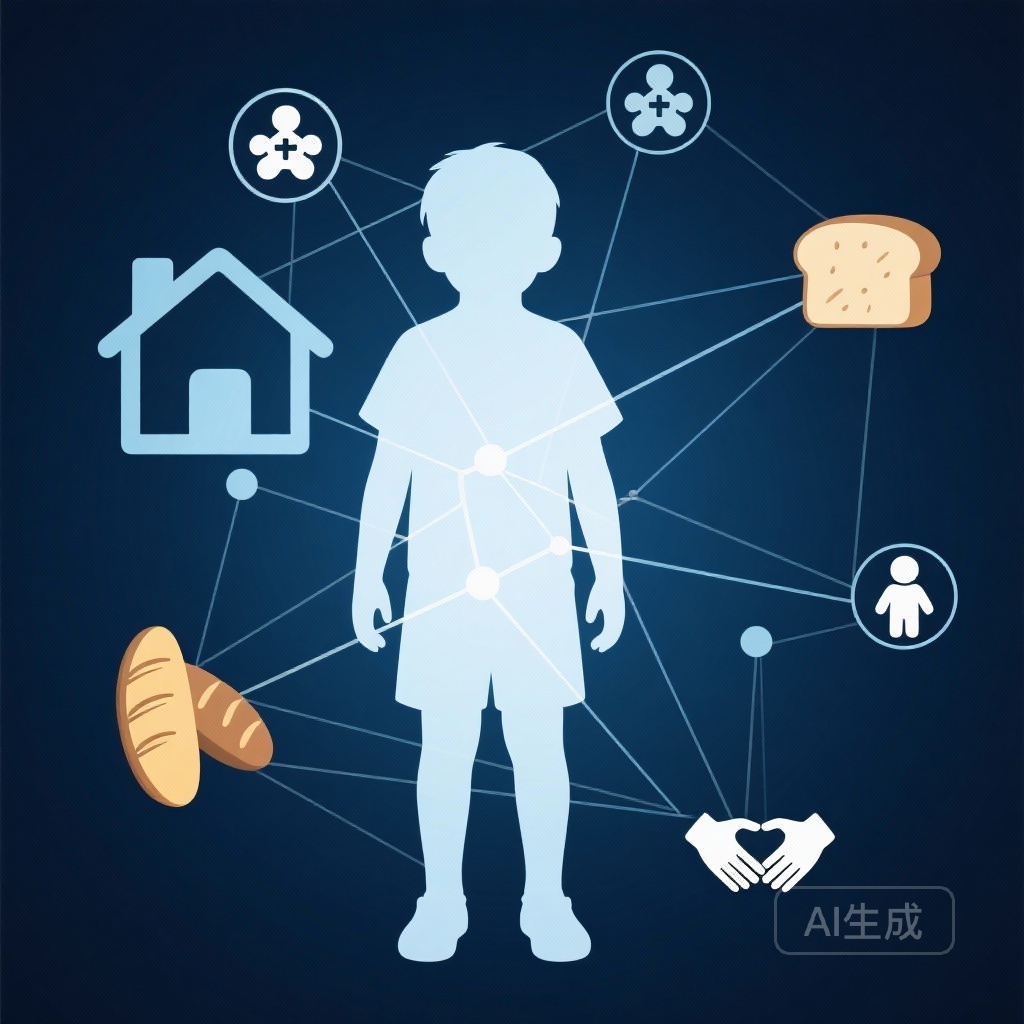
Research published in JAMA Pediatrics indicates that economic instability, specifically when accompanied by food insecurity, is associated with a 1.57 to 2.39-fold increased risk of pediatric long COVID.
Poor social and community context, characterized by high levels of discrimination and low social support, was found to more than double the odds of children developing prolonged symptoms after SARS-CoV-2 infection.
Interestingly, economic challenges that did not include food insecurity were not significantly associated with an increased risk, suggesting a specific nutritional or stress-related threshold for vulnerability.
The findings emphasize that pediatric recovery from COVID-19 is not merely a biological event but is deeply influenced by the environment in which a child lives and interacts.
Background and Disease Burden
While the acute phase of COVID-19 is often milder in children than in adults, the specter of Post-Acute Sequelae of SARS-CoV-2 infection (PASC), commonly known as long COVID, remains a significant public health concern. Millions of children worldwide continue to experience debilitating symptoms—including fatigue, cognitive dysfunction, and respiratory issues—months after their initial infection. Despite the prevalence of this condition, our understanding of why some children recover fully while others experience prolonged illness has remained limited, particularly regarding non-biological drivers.
Clinical medicine has increasingly recognized the Social Determinants of Health (SDOH) as fundamental drivers of health outcomes. In pediatrics, the influence of these factors is amplified, as children are uniquely dependent on their caregivers and the structural stability of their environments. Adverse SDOH, such as poverty, lack of educational access, and social isolation, are known to exacerbate chronic conditions like asthma and diabetes. This study seeks to determine if these same social risk factors contribute to the development of pediatric long COVID in the US population.
Study Design and Methodology
This cross-sectional analysis was part of a multicenter, longitudinal meta-cohort study (RECOVER-Pediatrics) encompassing 52 sites across the United States. The study included a robust sample of 4,584 participants, consisting of 903 school-aged children (6-11 years) and 3,681 adolescents (12-17 years), all with a documented history of SARS-CoV-2 infection.
The researchers employed a sophisticated methodological approach by grouping 24 individual SDOH factors into five domains defined by the Healthy People 2030 framework: economic stability, social and community context, caregiver education access and quality, neighborhood and built environment, and healthcare access and quality. Latent class analysis was used to identify patterns of adversity within these domains, allowing for a more nuanced understanding of how multiple social factors cluster together.
The primary outcome was the presence of long COVID, determined using caregiver-reported, symptom-based research indices tailored to specific age groups. This allowed the researchers to move beyond simple clinical diagnoses, which may be underreported in marginalized populations, toward a more standardized assessment of the symptom burden.
Key Findings: The Interplay of Adversity and Recovery
The results of the study provide compelling evidence that social environment dictates the trajectory of recovery. In unadjusted models, almost every domain of social adversity was linked to higher odds of long COVID. However, after adjusting for potential confounders—including age, sex, timing of infection, and other SDOH domains—two specific areas emerged as primary drivers: economic instability and social/community context.
The Critical Threshold of Food Insecurity
The study found a striking distinction within the domain of economic stability. Latent classes characterized by severe economic instability—including difficulty covering basic expenses, poverty, and reliance on government assistance—were significantly associated with long COVID. Specifically, Class 2 (moderate instability) showed an adjusted odds ratio (aOR) of 1.57 (95% CI, 1.18-2.09), while Class 4 (high instability) showed an aOR of 2.39 (95% CI, 1.73-3.30).
Crucially, Class 3, which represented families experiencing economic challenges but maintained food security, did not show a statistically significant increase in long COVID risk (aOR, 0.93; 95% CI, 0.70-1.23). This suggests that food insecurity may be a pivotal biological or psychological stressor that compromises a child’s ability to recover from viral infection.
Social and Community Context
The social environment proved to be equally influential. Children living in environments with poor social and community context—marked by high levels of perceived discrimination and low social support—faced more than double the odds of long COVID (aOR, 2.17; 95% CI, 1.77-2.66). This association remained consistent even after sensitivity analyses stratified by age and adjusted for race and ethnicity, suggesting that the experience of social marginalization has a tangible impact on physical health outcomes regardless of demographic labels.
Expert Commentary and Mechanistic Insights
The association between SDOH and long COVID likely reflects a complex interplay between biology and environment. From a mechanistic perspective, food insecurity is directly linked to nutritional deficiencies that can impair immune function and promote chronic low-grade inflammation. A child lacking consistent access to high-quality nutrition may have a blunted or dysregulated immune response to SARS-CoV-2, leading to the persistent inflammation hypothesized to drive long COVID symptoms.
Furthermore, the impact of poor social context and discrimination can be understood through the lens of allostatic load. Chronic exposure to social stressors triggers the repeated activation of the hypothalamic-pituitary-adrenal (HPA) axis. In children, this prolonged stress response can lead to physiological wear and tear, potentially exacerbating the neurological and autonomic symptoms frequently seen in PASC.
While this study establishes a strong association, it is important to acknowledge its limitations. As a cross-sectional analysis, it cannot definitively prove a temporal relationship between SDOH and the onset of symptoms. Additionally, the reliance on caregiver reports, while necessary in pediatric research, introduces the possibility of subjective bias. However, the use of large-scale, multicenter data and latent class analysis provides a high level of statistical rigor that supports the validity of these findings.
Conclusion and Clinical Implications
The RECOVER-Pediatrics study marks a significant shift in our understanding of long COVID, moving the conversation from a purely virological focus to a holistic view of child health. The findings demonstrate that economic instability (particularly food insecurity) and a lack of social support are not just social issues—they are clinical risk factors for chronic illness after infection.
For clinicians, these results suggest that screening for social determinants of health should be an integral part of the follow-up care for children who have had COVID-19. Addressing food insecurity and providing resources for social support may be as critical to a child’s recovery as any medical intervention. For policymakers, the study underscores the need for robust social safety nets, as improving economic and social stability may be one of the most effective ways to decrease the burden of pediatric long COVID in the United States.
References
Rhee KE, Thaweethai T, Pant DB, et al. Social Determinants of Health and Pediatric Long COVID in the US. JAMA Pediatr. 2026 Jan 5. doi:10.1001/jamapediatrics.2025.5485. Epub ahead of print. PMID: 41490011.