The ETI Revolution and the Exercise Paradox
The introduction of highly effective cystic fibrosis transmembrane conductance regulator (CFTR) modulator therapy, specifically the triple combination of Elexacaftor, Tezacaftor, and Ivacaftor (ETI), has fundamentally altered the clinical trajectory for people with Cystic Fibrosis (pwCF). Since its approval, clinicians have witnessed unprecedented improvements in forced expiratory volume in one second (FEV1), body mass index (BMI), and sweat chloride levels. However, as the focus of CF care shifts from managing acute decline to optimizing long-term health and longevity, the role of physical fitness has come under intense scrutiny.
Exercise capacity, particularly as measured by peak oxygen consumption (VO2peak) during a Cardiopulmonary Exercise Test (CPET), is one of the strongest predictors of mortality and hospitalization in the CF population. While ETI has addressed the underlying protein defect, the question remains: does systemic CFTR restoration automatically translate into a more fit and physiologically robust patient? A recent multicentric study from Italy provides a nuanced answer, suggesting that while the drug is a powerful tool, it is not a substitute for physical activity.
Study Design and Patient Population
In a prospective observational study conducted between May 2021 and April 2022, researchers enrolled 101 pwCF from the Milan Children and Adult CF centres. The cohort had a mean age of 28.4 years, with a nearly equal distribution of gender (38.6% female). Notably, the study included a diverse clinical spectrum: 20.8% of participants were affected by CF-related diabetes (CFRD), and nearly half (46.5%) had prior exposure to earlier generations of CFTR modulators.
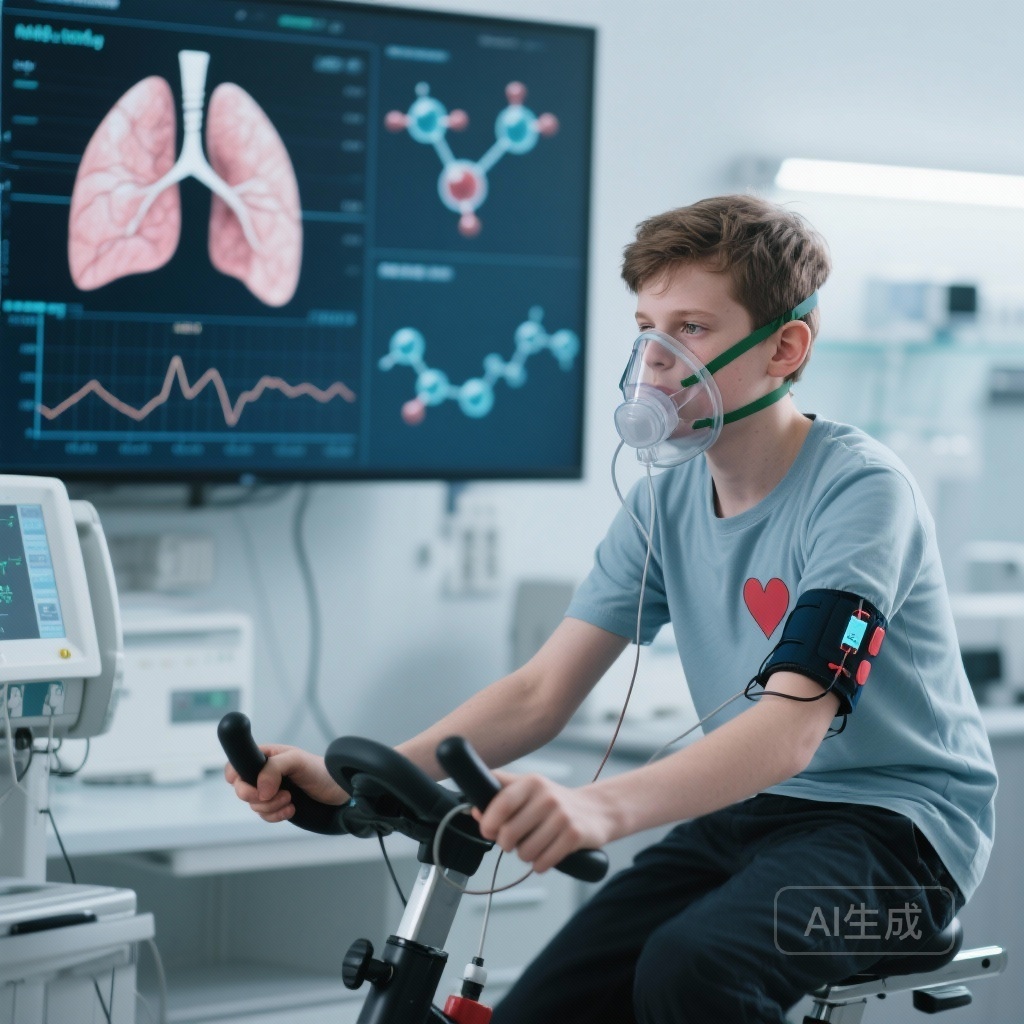
The primary objective was to assess the impact of 6 months of ETI therapy on exercise performance using CPET, the gold standard for assessing integrated multi-organ response to stress. The researchers focused on maximum workload (Wmax), VO2peak, and other functional outcomes to determine if the systemic improvements seen with ETI would manifest as enhanced aerobic power.
Key Findings: Statistical Gains vs. Clinical Realities
Modest Improvements in Workload
The study reported a statistically significant improvement in maximum workload (Wmax) after six months of ETI therapy. The mean Wmax rose from 151.0 (±38.6) W at baseline to 156.6 (±41.1) W (p = 0.008). While this statistical significance is noteworthy, the absolute increase of approximately 5.6 Watts is considered modest in a clinical context. This suggests that while ETI allows patients to push slightly harder, it does not fundamentally transform their exercise ceiling in the short term.
The VO2peak Stagnation
Perhaps the most significant finding of the study was the lack of a significant change in peak oxygen consumption (VO2peak). VO2peak reflects the maximum ability of the body to transport and utilize oxygen during exhaustive exercise. The stability of this metric despite ETI therapy suggests that the drug’s impact on the pulmonary and cardiac components of the oxygen transport chain may not be sufficient to overcome existing peripheral limitations, such as muscle deconditioning or intrinsic metabolic dysfunction in the skeletal muscle.
Predictors of Response
The researchers utilized fitted regression models to identify which patients were most likely to see improvements in exercise performance. Several key baseline characteristics were associated with a better response to ETI:
- Male Sex: Male subjects generally showed better exercise performance gains compared to females.
- Cystic Fibrosis-Related Diabetes (CFRD): Patients with CFRD were expected to have better exercise performance outcomes, potentially due to the metabolic stabilization afforded by ETI.
- Physical Activity Levels: Those who were more physically active at baseline experienced greater improvements, reinforcing the “virtuous cycle” of exercise.
- Lung Clearance Index (LCI): Patients with a higher LCI (indicating worse ventilation inhomogeneity) and those with baseline exercise limitations showed more room for improvement.
Expert Commentary: Why the Limited Impact?
The discrepancy between the dramatic improvements in lung function (FEV1) often seen with ETI and the modest gains in CPET outcomes warrants a deeper look into the pathophysiology of CF. Expert opinion suggests that exercise capacity is not determined by lung function alone. In many pwCF, years of chronic illness lead to skeletal muscle atrophy, fiber type shifting, and mitochondrial dysfunction. These peripheral factors do not disappear overnight with the introduction of a CFTR modulator.
Furthermore, the “legacy effect” of lung damage—including bronchiectasis and structural remodeling—means that while the remaining airways may function better, the overall ventilatory reserve may still be compromised. The study’s findings suggest that ETI provides the *physiological potential* for improvement, but that potential must be realized through the stimulus of physical training.
The Essential Role of Exercise Training
The conclusion of the Italian cohort study serves as a call to action for multidisciplinary CF teams. The researchers emphasize that ETI therapy should not lead to a de-escalation of physical therapy. Instead, ETI should be viewed as a “window of opportunity.” By reducing the burden of respiratory symptoms and improving energy balance, ETI makes it easier for patients to engage in high-intensity exercise that was previously intolerable.
Integrating structured exercise training is essential to address the peripheral limitations that ETI cannot reach. Exercise training improves mitochondrial density, enhances muscle capillary growth, and optimizes the stroke volume of the heart—factors that are critical for improving VO2peak and long-term survival.
Conclusion and Clinical Summary
The study by Retucci et al. provides a sobering but necessary perspective on the limits of pharmacological intervention. While ETI therapy is a landmark achievement that improves quality of life and functional outcomes, its impact on peak aerobic capacity is limited when used in isolation. The data reinforces the essential role of exercise as a core pillar of CF management.
For clinicians, the takeaway is clear: the prescription of ETI should be accompanied by a prescription for movement. To move from the goal of “stability” to the goal of “peak fitness,” pwCF require a synergistic approach that combines the molecular corrections of modulators with the physiological adaptations of regular, structured exercise.
References
Retucci M, Gramegna A, Gambazza S, Santambrogio M, Putti G, Mariani A, Russo MC, Vicenzi M, Daccò V, Blasi F. Limited impact of Elexacaftor/Tezacaftor/Ivacaftor on CPET outcomes in an Italian cohort of people with Cystic Fibrosis: reinforcing the essential role of exercise training. J Cyst Fibros. 2026 Jan;25(1):63-69. doi: 10.1016/j.jcf.2025.10.005. Epub 2025 Oct 16. PMID: 41107171.