Highlight
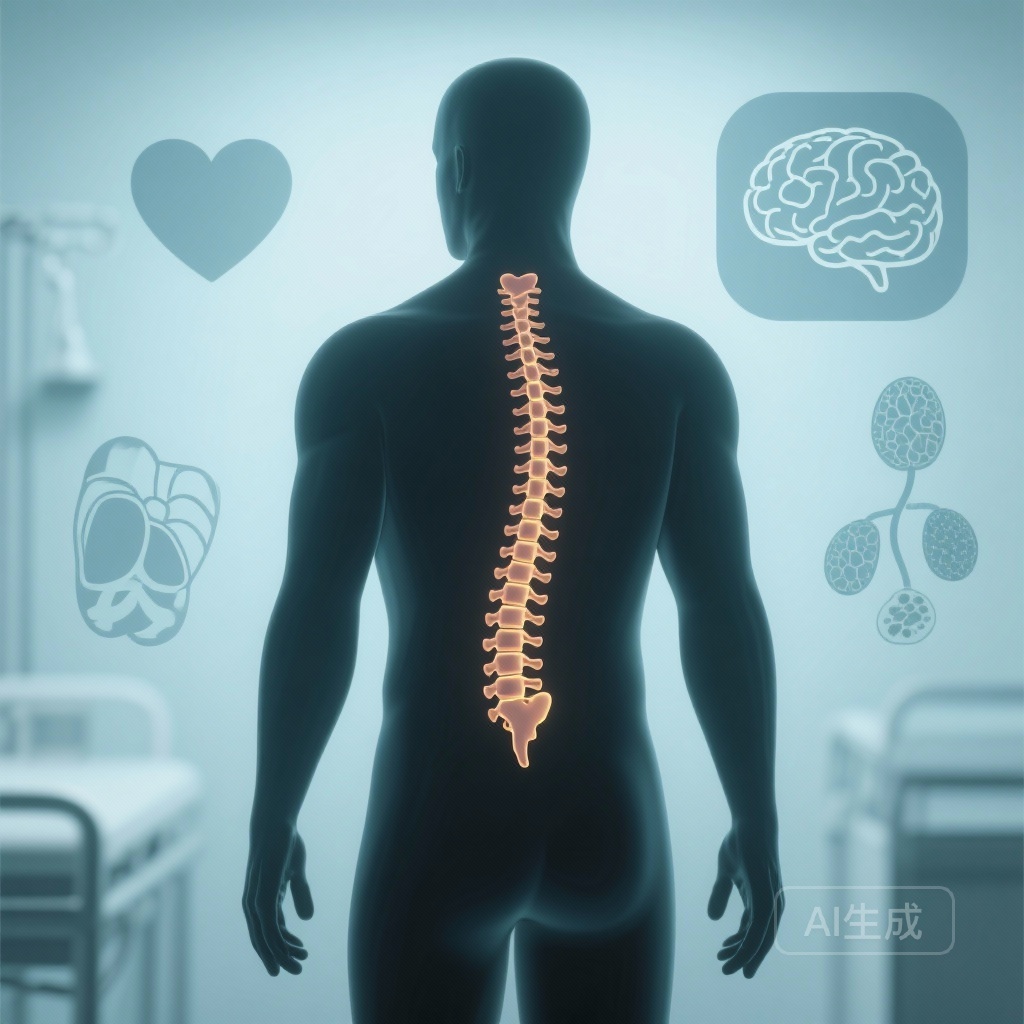
• Traumatic spinal cord injury (TSCI) was associated with increased long-term incidence of hypertension, hyperlipidemia, coronary artery disease, ischemic stroke, diabetes, and a range of neurologic and psychiatric diagnoses compared with matched uninjured controls.
• Elevated risk was observed across age groups, including young adults (18–45 years); several postinjury conditions—hypertension, pituitary and adrenal dysfunction, depression, substance misuse, seizures, and dementia—were independently associated with higher all-cause mortality.
Background: the unmet need
Traumatic spinal cord injury (TSCI) produces acute neurologic deficits that demand immediate surgical, medical, and rehabilitative attention. Yet survivors increasingly live for decades after injury; the long-term multisystem consequences and their contribution to premature morbidity and mortality are less well defined. Historically, research has emphasized respiratory complications, pressure injuries, urinary complications, and functional outcomes, while chronic cardiovascular, metabolic, endocrine, neurologic, and psychiatric sequelae have received less systematic study. Understanding these downstream risks is essential to design surveillance programmes, targeted prevention, and integrated chronic care for this high-risk population.
Study design and methods
Mashlah and colleagues performed a retrospective cohort analysis using longitudinal electronic health record (EHR) data from two large hospital-based registries: Mass General Brigham (MGB; January 1996–January 2024) and the University of California Health System (UC; same interval). Individuals with preexisting diagnoses of the studied comorbidities were excluded to focus on incident disease after TSCI. Each TSCI case was matched 3:1 to uninjured controls by age, sex, and race. The principal exposure was TSCI; primary outcomes were incident cardiovascular, endocrine, neurologic, and psychiatric conditions defined by ICD-9/ICD-10 codes. Associations were estimated using multivariable Cox proportional hazards models for incidence and logistic regression for associations with all-cause mortality. Data were analyzed September–December 2024.
Key findings
The study included 1038 patients with TSCI (MGB cohort; median age 44 years, 58% male) matched to 3114 controls, and an external UC cohort of 1711 TSCI cases (median age 45 years, 65% male) matched to 5133 controls.
Cardiovascular and metabolic outcomes
Compared with matched controls, individuals with TSCI had significantly higher long-term risk of major cardiovascular and metabolic diagnoses in the pooled analyses:
- Hypertension: HR 1.6 (95% CI, 1.3–1.9)
- Hyperlipidemia: HR 1.5 (95% CI, 1.3–1.8)
- Ischemic stroke: HR 2.5 (95% CI, 1.7–3.7)
- Coronary artery disease: HR 1.8 (95% CI, 1.3–2.5)
- Diabetes mellitus: HR 1.5 (95% CI, 1.1–2.1)
Notably, ischemic stroke risk was more than doubled, and coronary disease and metabolic risk were also meaningfully elevated. These associations persisted after adjustment for demographic covariates.
Neurologic and psychiatric sequelae
TSCI patients developed a range of new neurologic diagnoses at higher rates than controls. The study reported increased incidence of seizures and later-life cognitive impairment or dementia. Psychiatric diagnoses—including depression and substance misuse—were also more common postinjury. Specific effect sizes for these categories were reported and were consistent across both institutional cohorts.
Endocrine dysfunction
Endocrine disturbances were more frequent after TSCI. While absolute event rates were lower than for cardiovascular conditions, odds ratios for certain endocrine diagnoses and mortality associations were substantial. On logistic analysis related to mortality, postinjury pituitary dysfunction had OR 6.5 (95% CI, 1.1–33.2) and adrenal insufficiency OR 5.0 (95% CI, 1.04–20.2), though confidence intervals were wide, reflecting smaller numbers.
Age-stratified risks
Elevated risk extended to younger adults. For patients aged 18–45 years, TSCI conferred higher incidence of hypertension (HR 1.5; 95% CI, 1.1–2.1) and ischemic stroke (HR 2.8; 95% CI, 1.3–6.0), highlighting that TSCI accelerates vascular risk even in populations typically considered lower risk based on age alone.
Associations with mortality
Several postinjury conditions were independently associated with higher all-cause mortality. Notable findings included:
- Hypertension: OR 2.0 (95% CI, 1.2–3.5)
- Pituitary dysfunction: OR 6.5 (95% CI, 1.1–33.2)
- Adrenal insufficiency: OR 5.0 (95% CI, 1.04–20.2)
- Depression: OR 2.9 (95% CI, 1.6–5.2)
- Substance misuse: OR 4.0 (95% CI, 1.5–9.8)
- Seizures: OR 6.4 (95% CI, 2.7–14.5)
- Dementia: OR 4.8 (95% CI, 2.0–11.6)
These associations suggest that both multisystem medical complications and neuropsychiatric conditions contribute to reduced survival after TSCI.
Biological plausibility and potential mechanisms
Several mechanistic pathways plausibly link TSCI to multisystem chronic disease:
- Autonomic dysregulation: High-level cord injury can impair sympathetic control, producing labile blood pressure including autonomic dysreflexia—paroxysmal hypertension that may predispose to stroke and vascular injury.
- Physical inactivity and body composition changes: Reduced mobility accelerates sarcopenia, adiposity, insulin resistance, and atherogenic lipid profiles.
- Chronic inflammation: Tissue injury and altered neuroimmune interactions may create a proinflammatory milieu promoting atherogenesis.
- Neuroendocrine axis disruption: Hypothalamic–pituitary–adrenal and other axes may be perturbed by spinal injury or concomitant brain injury, explaining pituitary dysfunction and adrenal insufficiency in some patients.
- Behavioral and psychosocial factors: Depression, pain, and social isolation can worsen adherence to secondary prevention, increase substance use, and amplify cardiovascular risk.
Clinical implications: actionable recommendations
These data support shifting care models for TSCI from episodic, injury-focused management to proactive, longitudinal, multidisciplinary follow-up aimed at preventing or mitigating chronic multisystem disease. Practical steps include:
- Early and ongoing cardiovascular risk screening (blood pressure, lipids, glucose) and aggressive risk-factor modification using guideline-directed therapy tailored to the SCI population.
- Education and monitoring for autonomic dysreflexia in high thoracic and cervical injuries and individualized blood pressure targets.
- Routine endocrine screening when clinically indicated (eg, assessment of pituitary function or symptoms suggesting cortisol insufficiency), with low threshold for specialist referral.
- Integrated mental health and substance misuse services within SCI clinics, with routine depression screening and access to psychotherapy and pharmacotherapy.
- Seizure surveillance in patients with risk factors (concomitant head injury, new unexplained events) and consideration of neurocognitive evaluation where indicated.
- Structured rehabilitation and physical activity programs adapted for disability to reduce metabolic risk and preserve cardiorespiratory fitness.
Limitations and considerations
The study’s strengths include large sample sizes, multicenter replication, and exclusion of patients with preexisting comorbidities to focus on incident disease. However, limitations warrant cautious interpretation:
- Retrospective design and reliance on ICD coding lead to potential misclassification and variable diagnostic sensitivity/specificity.
- Residual confounding is possible—data on smoking, socioeconomic status, medication use, injury severity and level, rehabilitation exposure, and lifestyle factors may be incomplete or absent in EHRs.
- Surveillance bias: Patients with TSCI may have more frequent healthcare contact, increasing diagnosis detection.
- Wide confidence intervals for some endocrine mortality associations indicate small subgroup event counts and imprecision.
- Generalizability is limited to populations seen within large academic health systems in the United States; community and international contexts may differ.
Research gaps and future directions
Key priorities include prospective cohort studies with standardized assessments of injury characteristics, autonomic function, detailed behavioral risk factors, biomarkers of inflammation and metabolism, and repeated cognitive and endocrine testing. Interventional trials should test whether targeted prevention (eg, aggressive BP control, tailored exercise, endocrine replacement where indicated, or integrated mental health care) reduces incidence of downstream morbidity and mortality. Mechanistic human and preclinical studies to dissect neuroimmune and neuroendocrine pathways could inform targeted therapeutics.
Conclusion
Mashlah et al.’s large multicenter EHR study demonstrates that TSCI is associated with substantially increased long-term risk of cardiovascular, neurologic, psychiatric, and endocrine disorders—and that several postinjury conditions confer heightened mortality risk. These findings argue for proactive, multidisciplinary, and lifespan-oriented care models for TSCI survivors, with systematic cardiovascular risk management, endocrine vigilance, mental health integration, and rehabilitation strategies to mitigate long-term adverse outcomes.
Funding and trial registration
Funding sources, conflict of interest statements, and clinical trial registration (if any) are reported in the original publication: Mashlah A, Marini S, Mills H, et al. JAMA Netw Open. 2025 Nov 3;8(11):e2541157. doi:10.1001/jamanetworkopen.2025.41157.
References
Mashlah A, Marini S, Mills H, Yahya T, Radmanesh F, Chalif J, Zusman BE, Bernstock JD, Al Mansi MH, Grashow R, Abd-El-Barr MM, Zaidi HA, Lu Y, Salim A, Fahed AC, Manley GT, Halabi C, Digiorgio A, Zafonte R, Izzy S. Traumatic Spinal Cord Injury and Subsequent Risk of Developing Chronic Cardiovascular, Neurologic, Psychiatric, and Endocrine Disorders. JAMA Netw Open. 2025 Nov 3;8(11):e2541157. doi:10.1001/jamanetworkopen.2025.41157. PMID: 41186949; PMCID: PMC12587198.