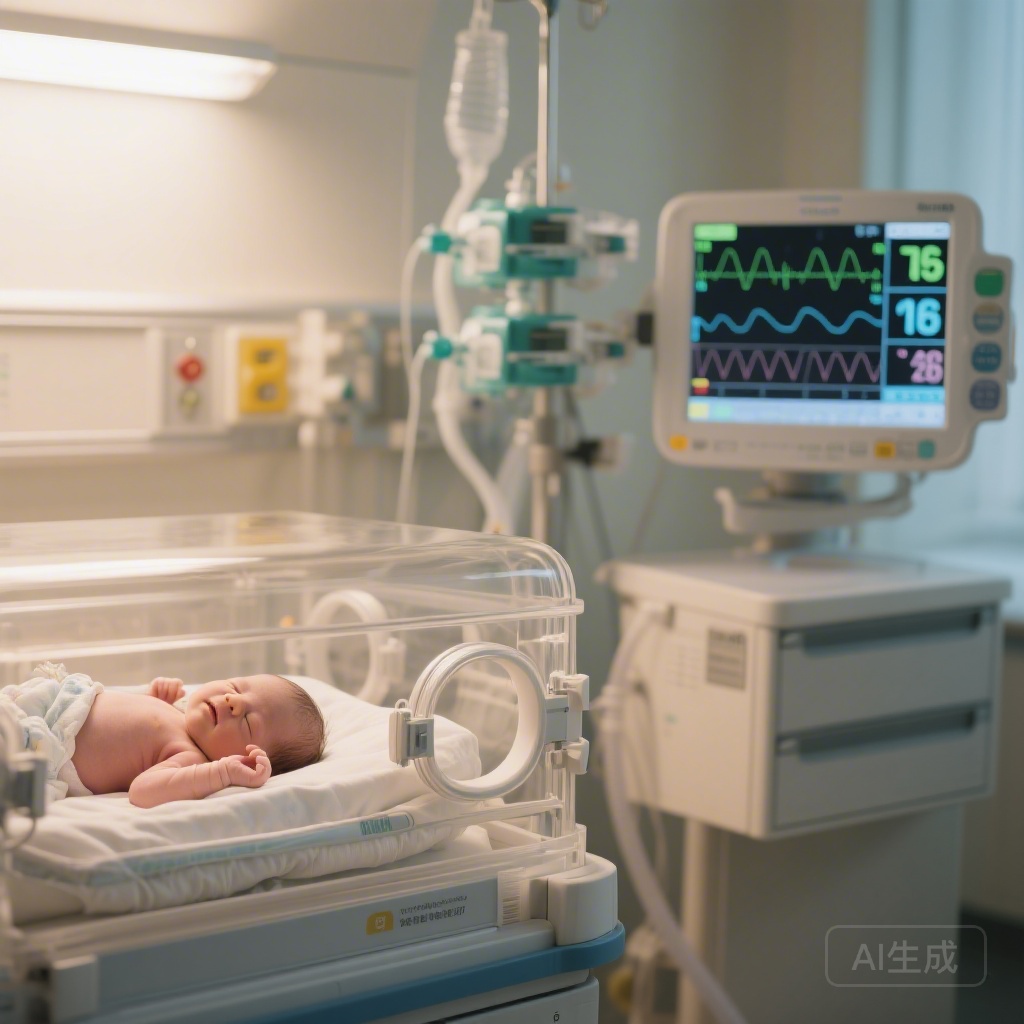
Introduction: The Challenge of Oxygen Titration in the NICU
Managing supplemental oxygen for extremely preterm infants (born before 28 weeks of gestation) is one of the most delicate tasks in neonatal intensive care. These infants are highly susceptible to the dual risks of hypoxia and hyperoxia. Frequent hypoxemic episodes are associated with an increased risk of mortality and neurodevelopmental impairment, while excessive oxygen exposure (hyperoxia) is a primary driver of oxidative stress, leading to complications such as retinopathy of prematurity (ROP) and bronchopulmonary dysplasia (BPD).
Traditionally, clinicians and bedside nurses manually adjust the fractional concentration of inspired oxygen (FiO2) based on pulse oximetry (SpO2) readings. However, maintaining SpO2 within a narrow target range is notoriously difficult due to the physiological instability of preterm infants and the high workload of bedside caregivers. Closed-loop automated control of FiO2 (FiO2-C) was developed to address this challenge. Previous physiological studies have consistently shown that FiO2-C increases the percentage of time infants spend within the target SpO2 range and reduces the workload of nursing staff. However, whether these physiological improvements translate into better clinical outcomes remained an unanswered question until the publication of the FiO2-C trial.
The FiO2-C Trial: Study Design and Methodology
The FiO2-C trial was a multicentre, parallel-group, randomised, controlled, superiority trial conducted across 32 neonatal intensive care units (NICUs) in China, Germany, the Netherlands, and the UK. The primary objective was to determine if automated FiO2 control could improve clinical outcomes compared to routine manual care.
Study Population
The study enrolled infants born between 23+0 and 27+6 weeks of postmenstrual age. Participants were randomly assigned in a 1:1 ratio to either the FiO2-C group or the routine manual control group. Randomization was stratified by center, postmenstrual age at birth, and sex.
Intervention
In the intervention group, infants received automated FiO2 control provided by infant ventilators equipped with specific algorithms (e.g., Oxy-Genie or CLiO2) in addition to routine manual monitoring. The control group received routine manual titration of FiO2 by the clinical staff according to local unit protocols.
Primary and Secondary Endpoints
The primary endpoint was a composite of serious neonatal outcomes up to 36 weeks postmenstrual age: death, necrotising enterocolitis (NEC), or bronchopulmonary dysplasia (BPD); or severe retinopathy of prematurity (ROP) by 44 weeks postmenstrual age. Secondary endpoints included the individual components of the primary composite, as well as the maximum ROP severity score based on the International Neonatal Consortium Retinopathy of Prematurity Activity Scale.
Key Findings: Clinical Outcomes and Statistical Analysis
Between July 2018 and October 2023, 1082 infants were enrolled (539 in the FiO2-C group and 543 in the manual control group). The median postmenstrual age at birth was 26.1 weeks. Notably, the trial was stopped early due to poor recruitment, which affected the final statistical power.
Primary Outcome Results
The primary analysis followed the intention-to-treat principle. The composite primary endpoint occurred in 206 (39%) of 534 infants in the FiO2-C group compared to 222 (41%) of 538 infants in the routine manual control group. After adjustment, the odds ratio (OR) was 0.90 (97.5% CI 0.65–1.24; p=0.47). This result indicates no statistically significant difference in the risk of major morbidity or death between the two groups.
Secondary Outcomes and Morbidities
The individual components of the primary endpoint were also remarkably similar between the two groups:
1. Death: 9% in FiO2-C vs. 9% in manual care.
2. Necrotising Enterocolitis (NEC): 5% in FiO2-C vs. 7% in manual care.
3. Bronchopulmonary Dysplasia (BPD): 21% in FiO2-C vs. 23% in manual care.
4. Severe Retinopathy of Prematurity (ROP): 18% in FiO2-C vs. 19% in manual care.
The maximum ROP severity score showed no significant difference, with a median score of 7 in both groups (p=0.24). Furthermore, the postnatal age at death and the primary causes of death were comparable across both arms of the trial.
Safety and Technical Performance
Safety was a paramount concern in this trial, given the reliance on automated algorithms for life-sustaining oxygen delivery. The study reported 197 serious adverse events in the FiO2-C group and 192 in the manual control group. There was no evidence of harm directly related to the automated intervention.
Technically, four serious incidents related to software function were reported. However, these incidents did not lead to apparent harm to the infants involved. The researchers concluded that the long-term application of FiO2-C appears safe and does not introduce new clinical risks compared to manual titration.
Expert Commentary: Interpreting the Neutral Results
The findings of the FiO2-C trial may seem counterintuitive given that previous studies proved automated systems are better at keeping infants within the prescribed SpO2 target range. However, several factors may explain why improved SpO2 targeting did not translate into improved clinical outcomes in this study.
First, the quality of manual care in the participating centers was likely very high. In modern, well-staffed NICUs, manual titration may already be optimized to a level where the incremental benefit of an automated system is marginal. Second, the trial was stopped early, which may have limited its ability to detect small but clinically meaningful differences. Third, the pathophysiology of BPD, NEC, and ROP is multifactorial; while oxygen is a major contributor, other factors such as inflammation, nutrition, and genetics play significant roles that automated oxygen control cannot address.
It is also worth noting that the primary benefit of FiO2-C might not be in reducing morbidity, but in reducing the cognitive and physical workload of the nursing staff. By automating the frequent adjustments required to maintain SpO2, nurses may be freed to focus on other critical aspects of infant care, which is a significant benefit in the context of global healthcare staffing challenges.
Conclusion: The Future of Automated Oxygenation
While the FiO2-C trial did not demonstrate superiority in clinical outcomes for automated oxygen control, it provides robust evidence for the safety of these systems in extremely preterm infants. The technology successfully automates a complex task without increasing the risk of death or major neonatal complications.
For clinical practice, the choice to implement FiO2-C should perhaps be viewed through the lens of operational efficiency and safety rather than a mandatory intervention for improving survival or reducing BPD. Future research should focus on refining automated algorithms to handle more complex clinical scenarios and investigating whether specific subgroups of infants might derive more significant benefits from automated titration.
Funding and ClinicalTrials.gov
This study was funded by the German Federal Ministry of Education and Research. The trial is registered with ClinicalTrials.gov under the identifier NCT03168516.
References
1. Franz AR, et al. Automatic versus manual control of oxygen and neonatal clinical outcomes in extremely preterm infants: a multicentre, parallel-group, randomised, controlled, superiority trial. Lancet Child Adolesc Health. 2026 Mar;10(3):179-188. doi: 10.1016/S2352-4642(25)00351-7.
2. Hallenberger A, et al. Impact of automated FiO2 control on SpO2 targeting in extremely preterm infants: a systematic review. Journal of Perinatology. 2022.
3. Stevens TP, et al. The role of oxygen in the development of retinopathy of prematurity. Clinics in Perinatology. 2013.