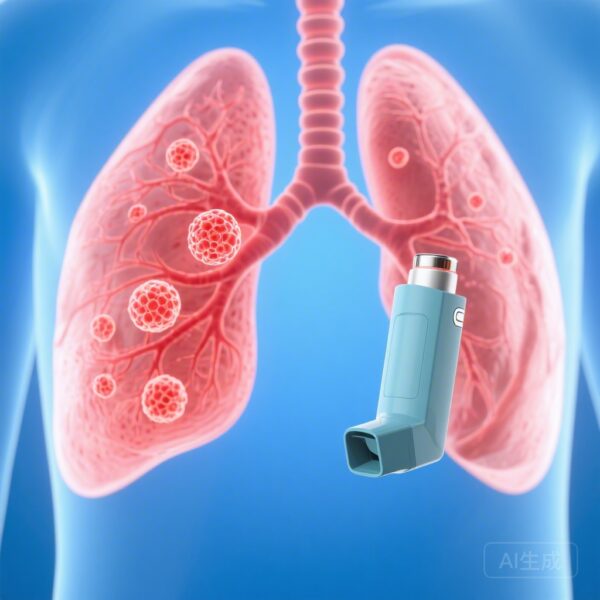
Highlights of the ARTS Trial
The primary analysis of the ARTS trial reveals several landmark findings for the management of non-small-cell lung cancer (NSCLC):
– Adjuvant treatment with aumolertinib led to an 83% reduction in the risk of disease recurrence or death (Hazard Ratio [HR] 0.17; 95% CI 0.09-0.29; p<0.0001).
– Median disease-free survival (DFS) was not reached in the aumolertinib group, compared to only 19.42 months in the placebo group.
– The safety profile was manageable, with no new safety signals identified; the most common grade 3-4 adverse event was increased blood creatine phosphokinase (7%).
– Nearly 95% of the study population had received prior adjuvant chemotherapy, reinforcing aumolertinib's efficacy as a sequential or foundational adjuvant strategy.
Background: The Unmet Need in Resectable NSCLC
Non-small-cell lung cancer remains the leading cause of cancer-related mortality globally. For patients with early-stage (II-IIIB) disease, complete surgical resection offers the best chance of a cure. However, despite optimal surgery and standard-of-care adjuvant chemotherapy, recurrence rates remain high, particularly in patients harboring Epidermal Growth Factor Receptor (EGFR) mutations. In the Asian population, EGFR mutations—specifically exon 19 deletions (ex19del) and exon 21 Leu858Arg substitutions—are prevalent in approximately 40-50% of lung adenocarcinoma cases.
Third-generation EGFR tyrosine-kinase inhibitors (TKIs) have revolutionized the treatment of metastatic NSCLC due to their high potency and ability to cross the blood-brain barrier. The landmark ADAURA trial established osimertinib as a standard in the adjuvant setting. However, diversifying the therapeutic landscape with other third-generation TKIs like aumolertinib is crucial for expanding patient access and refining safety-efficacy balances. Aumolertinib, already approved in China for metastatic disease, was evaluated in the ARTS trial to determine its utility in preventing recurrence following definitive surgery.
Study Design and Methodology
The ARTS study (NCT04687241) was a double-blind, multicentre, randomised, controlled, phase 3 trial conducted across 48 hospitals in mainland China. The study targeted a high-risk population: patients aged 18 or older with completely resected stage II-IIIB NSCLC. All participants were required to have confirmed EGFR ex19del or Leu858Arg mutations and an ECOG performance status of 0 or 1.
Patients were stratified by tumor stage (II vs. IIIA vs. IIIB) and mutation type. Following standard adjuvant therapy (usually chemotherapy), 214 patients were randomly assigned (1:1) to receive either aumolertinib (110 mg orally once daily) or a placebo for a planned duration of three years. The primary endpoint was DFS in the modified intention-to-treat (mITT) population, which excluded patients who were found to have stage I disease post-randomization. DFS was assessed by a Blinded Independent Central Review (BICR) to ensure objective evaluation of recurrence.
Results: Unprecedented Disease-Free Survival Benefits
The results of the ARTS trial represent a significant milestone in thoracic oncology. At the data cutoff date of April 15, 2024, with a median follow-up of approximately 27.6 months in both groups, the efficacy data were strikingly in favor of aumolertinib.
Primary Efficacy Endpoint
In the mITT population, the median DFS for patients receiving aumolertinib was not reached (95% CI 29.14 to not applicable). In contrast, patients in the placebo group experienced a median DFS of 19.42 months (95% CI 11.24-26.22). The hazard ratio of 0.17 indicates that aumolertinib reduced the risk of disease recurrence or death by 83% compared to placebo. This magnitude of benefit was consistent across all prespecified subgroups, including mutation type and disease stage.
Secondary Endpoints and Subgroup Analysis
The consistency of the benefit was particularly notable in patients with stage IIIA and IIIB disease, who traditionally face the highest risk of early systemic relapse. While overall survival (OS) data are still maturing, the profound separation in the DFS curves suggests a substantial delay in disease progression, which is a clinically meaningful outcome for patients seeking to maintain their post-surgical quality of life.
Safety and Tolerability Profile
Safety is a paramount concern in the adjuvant setting, where patients are potentially cured and treatment is intended to last for several years. The ARTS trial showed that aumolertinib was generally well-tolerated, with a safety profile consistent with its known pharmacological mechanism.
Common Adverse Events
Adverse events (AEs) occurred in most patients, but the majority were of grade 1 or 2. The most common grade 3-4 AE in the aumolertinib group was an increase in blood creatine phosphokinase (7%), which is a known side effect of some third-generation EGFR-TKIs but is typically asymptomatic and manageable. Other grade 3-4 events included prolonged QT interval (3%) and pneumonia (2%). Interestingly, the rates of hypertension and pneumonia were comparable to or slightly lower than those in the placebo group, suggesting that many respiratory events may have been related to the underlying condition or post-surgical recovery rather than the drug itself.
Serious Adverse Events
Treatment-related serious adverse events (SAEs) were rare, occurring in only 1% of the aumolertinib group compared to 3% in the placebo group. There were no treatment-related deaths. This favorable safety profile is critical for maintaining long-term adherence over the three-year treatment course.
Expert Commentary: Contextualizing Aumolertinib in Global Care
The ARTS trial provides robust evidence that aumolertinib is a highly effective adjuvant treatment for Chinese patients with EGFR-mutated NSCLC. From a clinical perspective, several points merit discussion:
Comparison with ADAURA
The HR of 0.17 observed in ARTS is remarkably similar to the HR reported in the ADAURA trial for osimertinib. This reinforces the class effect of third-generation EGFR-TKIs in the adjuvant setting. Aumolertinib offers a valuable alternative, particularly in regions where it is more accessible or where its specific side-effect profile (such as lower rates of certain gastrointestinal toxicities compared to earlier TKIs) might be preferred for specific patients.
The Role of Chemotherapy
It is important to note that 95% of patients in the ARTS trial received prior adjuvant chemotherapy. This clarifies that aumolertinib provides substantial added value even after standard systemic treatment, addressing the residual micrometastatic disease that chemotherapy often fails to eradicate.
Future Considerations
While the DFS benefit is undeniable, the oncology community awaits long-term overall survival data and central nervous system (CNS) recurrence data. Given aumolertinib’s known CNS activity in the metastatic setting, it is hypothesized that it will significantly reduce the incidence of brain metastases, which is a devastating form of recurrence in NSCLC.
Conclusion and Summary
The Phase 3 ARTS trial confirms that aumolertinib as adjuvant therapy provides a profound and statistically significant improvement in disease-free survival for patients with resected stage II-IIIB EGFR-mutated NSCLC. With an 83% reduction in the risk of recurrence and a manageable safety profile, aumolertinib establishes itself as a potent standard of care in the adjuvant setting for this patient population.
For clinicians, these results emphasize the importance of routine EGFR mutation testing for all patients with resectable NSCLC to ensure that those who could benefit from targeted adjuvant therapy are identified early. As we move toward more personalized oncology, the success of the ARTS trial represents another step forward in turning a high-risk diagnosis into a manageable, long-term survivable condition.
Funding and Clinical Registration
This study was funded by Hansoh Pharmaceutical Group. The trial is registered with ClinicalTrials.gov, number NCT04687241.
References
1. Zhang L, Zhang X, Wu L, et al. Aumolertinib as adjuvant therapy in resected EGFR-mutated non-small-cell lung cancer (ARTS): a double-blind, multicentre, randomised, controlled, phase 3 trial. Lancet Oncol. 2026;27(2):159-168. doi:10.1016/S1470-2045(25)00643-6.
2. Wu YL, Tsuboi M, He J, et al. Osimertinib in Resected EGFR-Mutated NSCLC. N Engl J Med. 2020;383(18):1711-1723. doi:10.1056/NEJMoa2027071.
3. Nagasaka M, Gadgeel SM. Role of chemotherapy and targeted therapy as adjuvant treatment for squamous cell lung cancer. Translational Lung Cancer Research. 2018;7(4):442-451.