Introduction: The Persistent Challenge of High-Risk NMIBC
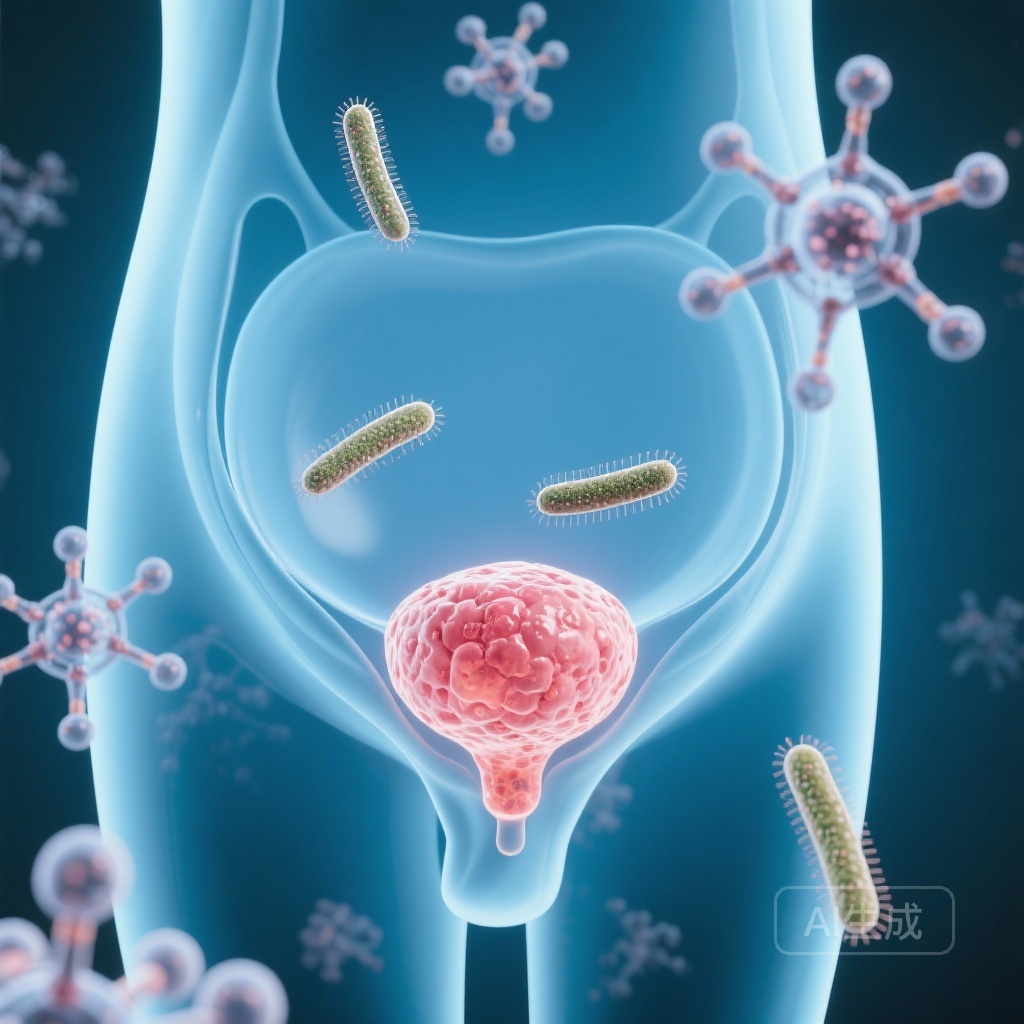
Non-muscle-invasive bladder cancer (NMIBC) represents approximately 75% of all newly diagnosed bladder cancer cases. Within this group, patients with high-risk disease—characterized by T1 lesions, high-grade tumors, or the presence of carcinoma in situ (CIS)—face a significant clinical burden due to high rates of recurrence and potential progression to muscle-invasive disease. For decades, the gold standard for management following transurethral resection of bladder tumor (TURBT) has been intravesical immunotherapy with Bacillus Calmette-Guérin (BCG). While BCG is effective, it is far from curative for all; approximately 30% to 40% of patients experience treatment failure within the first few years. These failures necessitate more aggressive interventions, including radical cystectomy, which carries substantial morbidity.
The biological rationale for combining BCG with immune checkpoint inhibitors (ICIs) is compelling. BCG induces a localized inflammatory response and shifts the tumor microenvironment toward a Th1-type immune profile. However, this inflammatory state also upregulates programmed death-ligand 1 (PD-L1) expression on both tumor and immune cells, potentially serving as an adaptive resistance mechanism that dampens the anti-tumor response. By introducing atezolizumab—a monoclonal antibody targeting PD-L1—researchers hypothesized that the combination could overcome this resistance and synergistically enhance the durable efficacy of BCG.
Study Design and Methodology of the ALBAN Trial
The ALBAN (GETUG-AFU 37) trial was an international, randomized, open-label phase III study designed to evaluate whether the addition of systemic atezolizumab to standard intravesical BCG could improve outcomes in BCG-naive patients with high-risk NMIBC. The trial enrolled 517 patients who were randomized 1:1 into two treatment arms:
- Arm A (Control): Standard intravesical BCG therapy consisting of an induction phase (6 weekly instillations) followed by a 1-year maintenance regimen (3 weekly instillations at 3, 6, and 12 months).
- Arm B (Experimental): The same BCG regimen combined with intravenous atezolizumab (1200 mg every 3 weeks) for a total of 17 cycles, spanning approximately one year.
The primary endpoint was investigator-assessed event-free survival (EFS), defined as the time from randomization to the first occurrence of high-grade recurrence, progression to muscle-invasive or metastatic disease, or death from any cause. Secondary endpoints included high-grade recurrence-free survival (RFS), overall survival (OS), and complete response (CR) rates specifically in patients with CIS.
Key Findings: A Neutral Outcome for Combined Therapy
The results of the ALBAN trial, recently published in Annals of Oncology, present a sobering outlook for this specific combination. After a median follow-up period sufficient to capture early and mid-term recurrence events, the trial did not meet its primary endpoint. The investigator-assessed EFS showed no statistically significant difference between the two groups. Specifically, 255 patients were assigned to Arm A and 262 to Arm B, with a resulting hazard ratio (HR) of 0.98 (95% CI 0.71-1.36; P = 0.9106). The Kaplan-Meier curves for EFS in both arms were nearly overlapping throughout the study period.
Subgroup analyses, which looked at factors such as age, T-stage, and the presence or absence of CIS, were remarkably consistent with the primary analysis, showing no evidence of benefit for the atezolizumab-BCG combination in any specific patient population. Secondary outcomes mirrored the primary results; there was no significant improvement in high-grade RFS or OS. For the subset of patients with CIS, the complete response rates were also comparable between the two arms, suggesting that the addition of the PD-L1 inhibitor did not enhance the initial clearance of these high-risk lesions.
Safety and Tolerability
While the safety profile of the combination was generally consistent with the known toxicities of the individual agents, the addition of systemic immunotherapy inevitably increased the burden of adverse events. Treatment-related adverse events (TRAEs) were more frequent in the combination arm. Grade ≥3 TRAEs were reported at higher rates in Arm B compared to Arm A. Common immune-related adverse events associated with atezolizumab, such as fatigue, pruritus, and thyroid dysfunction, were observed, alongside the expected local irritative symptoms caused by BCG. These findings suggest that the added toxicity of systemic ICI therapy was not offset by any clinical gain in this particular trial setting.
Expert Commentary: Contextualizing the ALBAN Results
The neutral results of the ALBAN trial raise critical questions about the current strategy of combining PD-1/PD-L1 inhibitors with BCG in the frontline setting. Interestingly, the ALBAN findings contrast with some other reported data in the NMIBC space. For example, trials investigating other PD-1 inhibitors have shown more promising signals in different contexts, such as BCG-unresponsive disease. This discrepancy suggests that the benefit of checkpoint inhibition in NMIBC may not be a “class effect” but rather dependent on the specific agent (PD-1 vs. PD-L1), the timing of administration, or the patient population (BCG-naive vs. BCG-unresponsive).
One potential reason for the failure of ALBAN could be the duration and intensity of the BCG regimen. The trial utilized a 1-year maintenance schedule; some experts argue that a more prolonged 3-year maintenance schedule might have interacted differently with the immunotherapy. Furthermore, the systemic delivery of atezolizumab may not have achieved optimal concentration or immune activation within the bladder microenvironment compared to local delivery methods currently under investigation in other trials.
The trial also underscores the urgent need for biomarkers. Currently, patients are selected for these therapies based on clinical risk factors alone. Future research must prioritize identifying which patients have a tumor microenvironment that is truly “primed” for checkpoint inhibition. Factors such as baseline CD8+ T-cell infiltration, tumor mutational burden (TMB), or specific gene expression signatures may be more predictive of response than PD-L1 expression alone.
Conclusion and Clinical Implications
The ALBAN (GETUG-AFU 37) trial provides high-level evidence that the addition of systemic atezolizumab to a 1-year BCG regimen does not improve event-free survival in BCG-naive, high-risk NMIBC patients. At this time, the standard of care remains BCG monotherapy. For clinicians, these results serve as a reminder that the synergistic potential of immunotherapy is complex and that more is not always better. While the search for effective adjuncts to BCG continues, the focus must shift toward optimizing treatment timing, exploring different checkpoint targets, and developing robust biomarkers to guide patient selection. The ALBAN trial remains a landmark study for its rigorous design, providing clear, albeit negative, guidance for the uro-oncology community.
Funding and Trial Registration
The ALBAN trial was supported by F. Hoffmann-La Roche/Genentech and coordinated by the French Genito-Urinary Tumor Group (GETUG). ClinicalTrials.gov Identifier: NCT02792192 (GETUG-AFU 37).
References
1. Roupret M, Bertaut A, Pignot G, et al. ALBAN (GETUG-AFU 37): a phase III, randomized, open-label international trial of intravenous atezolizumab and intravesical Bacillus Calmette-Guérin (BCG) versus BCG alone in BCG-naive high-risk, non-muscle-invasive bladder cancer (NMIBC). Ann Oncol. 2026 Jan;37(1):44-52. doi: 10.1016/j.annonc.2025.09.017.
2. Kamat AM, Bellmunt J, Galsky MD, et al. Society for Immunotherapy of Cancer (SITC) consensus statement on immunotherapy for the treatment of bladder cancer. J Immunother Cancer. 2017;5:68.
3. Balar AV, Kamat AM, Kulkarni GS, et al. Pembrolizumab monotherapy for the treatment of high-risk non-muscle-invasive bladder cancer unresponsive to BCG (KEYNOTE-057): an open-label, single-arm, multicentre, phase 2 study. Lancet Oncol. 2021;22(7):919-930.