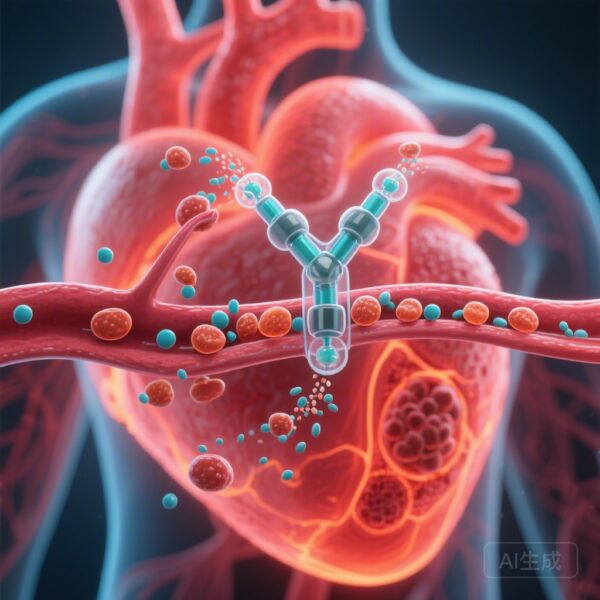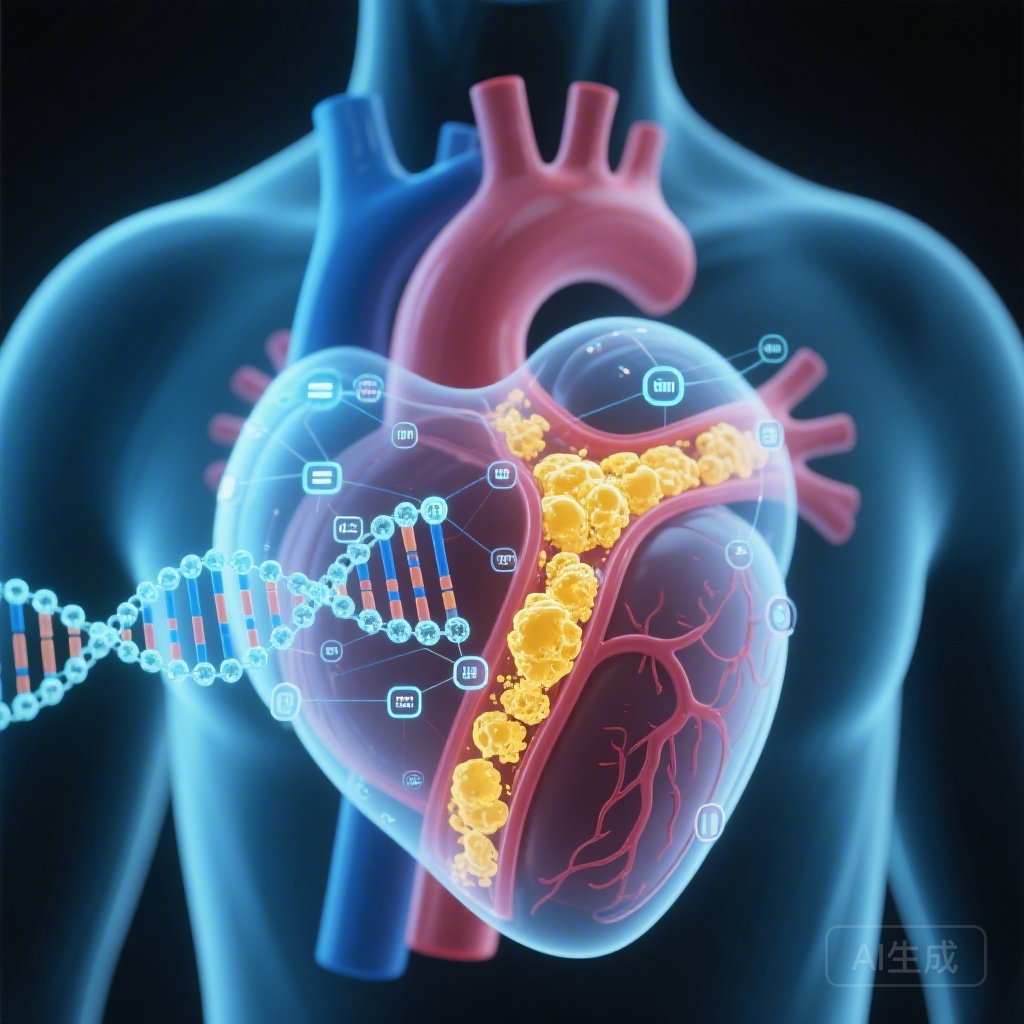
Highlights
The following key findings summarize the significance of the study on angiographic coronary artery disease (CAD) burden:
- A novel polygenic risk score (PRS) for angiographic CAD burden successfully predicts both obstructive and nonobstructive coronary atherosclerosis across diverse biobank cohorts.
- Mendelian randomization analysis confirms that traditional ASCVD risk factors, particularly LDL cholesterol and type 2 diabetes, exert their influence on myocardial infarction primarily through the physical accumulation of coronary plaque.
- The association between lipid levels and heart failure is significantly mediated by coronary atherosclerosis burden, suggesting that preventing plaque progression is a primary mechanism for reducing heart failure risk in these patients.
- These findings provide a causal framework supporting aggressive primary prevention to halt the progression of atherosclerosis before it reaches a symptomatic threshold.
Background and Clinical Context
Coronary artery disease (CAD) remains the leading cause of global cardiovascular morbidity and mortality, characterized by the progressive accumulation of atherosclerotic plaques within the coronary arteries. While the clinical management of CAD has traditionally focused on managing acute events—such as myocardial infarction (MI) and heart failure (HF)—there is an increasing shift toward understanding the structural precursors of these events. The “burden” of CAD, defined by the extent and severity of coronary stenosis observed on angiography, has long been recognized as a prognostic indicator. However, the degree to which this physical burden independently mediates the relationship between traditional atherosclerotic cardiovascular disease (ASCVD) risk factors and clinical outcomes has remained partially obscured by confounding variables in observational data.
Traditional risk factors such as hyperlipidemia, hypertension, and type 2 diabetes are well-established drivers of cardiovascular events. Yet, clinicians often grapple with the “residual risk” and the varying degrees of atherosclerosis seen in patients with similar risk profiles. This study sought to clarify the causal pathways by using genetic data to model the angiographic burden of CAD, thereby determining if the plaque itself is the primary vessel through which risk factors cause clinical harm, or if other pleiotropic pathways are at play.
Study Design and Methodology
The researchers employed a multi-stage approach combining large-scale genomic data with clinical imaging records. The study utilized data from the VA Million Veteran Program (MVP, n=41,507) to develop a polygenic risk score (PRS) specifically for angiographic CAD burden. This score was then validated using the Penn Medicine Biobank (PMBB), which included 41,660 genotyped individuals, 3,771 of whom had detailed coronary angiogram data available for review.
The methodology focused on two primary analyses:
1. Polygenic Risk Score Validation
The PRS for CAD burden was tested for its association with various degrees of coronary stenosis (nonobstructive vs. obstructive) and other cardiometabolic phenotypes, including peripheral artery disease (PAD) and traditional risk factors like hypertension and hyperlipidemia.
2. Mendelian Randomization (MR) and Mediation Framework
Using publicly available genome-wide association study (GWAS) data, the team applied a Mendelian randomization framework. This approach uses genetic variants as instrumental variables to mimic randomized controlled trials, allowing for causal inference. The mediation analysis specifically investigated whether the effect of risk factors (lipids, blood pressure, diabetes) on clinical outcomes (MI, HF) was mediated by the angiographic burden of atherosclerosis.
Key Findings
The study yielded robust evidence regarding the structural mediation of cardiovascular risk. The polygenic risk score for CAD burden was strongly associated with angiographic findings. Each standard deviation increase in the PRS was associated with a 26% increase in the odds of nonobstructive CAD (OR 1.26; 95% CI, 1.14-1.39) and a staggering 123% increase in the odds of obstructive CAD (OR 2.23; 95% CI, 1.94-2.55). Beyond the coronary arteries, the PRS also correlated with peripheral artery disease and several metabolic markers, suggesting a systemic genetic predisposition to atherosclerotic processes.
Mediation of Myocardial Infarction
The Mendelian randomization analysis revealed that a significant portion of the risk for myocardial infarction attributed to lipid measures—including apolipoprotein B (ApoB), low-density lipoprotein (LDL), total cholesterol (TC), and triglycerides (TG)—was mediated through the physical burden of coronary atherosclerosis. Similarly, type 2 diabetes showed a significant indirect effect on MI risk through its impact on plaque accumulation. This reinforces the biological model that these risk factors do not cause MI in a vacuum but do so by directly accelerating the growth and complexity of coronary plaques.
Insights into Heart Failure
One of the most compelling findings involved heart failure. The study found that LDL and total cholesterol demonstrated significant indirect effects on heart failure risk specifically through the angiographic CAD burden. This suggests that for many patients, heart failure is not an independent metabolic consequence of dyslipidemia but rather a secondary result of the atherosclerotic damage to the coronary vasculature. By contrast, other risk factors might influence heart failure through non-atherosclerotic pathways, such as direct myocardial strain or inflammatory processes, but the lipid-HF link appears heavily dependent on the coronary plaque burden.
Expert Commentary and Clinical Implications
The results of this study have profound implications for clinical practice and health policy. By quantifying the mediation effect of CAD burden, the research underscores the importance of the “area under the curve” for risk factor exposure. If the physical burden of plaque is the primary mediator of clinical events, then the timing of intervention becomes as critical as the intensity.
From a mechanistic perspective, these findings validate the use of coronary artery calcium (CAC) scoring and CT angiography as vital tools in risk stratification. If we can genetically and radiologically identify individuals with a high burden of subclinical atherosclerosis, we can intervene more aggressively with lipid-lowering therapies and glucose management before they reach the “obstructive” threshold that leads to MI or HF.
However, it is important to note the limitations. While the study uses a massive dataset, the mediation is described as “partial.” This implies that risk factors like hypertension or diabetes likely also contribute to adverse outcomes through pathways independent of large-vessel atherosclerosis, such as microvascular dysfunction, endothelial inflammation, or direct pressure-related remodeling of the left ventricle. Future research should aim to delineate these non-atherosclerotic pathways to provide a more holistic view of cardiovascular risk.
Conclusion
The study by Tsao et al. provides a clear, evidence-based roadmap for the future of preventive cardiology. By demonstrating that the angiographic burden of coronary atherosclerosis is the central mediator between traditional risk factors and clinical catastrophes, it shifts the focus back to the vessel wall. Primary prevention efforts must be prioritized to prevent the very development of coronary plaques. Once the burden of atherosclerosis is established, the risk of myocardial infarction and heart failure rises significantly, mediated by the structural damage already present in the coronary tree.
References
Tsao NL, Abramowitz SA, Shakt GE, et al. Angiographic Burden of Coronary Atherosclerosis Partially Mediates the Association Between ASCVD Risk Factors and Outcomes. Circ Genom Precis Med. 2026;19(1):e005266. doi:10.1161/CIRCGEN.125.005266.