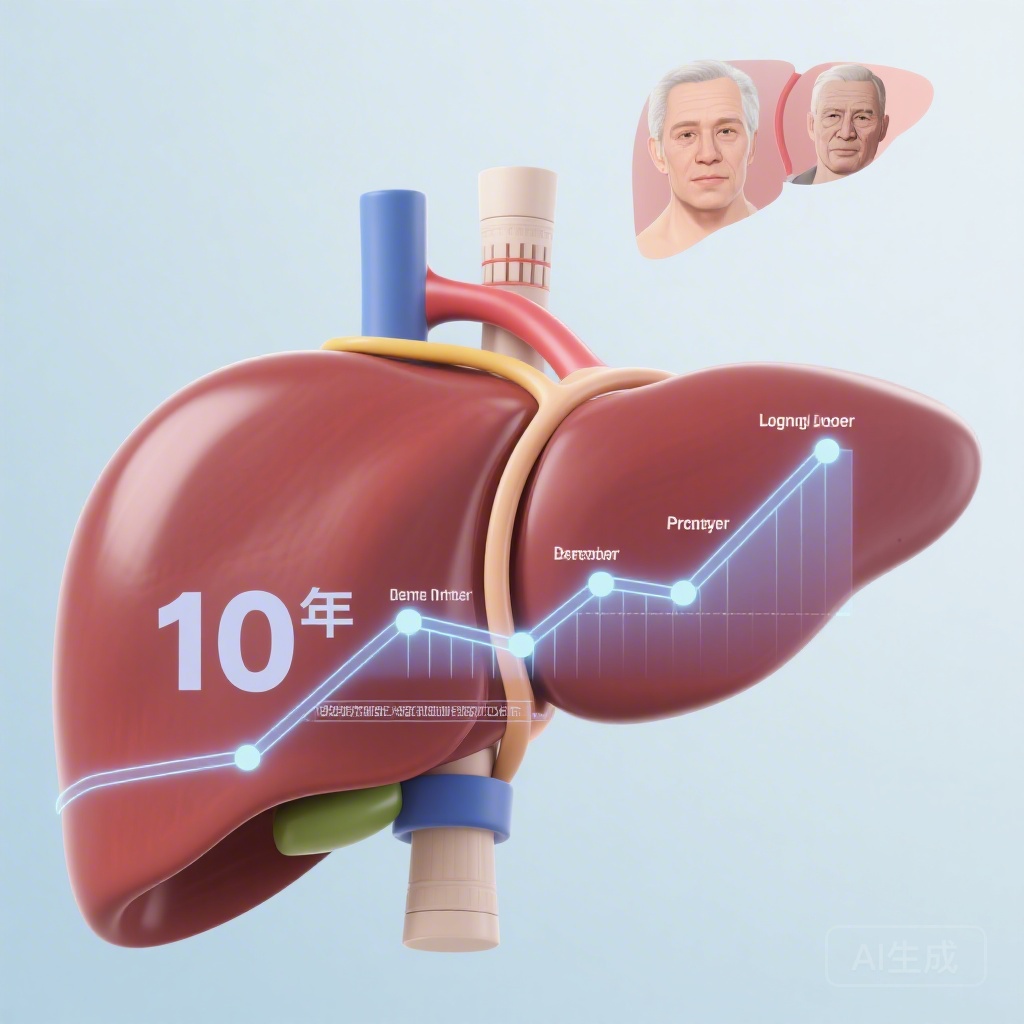
Introduction: The Quest for the Fifty-Year Graft
In the realm of solid organ transplantation, the adolescent recipient represents a unique clinical challenge. Unlike adult recipients, for whom a graft survival of 15 to 20 years may constitute a successful lifelong outcome, an adolescent undergoing liver transplantation (LT) at age 15 ideally requires that graft to function for 50 or 60 years. Consequently, maximizing the durability of the initial transplant is paramount to avoiding the morbidity and mortality associated with re-transplantation later in life.
While donor-recipient age mismatch has long been recognized as a significant variable in adult liver transplantation, its specific impact on the adolescent cohort—those aged 12 to 17—has remained under-characterized. Current allocation policies in the United States prioritize pediatric candidates, yet a significant portion of adolescent-derived donor livers are still allocated to adult recipients. This raises a critical question for transplant surgeons and policy-makers: does the use of older donor grafts for adolescent recipients compromise long-term outcomes, and if so, can geographic allocation policies be adjusted to mitigate this risk?
Highlights of the Study
- A 10-year graft survival disparity of 12.7% exists between adolescents receiving age-matched grafts (<10 years difference) and those receiving age-mismatched grafts (≥10 years difference).
- Age-mismatched recipients were more likely to be in the ICU at the time of transplant, reflecting a clinical tendency to accept older grafts for more critically ill patients.
- Simulation data suggests that expanding the geographic allocation radius for adolescent donors from 500 nautical miles (NM) to 1000 NM would more than double the proportion of candidates receiving age-matched offers within 15 days.
Study Design: A National Retrospective Analysis
To address these questions, researchers conducted a retrospective case-control study using the Organ Procurement & Transplantation Network (OPTN) database. The study cohort included 2,020 adolescents (ages 12-17) who received liver-only grafts from donation after brain death (DBD) between March 2002 and December 2024.
Recognizing that patients receiving older grafts might be sicker or have other confounding factors, the researchers employed 1:1 propensity score matching. This process matched 526 pairs of recipients based on a comprehensive set of variables, including:
- Graft type and size mismatch
- Donor and recipient sex (including sex mismatch)
- Transplant center volume
- Recipient hospitalization and ICU status at the time of transplant
Exposure was defined as a donor-recipient age difference of 10 or more years (age-mismatched) versus a difference of less than 10 years (age-matched). The primary endpoint was 10-year graft survival, with secondary endpoints focusing on overall survival and simulated waiting times under different allocation radii.
Results: The Longitudinal Cost of Age Mismatch
Of the 2,020 adolescents analyzed, 30.3% (n=612) received age-mismatched grafts. The median donor age in the mismatched group was 36 years, compared to 16 years in the matched group. Initial descriptive statistics revealed that the age-mismatched group was significantly more likely to be in the ICU at the time of transplant (46.9% vs. 17.8%), suggesting that clinicians often bypass the desire for an age-matched graft when faced with urgent clinical necessity.
Survival Outcomes
After propensity score matching, the data revealed a stark contrast in long-term durability. The 10-year graft survival rate was 61.5% for the age-mismatched group, compared to 74.2% for the age-matched group (P < .001). This 12.7% difference persisted even when the researchers stratified the results by pretransplant hospitalization status, indicating that the age of the donor liver itself is an independent driver of long-term failure, regardless of the recipient's initial acuity.
Geographic Allocation Simulations
One of the most actionable findings of the study came from the allocation simulation. Under the current 500-NM limit, only 44% of adolescent candidates are estimated to receive an age-matched graft offer within 15 days. However, the simulation demonstrated that expanding this radius to 1000 NM would allow 90% of candidates to receive such an offer within the same timeframe. Removing geographic limits entirely did not significantly improve the 1000-NM results, suggesting that a 1000-NM radius may be the ‘sweet spot’ for optimizing adolescent outcomes without incurring the logistics and costs of transcontinental transport.
Expert Commentary: Biological Plausibility and Policy Implications
From a physiological standpoint, the inferior performance of older grafts in younger recipients can be attributed to several factors. Older livers may have a lower regenerative capacity and a higher ‘allostatic load’—the cumulative wear and tear of biological aging. Furthermore, the immunological interplay between a robust adolescent immune system and an older donor organ may lead to different patterns of chronic rejection or graft fibrosis over a decade of follow-up.
Clinicians often face a difficult trade-off. In the acute setting, a ‘bird in the hand’—even if it is a 40-year-old liver—may be seen as preferable to waiting for a younger donor when a patient is in the ICU. However, this study suggests that for adolescents, the long-term price of that decision is substantial.
Moreover, the study highlights a systemic inefficiency. Because some adolescent donor livers are currently allocated to adults, the pediatric pool is effectively diluted. If policy were to shift toward broader geographic sharing specifically for adolescent-to-adolescent matching, the ‘national pool’ of young livers could be utilized more effectively to ensure that the recipients with the longest life expectancy receive the most durable grafts.
Study Limitations
As with any registry-based study, limitations exist. The OPTN database may not capture granular details regarding technical surgical complications or specific immunosuppression adherence patterns, which are particularly relevant in the adolescent population. Additionally, while propensity matching is robust, it cannot account for unmeasured confounders that might influence a surgeon’s decision to accept a specific graft.
Conclusion: A Call for Targeted Policy Reform
The findings by Nakayama et al. provide compelling evidence that donor-recipient age matching is a critical determinant of graft longevity in adolescents. A 12.7% difference in 10-year survival is not merely a statistical figure; it represents hundreds of potential re-transplants and life-threatening complications.
By expanding the allocation radius to 1000 NM, the transplant community has a tangible opportunity to improve these outcomes. Moving forward, the UNOS/OPTN policy-making bodies should consider these data when refining pediatric prioritization. For the adolescent patient, the best chance at a normal, long life begins with a liver that is as young as they are.
References
1. Nakayama T, Jensen AR, Attia A, Ahn DJ, Firl DJ, Kwong A, Charu V, Melcher ML, Esquivel CO, Sasaki K. Donor-Recipient Age Mismatch and Long-Term Graft Outcomes After Adolescent Liver Transplant. JAMA Netw Open. 2026 Jan 2;9(1):e2552779. doi: 10.1001/jamanetworkopen.2025.52779. PMID: 41499116.
2. Massie AB, Safier K, Henderson ML, et al. The adolescent gap: pediatric liver transplant candidates reaching adulthood. Am J Transplant. 2018;18(6):1463-1470.
3. Northup PG, Pruett TL, Everhart JE. The impact of donor age on liver transplant outcomes: a review of the literature. Liver Transpl. 2011;17(4):353-360.