Introduction
Emergence delirium (ED) remains one of the most challenging postoperative complications in pediatric anesthesia. Characterized by a state of dissociation, agitation, and lack of cooperation during the transition from anesthesia to wakefulness, ED affects up to 80% of children depending on the anesthetic agent and surgical context. Beyond the immediate distress caused to the patient, family, and medical staff, ED is associated with physical injury, self-extubation, and long-term postoperative maladaptive behavioral changes. While sevoflurane is a preferred volatile anesthetic due to its rapid induction and recovery, it is notoriously linked to a high incidence of ED.
Current strategies for mitigating ED primarily involve pharmacological interventions, such as the administration of dexmedetomidine, opioids, or propofol. However, these agents carry their own risks, including respiratory depression and prolonged recovery times. Consequently, there is a growing interest in nonpharmacologic, sensory-based interventions. A recent randomized clinical trial published in JAMA Pediatrics by Fu et al. investigates the efficacy of 40-Hz light stimulation—a form of gamma-frequency neuromodulation—in reducing the incidence of ED in children undergoing surgery under sevoflurane anesthesia.
The Science of Gamma-Frequency Stimulation
Gamma oscillations (30-80 Hz) are associated with high-level cognitive functions, including attention, memory, and sensory processing. Disruption of these oscillations has been implicated in various neuropsychiatric and neurodegenerative conditions. Preclinical studies have shown that 40-Hz sensory stimulation (visual or auditory) can entrain gamma rhythms, leading to reduced neuroinflammation and improved cognitive outcomes. In the context of anesthesia, which profoundly alters neural synchrony, the application of 40-Hz light stimulation aims to stabilize cortical networks during the vulnerable period of emergence, potentially preventing the disorganized neural activity that manifests as delirium.
Study Design and Methodology
Population and Setting
The study was a single-center, randomized clinical trial conducted at Henan Provincial People’s Hospital between April and August 2024. The researchers enrolled 98 children aged 3 to 14 years who were scheduled for elective vascular malformation resection. This specific surgical population was chosen to maintain a degree of homogeneity in surgical stress and duration.
Intervention and Control
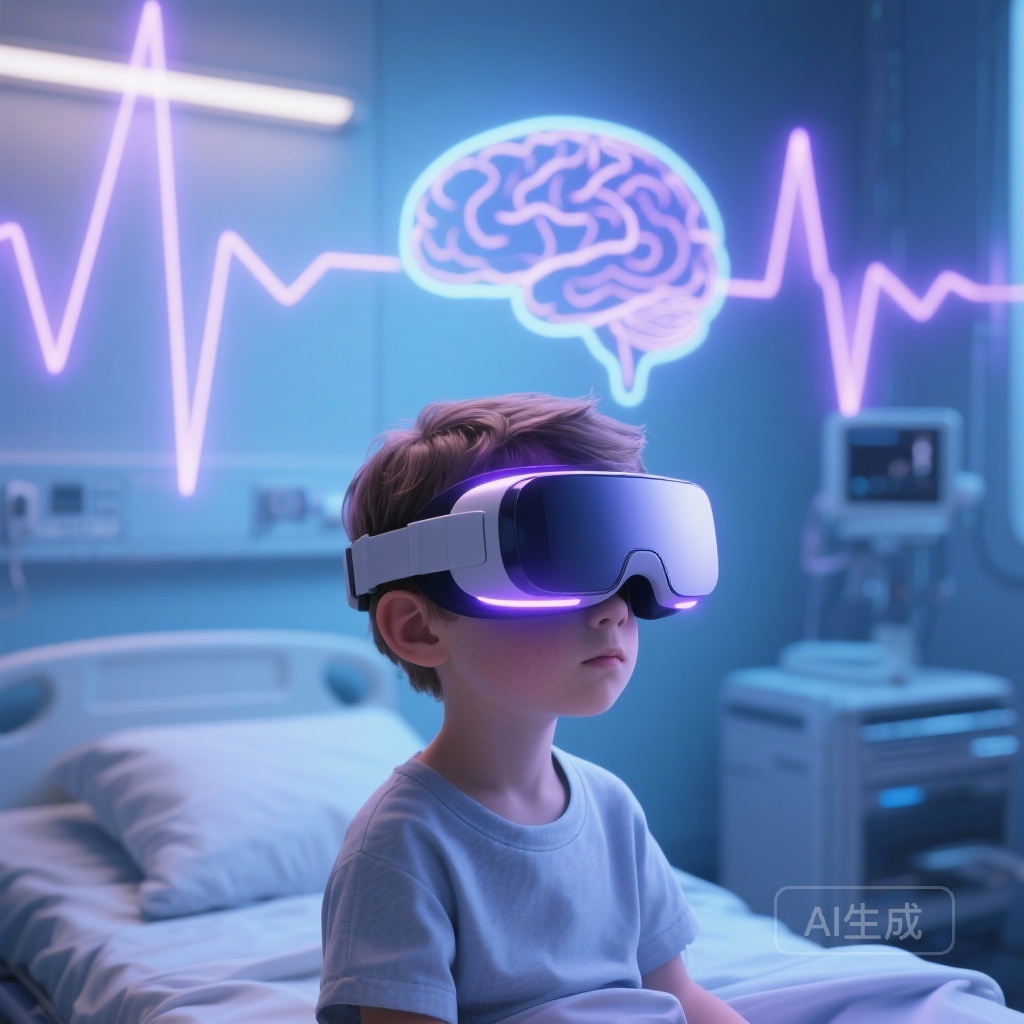
Participants were randomized 1:1 into two groups. Following the induction of anesthesia, the intervention group received 40-Hz light stimulation via specialized virtual reality (VR) glasses for one hour. The control (sham) group wore identical glasses that remained dark. The use of VR glasses ensured a controlled delivery of light stimulation directly to the visual cortex while the patients were under general anesthesia.
Primary and Secondary Outcomes
The primary efficacy endpoint was the incidence of emergence delirium. This was defined as a score of 10 or higher on the Chinese version of the Cornell Assessment of Pediatric Delirium (C-CAPD) scale, monitored from the moment of extubation up to 72 hours post-surgery. Secondary measures included the Pediatric Anesthesia Emergence Delirium (PAED) scale, postoperative pain levels, and recovery times.
Key Findings
The results of the trial provide compelling evidence for the efficacy of light-based neuromodulation. Of the 98 children randomized (mean age 7.7 years; 60.2% male), the incidence of emergence delirium was significantly lower in the 40-Hz light stimulation group compared to the sham group.
Primary Outcome Results
According to the C-CAPD scale, the incidence of ED was 22.4% in the intervention group compared to 44.9% in the sham group. This represents an unadjusted risk ratio (RR) of 0.57 (95% CI, 0.33-0.92; P = .02). These data suggest that 40-Hz light stimulation nearly halved the risk of developing clinically significant delirium.
Secondary and Adjusted Analysis
The findings were robust across different assessment tools. Using the PAED scale, the incidence was 14.3% in the intervention group versus 34.7% in the sham group (unadjusted RR, 0.51; 95% CI, 0.26-0.91; P = .02). Furthermore, the researchers performed a multivariable analysis to account for potential confounders such as age, sex, preoperative anxiety, anesthesia duration, and postoperative pain. After adjustment, 40-Hz light stimulation remained a significant independent factor associated with reduced ED (adjusted RR, 0.86; 95% CI, 0.77-0.95; P = .004).
Clinical Implications and Expert Commentary
This study represents a significant step forward in perioperative pediatric care. The use of non-invasive light stimulation addresses a critical unmet need for safer alternatives to sedative-heavy protocols. By utilizing the 40-Hz frequency, the intervention leverages the brain’s innate plasticity and response to rhythmic sensory input.
Mechanistic Insights
While the exact mechanism in humans remains to be fully elucidated, it is hypothesized that 40-Hz stimulation may modulate microglial activity or enhance the clearance of anesthetic metabolites and inflammatory mediators in the brain. In the pediatric population, whose brains are still developing, such a targeted, non-pharmacological approach is particularly attractive as it avoids the potential neurotoxic effects associated with prolonged or high-dose anesthetic exposure.
Considerations for Implementation
One of the primary strengths of this intervention is its feasibility. VR glasses are portable, relatively inexpensive, and can be easily integrated into the existing workflow of an operating room or post-anesthesia care unit (PACU). However, clinicians must consider the exclusion criteria used in the study; children with neuropsychiatric disorders or cephalofacial vascular malformations were excluded, meaning the results may not be generalizable to all pediatric surgical populations.
Conclusion
The randomized clinical trial by Fu et al. demonstrates that 40-Hz light stimulation is a safe and effective method for reducing the incidence of emergence delirium in children undergoing sevoflurane anesthesia. By nearly halving the rate of ED, this intervention not only improves the immediate postoperative experience for the child and their caregivers but may also reduce the burden on nursing staff and the healthcare system. Future research should focus on multicenter trials with larger, more diverse cohorts to confirm these findings and explore the optimal duration and intensity of stimulation across different age groups and surgical procedures.
Trial Registration
ClinicalTrials.gov Identifier: NCT06493513