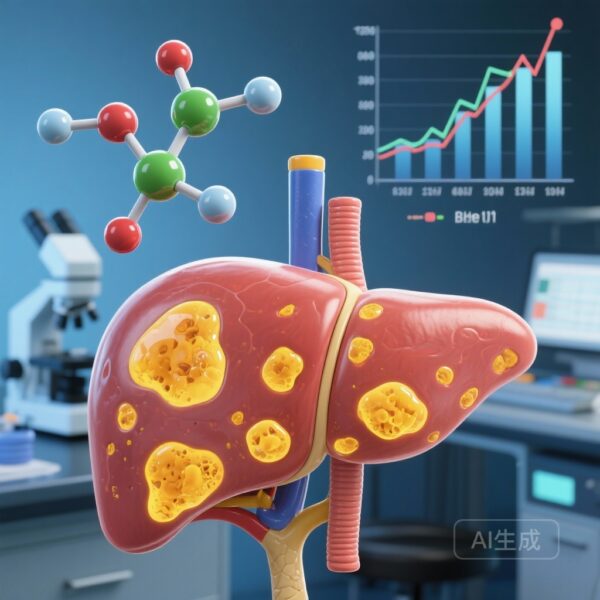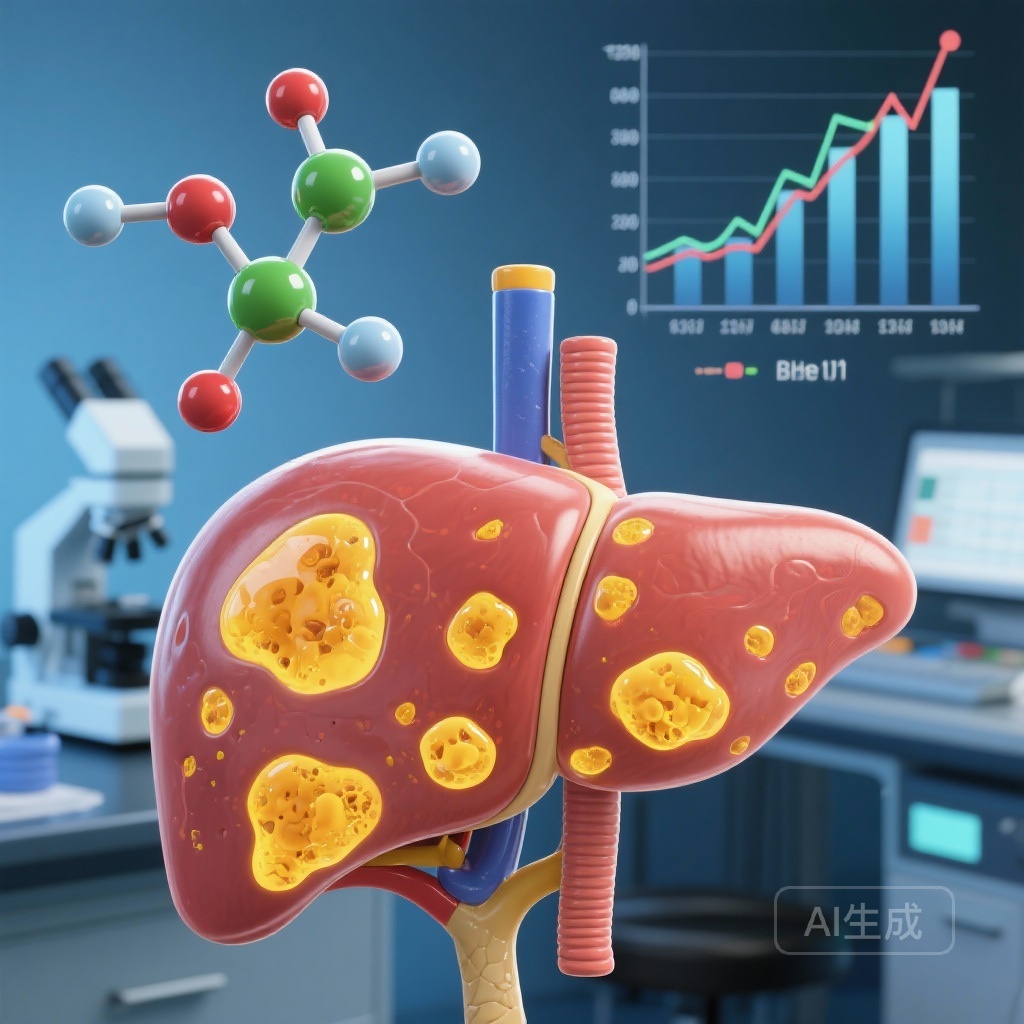
Berberine cải thiện hồ sơ lipid và viêm nhưng không giảm mỡ nội tạng và gan trong MASLD

Berberine cải thiện hồ sơ lipid và viêm nhưng không giảm mỡ nội tạng và gan trong MASLD

Tóm tắt

  • Trong một thử nghiệm ngẫu nhiên đa trung tâm (RCT) với 337 người tham gia, 1 g/ngày của berberine trong sáu tháng không làm giảm đáng kể diện tích mô mỡ nội tạng (VAT) hoặc lượng mỡ gan so với nhóm giả dược.
  • Điều trị bằng berberine đã dẫn đến giảm đáng kể cholesterol lipoprotein mật độ thấp (LDL-C), apolipoprotein B (ApoB) và protein phản ứng C nhạy cảm cao (hs-CRP).
  • Hồ sơ an toàn của berberine rất tốt, với tỷ lệ sự cố bất lợi tương đương với nhóm giả dược.
  • Phân tích sau hoc cho thấy rằng bệnh nhân có mức viêm cơ bản cao hơn có thể nhận được lợi ích giảm lipid lớn hơn từ berberine.

Giới thiệu: Thách thức chuyển hóa của MASLD

Bệnh gan nhiễm mỡ liên quan đến rối loạn chuyển hóa (MASLD), trước đây được gọi là NAFLD, đã trở thành một đại dịch sức khỏe toàn cầu, gắn liền chặt chẽ với béo phì, đề kháng insulin và rối loạn lipid máu. Trung tâm của bệnh sinh MASLD là sự tích tụ mô mỡ nội tạng (VAT), đóng vai trò là nguồn chính của các cytokine gây viêm và axit béo tự do, thúc đẩy gan nhiễm mỡ và rối loạn chuyển hóa toàn thân. Dù phổ biến, các lựa chọn điều trị dược lý cho MASLD vẫn còn hạn chế, dẫn đến việc các nhà nghiên cứu tìm kiếm các hợp chất thực vật có tiềm năng chuyển hóa.

Berberine, một alkaloid isoquinoline có trong nhiều loại thảo dược truyền thống, đã thu hút sự chú ý đáng kể như một tác nhân điều trị tiềm năng. Thường được gọi trong truyền thông đại chúng là “metformin tự nhiên”, berberine đã chứng minh khả năng kích hoạt kinase protein hoạt hóa AMP (AMPK) và ức chế PCSK9 trong các nghiên cứu tiền lâm sàng. Mặc dù các nghiên cứu thử nghiệm trước đó đã gợi ý về lợi ích trong việc giảm cân và giảm mỡ gan, bằng chứng lâm sàng quy mô lớn và nghiêm ngặt trong các quần thể không mắc bệnh tiểu đường vẫn còn thiếu. Thử nghiệm BRAVO (Berberine và Mỡ Nội Tạng ở Người Béo Phì Không Mắc Bệnh Tiểu Đường và MASLD) được thiết kế để cung cấp bằng chứng quyết định về hiệu quả của nó trong các quần thể cụ thể này.

Thử nghiệm BRAVO: Thiết kế và Phương pháp Nghiên cứu

Thử nghiệm BRAVO là một thử nghiệm lâm sàng ngẫu nhiên, đối chứng giả dược, mù đôi, đa trung tâm được tiến hành tại 11 bệnh viện ở Trung Quốc. Nghiên cứu đã tuyển chọn 337 người không mắc bệnh tiểu đường bị béo phì và MASLD từ tháng 7 đến tháng 12 năm 2023. Người tham gia phải có chỉ số khối cơ thể (BMI) ít nhất 28 kg/m² hoặc BMI 25 kg/m² với vòng eo tăng, cùng với MASLD được xác nhận.

Người tham gia được phân ngẫu nhiên theo tỷ lệ 1:1 để nhận berberine đường uống (1 g/ngày, chia thành hai liều 0.5 g) hoặc giả dược phù hợp trong sáu tháng. Các điểm cuối chính là tỷ lệ phần trăm thay đổi tương đối trong diện tích mô mỡ nội tạng (VAT) và thay đổi tuyệt đối trong lượng mỡ gan, cả hai đều được đo chính xác bằng chụp cắt lớp vi tính (CT). Các điểm cuối phụ bao gồm thay đổi trong các chỉ số đường huyết, hồ sơ lipid (LDL-C, triglyceride, ApoB) và các chỉ số viêm như protein phản ứng C nhạy cảm cao (hs-CRP). Phân tích tuân theo nguyên tắc điều trị dự định, đảm bảo rằng tất cả người tham gia được ngẫu nhiên hóa đều được bao gồm trong đánh giá hiệu quả và an toàn.

Kết quả Chính: Mỡ Nội Tạng và Gan Nhiễm Mỡ

Kết quả của thử nghiệm BRAVO đã đưa ra một bức tranh phức tạp về tác động chuyển hóa của berberine. Về các kết quả chính, nghiên cứu đã không đạt được mục tiêu chính về giảm mỡ. Cuối cùng của can thiệp sáu tháng, không có sự khác biệt thống kê đáng kể giữa nhóm berberine và nhóm giả dược về diện tích mô mỡ nội tạng hoặc lượng mỡ gan.

Mô Mỡ Nội Tạng (VAT)

Tỷ lệ thay đổi tương đối trung bình trong diện tích VAT của nhóm berberine so với nhóm giả dược là 1.4% (97.5% CI, -2.4% đến 5.2%). Kết quả này cho thấy berberine không giúp giảm mỡ nội tạng nhiều hơn giả dược trong suốt thời gian sáu tháng của nghiên cứu.

Lượng Mỡ Gan

Tương tự, thay đổi tuyệt đối trong lượng mỡ gan không có cải thiện đáng kể với berberine so với giả dược (0.9% [97.5% CI, -0.4% đến 2.1%]). Những phát hiện này thách thức quan niệm rằng berberine có thể hoạt động như một tác nhân giảm cân hoặc giảm mỡ gan chính trong trường hợp không có hạn chế calo hoặc thay đổi lối sống tích cực.

Kết quả Phụ: Lipid, Apolipoprotein và Viêm

Mặc dù các điểm cuối chính là âm, các kết quả phụ đã tiết lộ lợi ích lâm sàng đáng kể của berberine trong các lĩnh vực khác của sức khỏe chuyển hóa. Berberine đã chứng minh rõ ràng và có ý nghĩa thống kê về việc cải thiện hồ sơ lipidomic và viêm của người tham gia.

Cải thiện Hồ sơ Lipid

Người tham gia trong nhóm berberine đã trải qua sự giảm LDL-C đáng kể hơn so với nhóm giả dược (-7.72 mg/dL [95% CI, -13.13 đến -1.93]). Ngoài ra, apolipoprotein B (ApoB), một chỉ số quan trọng của rủi ro xơ vữa động mạch, đã giảm -3.42 mg/dL (95% CI, -6.33 đến -0.51) trong nhóm berberine. Những kết quả này phù hợp với cơ chế ức chế PCSK9 do berberine, làm tăng biểu hiện của các thụ thể LDL trên tế bào gan.

Viêm Toàn Thân

Một trong những phát hiện đáng chú ý nhất là giảm mức hs-CRP. Người tham gia được điều trị bằng berberine đã giảm đáng kể hs-CRP so với giả dược (-0.072 mg/dL [95% CI, -0.140 đến -0.004]). Phân tích sau hoc cũng chỉ ra rằng hiệu ứng chống viêm này rõ ràng nhất ở những người tham gia có mức hs-CRP cơ bản cao. Điều này cho thấy berberine có thể đặc biệt có lợi cho bệnh nhân có gánh nặng viêm cơ bản cao, một đặc điểm phổ biến trong quá trình tiến triển của MASLD thành rối loạn chuyển hóa gan nhiễm mỡ (MASH).

Hồ sơ An toàn và Tính dung nạp

Hồ sơ an toàn của berberine ở liều 1 g/ngày rất tốt. Thử nghiệm báo cáo tỷ lệ tuân thủ thuốc cao—90.3% cho nhóm berberine và 90.7% cho nhóm giả dược. Tần suất các sự cố bất lợi, bao gồm các triệu chứng tiêu hóa thường liên quan đến berberine, tương tự giữa hai nhóm nghiên cứu. Không có sự cố bất lợi nghiêm trọng nào liên quan đến can thiệp, xác nhận rằng berberine là một chất bổ sung được dung nạp tốt cho sử dụng dài hạn trong quần thể này.

Bàn luận Lâm sàng: Hòa giải Các Tín Hiệu Chuyển Hóa Phức Tạp

Thử nghiệm BRAVO cung cấp bằng chứng chất lượng cao làm rõ vai trò của berberine trong điều trị chuyển hóa. Sự không đồng nhất giữa việc thất bại trong việc giảm mỡ (VAT và mỡ gan) và thành công trong việc cải thiện lipid và viêm cần được kiểm tra lâm sàng kỹ lưỡng hơn.

Sự thiếu hiệu quả trên mỡ có thể do liều lượng hoặc quần thể nghiên cứu. Mặc dù 1 g/ngày là liều chuẩn, một số nghiên cứu trước đó cho thấy giảm cân đã sử dụng liều cao hơn hoặc kết hợp berberine với các can thiệp lối sống khác. Hơn nữa, ở những người không mắc bệnh tiểu đường, các con đường chuyển hóa mà berberine ảnh hưởng có thể không đủ mạnh để vượt qua các cơ chế duy trì cân bằng chất béo mà không có thâm hụt calo đồng thời.

Tuy nhiên, sự giảm LDL-C và hs-CRP đáng kể cho thấy berberine vẫn là một công cụ quý giá để giảm rủi ro tim mạch ở bệnh nhân mắc MASLD. Vì bệnh tim mạch là nguyên nhân tử vong hàng đầu ở bệnh nhân MASLD, các đặc tính giảm lipid và chống viêm của berberine cung cấp lợi thế lâm sàng có ý nghĩa, ngay cả khi không giảm trực tiếp lượng mỡ gan. Những phát hiện này hỗ trợ việc sử dụng berberine như một liệu pháp bổ trợ cho rối loạn lipid và viêm dưới lâm sàng trong bối cảnh hội chứng chuyển hóa.

Bình luận Chuyên gia

Thử nghiệm BRAVO nhắc nhở rằng các kết quả lâm sàng không luôn phản ánh kỳ vọng hóa học. Mặc dù việc kích hoạt AMPK của berberine nên lý thuyết thúc đẩy oxy hóa lipid và giảm mỡ, thực tế lâm sàng trongRCT 6 tháng này cho thấy sức mạnh chính của nó nằm ở hiệu ứng ức chế PCSK9 và tính chất chống viêm. Đối với các bác sĩ, điều này có nghĩa là berberine có thể được xem như một chất điều hòa chuyển hóa và tác nhân giảm lipid hơn là một thuốc giảm cân.

Kết luận

Trong thử nghiệm lâm sàng ngẫu nhiên đa trung tâm này của người không mắc bệnh tiểu đường bị béo phì và MASLD, việc điều trị 6 tháng bằng 1 g/ngày berberine không giảm diện tích mô mỡ nội tạng hoặc lượng mỡ gan. Tuy nhiên, nó đã chứng minh lợi ích rõ ràng trong việc giảm LDL-C, ApoB và hs-CRP, đặc biệt là ở những người có mức viêm cơ bản cao. Với hồ sơ an toàn tuyệt vời, berberine vẫn là một lựa chọn khả thi để quản lý các khía cạnh tim mạch và viêm của rối loạn chuyển hóa, mặc dù không nên dựa vào nó như một phương pháp điều trị chính để giảm mỡ nội tạng hoặc gan nhiễm mỡ.

Tài trợ và ClinicalTrials.gov

Nghiên cứu này được tài trợ bởi các khoản tài trợ từ Chương trình Nghiên cứu và Phát triển Quốc gia Trung Quốc và các quỹ nghiên cứu y tế khu vực. Thử nghiệm được đăng ký tại ClinicalTrials.gov với số hiệu NCT05647915.

Tài liệu tham khảo

Lei L, Wang B, Zhao L, et al. Berberine and Adiposity in Diabetes-Free Individuals With Obesity and MASLD: A Randomized Clinical Trial. JAMA Netw Open. 2026;9(1):e2554152. doi:10.1001/jamanetworkopen.2025.54152

Berberine Improves Lipid Profiles and Inflammation but Fails to Reduce Visceral and Liver Fat in MASLD

Berberine Improves Lipid Profiles and Inflammation but Fails to Reduce Visceral and Liver Fat in MASLD

Highlights

  • In a multicenter RCT involving 337 participants, 1 g/d of berberine for six months did not significantly reduce visceral adipose tissue (VAT) area or liver fat content compared to placebo.
  • Berberine treatment resulted in significant reductions in low-density lipoprotein cholesterol (LDL-C), apolipoprotein B (ApoB), and high-sensitivity C-reactive protein (hs-CRP).
  • The safety profile of berberine was excellent, with adverse event rates comparable to the placebo group.
  • Post hoc analysis suggests that patients with higher baseline inflammation may derive greater lipid-lowering benefits from berberine.

Introduction: The Metabolic Challenge of MASLD

Metabolic dysfunction-associated steatotic liver disease (MASLD), formerly known as NAFLD, has emerged as a global health epidemic, closely linked with obesity, insulin resistance, and dyslipidemia. Central to the pathogenesis of MASLD is the accumulation of visceral adipose tissue (VAT), which serves as a major source of pro-inflammatory cytokines and free fatty acids that drive hepatic steatosis and systemic metabolic dysfunction. Despite its prevalence, pharmacological options for MASLD remain limited, leading researchers to explore botanical compounds with metabolic potential.

Berberine, an isoquinoline alkaloid found in several traditional medicinal plants, has gained significant attention as a potential therapeutic agent. Often referred to in lay media as “natural metformin,” berberine has demonstrated the ability to activate adenosine monophosphate-activated protein kinase (AMPK) and inhibit proprotein convertase subtilisin/kexin type 9 (PCSK9) in preclinical studies. While previous pilot studies suggested benefits in weight loss and liver fat reduction, large-scale, rigorous clinical evidence in diabetes-free populations has been lacking. The BRAVO (Berberine and Adiposity in Diabetes-Free Individuals With Obesity and MASLD) trial was designed to provide definitive evidence regarding its efficacy in these specific populations.

The BRAVO Trial: Study Design and Methodology

The BRAVO trial was a multicenter, double-blind, randomized, placebo-controlled clinical trial conducted across 11 hospitals in China. The study enrolled 337 diabetes-free individuals with obesity and MASLD between July and December 2023. Participants were required to have a body mass index (BMI) of at least 28 kg/m² or a BMI of 25 kg/m² with increased waist circumference, alongside confirmed MASLD.

Participants were randomly assigned in a 1:1 ratio to receive either oral berberine (1 g/d, administered as two 0.5 g doses) or a matching placebo for six months. The primary endpoints were the relative percentage change in VAT area and the absolute change in liver fat content, both precisely measured using computed tomography (CT) scans. Secondary endpoints included changes in glycemic markers, lipid profiles (LDL-C, triglycerides, ApoB), and inflammatory markers such as high-sensitivity C-reactive protein (hs-CRP). The analysis followed the intention-to-treat principle, ensuring that all randomized participants were included in the evaluation of efficacy and safety.

Primary Outcomes: Visceral Adiposity and Hepatic Steatosis

The results of the BRAVO trial presented a nuanced picture of berberine’s metabolic impact. Regarding the primary outcomes, the study failed to meet its main objectives for fat reduction. At the end of the six-month intervention, there were no statistically significant differences between the berberine and placebo groups in terms of visceral adipose tissue area or liver fat content.

Visceral Adipose Tissue (VAT)

The mean relative change in VAT area for the berberine group compared to the placebo group was 1.4% (97.5% CI, -2.4% to 5.2%). This result indicates that berberine did not facilitate any more visceral fat loss than a placebo over the half-year duration of the study.

Liver Fat Content

Similarly, the absolute change in liver fat content showed no significant improvement with berberine compared to placebo (0.9% [97.5% CI, -0.4% to 2.1%]). These findings challenge the notion that berberine can act as a primary weight-loss or de-fatting agent for the liver in the absence of caloric restriction or intensive lifestyle modification.

Secondary Outcomes: Lipids, Apolipoproteins, and Inflammation

While the primary endpoints were negative, the secondary outcomes revealed significant clinical benefits of berberine in other areas of metabolic health. Berberine demonstrated a clear and statistically significant advantage over placebo in improving the lipidomic and inflammatory profile of participants.

Lipid Profile Improvements

Participants in the berberine arm experienced a significantly larger reduction in LDL-C levels compared to those in the placebo arm (-7.72 mg/dL [95% CI, -13.13 to -1.93]). Furthermore, apolipoprotein B (ApoB), a critical marker of atherogenic risk, was reduced by -3.42 mg/dL (95% CI, -6.33 to -0.51) in the berberine group. These results align with the known mechanism of berberine-mediated PCSK9 inhibition, which increases the expression of LDL receptors on hepatocytes.

Systemic Inflammation

One of the most notable findings was the reduction in hs-CRP levels. Berberine-treated individuals showed a significant decrease in hs-CRP compared to placebo (-0.072 mg/dL [95% CI, -0.140 to -0.004]). Post hoc analyses further indicated that this anti-inflammatory effect was most pronounced in participants who entered the study with higher baseline hs-CRP levels. This suggests that berberine may be particularly beneficial for patients with a high baseline inflammatory burden, a common feature in the progression of MASLD to metabolic dysfunction-associated steatohepatitis (MASH).

Safety and Tolerability Profile

The safety profile of berberine at a dose of 1 g/d was excellent. The trial reported high medication adherence rates—90.3% for the berberine group and 90.7% for the placebo group. The incidence of adverse events, including gastrointestinal symptoms which are often associated with berberine, was similar between the two study arms. No serious adverse events were linked to the intervention, confirming that berberine is a well-tolerated supplement for long-term use in this population.

Clinical Discussion: Reconciling Mixed Metabolic Signals

The BRAVO trial provides high-quality evidence that clarifies berberine’s role in metabolic therapy. The disconnect between its failure to reduce fat (VAT and liver fat) and its success in improving lipids and inflammation warrants closer clinical examination.

The lack of effect on adiposity may be due to the dose or the study population. While 1 g/d is a standard dose, some previous studies showing weight loss used higher doses or combined berberine with other lifestyle interventions. Furthermore, in individuals who are diabetes-free, the metabolic pathways that berberine influences might not be sufficient to overcome the homeostatic mechanisms preserving fat stores without a concurrent caloric deficit.

However, the significant reduction in LDL-C and hs-CRP suggests that berberine remains a valuable tool for cardiovascular risk reduction in patients with MASLD. Since cardiovascular disease is the leading cause of mortality in MASLD patients, the lipid-lowering and anti-inflammatory properties of berberine provide a meaningful clinical advantage, even in the absence of direct liver fat reduction. The findings support the use of berberine as an adjunct therapy for dyslipidemia and subclinical inflammation in the context of metabolic syndrome.

Expert Commentary

The BRAVO trial serves as a reminder that clinical outcomes do not always mirror biochemical expectations. While berberine’s activation of AMPK should theoretically promote lipid oxidation and fat reduction, the clinical reality in this 6-month RCT suggests that its primary strength lies in its PCSK9-inhibitory effects and its anti-inflammatory properties. For clinicians, this means berberine should perhaps be viewed more as a metabolic modulator and lipid-lowering agent rather than a weight-loss drug.

Conclusion

In this multicenter randomized clinical trial of diabetes-free individuals with obesity and MASLD, a 6-month treatment with 1 g/d of berberine did not reduce visceral adipose tissue area or liver fat content. However, it demonstrated clear benefits in reducing LDL-C, ApoB, and hs-CRP, particularly in those with higher baseline inflammation. With an excellent safety profile, berberine remains a viable option for managing the cardiovascular and inflammatory aspects of metabolic dysfunction, though it should not be relied upon as a primary treatment for reducing adiposity or hepatic steatosis.

Funding and ClinicalTrials.gov

This study was supported by grants from the National Key Research and Development Program of China and various regional health research funds. The trial is registered at ClinicalTrials.gov with the identifier NCT05647915.

References

Lei L, Wang B, Zhao L, et al. Berberine and Adiposity in Diabetes-Free Individuals With Obesity and MASLD: A Randomized Clinical Trial. JAMA Netw Open. 2026;9(1):e2554152. doi:10.1001/jamanetworkopen.2025.54152
Comments

No comments yet. Why don’t you start the discussion?

Để lại một bình luận