Vòng lặp tiền xử lý NSUN2-FOSB: Mở khóa sự sống sót được trung gian bởi m5C trong bạch cầu cấp tính tủy

Vòng lặp tiền xử lý NSUN2-FOSB: Mở khóa sự sống sót được trung gian bởi m5C trong bạch cầu cấp tính tủy

Những điểm nổi bật của trục NSUN2-FOSB-BCL2L1

Nghiên cứu được công bố trên tạp chí Haematologica đã xác định một cơ chế epigenetic quan trọng thúc đẩy sự tiến triển của Bạch cầu cấp tính tủy (AML). Những điểm chính của nghiên cứu này bao gồm:

1. NSUN2 được biểu hiện mạnh mẽ trong các mẫu bệnh nhân AML nguyên phát nhưng vẫn ở mức thấp trong các tế bào gốc và tiền chất tạo máu bình thường (HSPCs).
2. Trục NSUN2-FOSB-BCL2L1 hoạt động theo cách phụ thuộc vào m5C, nơi NSUN2 ổn định mRNA FOSB thông qua sự biến đổi 5-methylcytosine tại 3′-UTR.
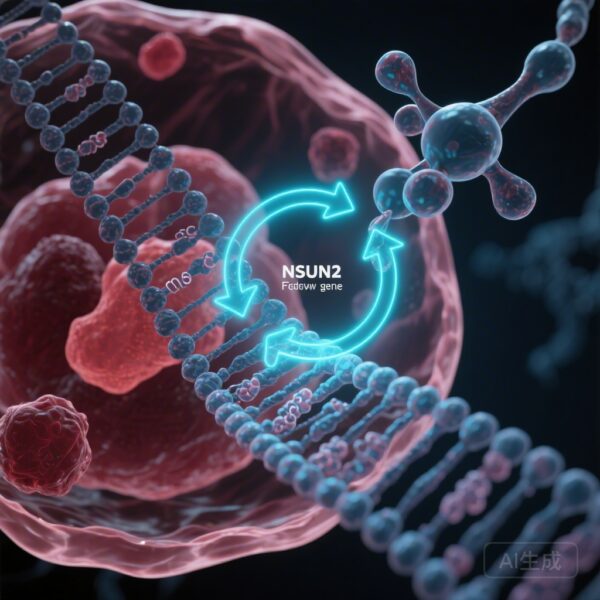
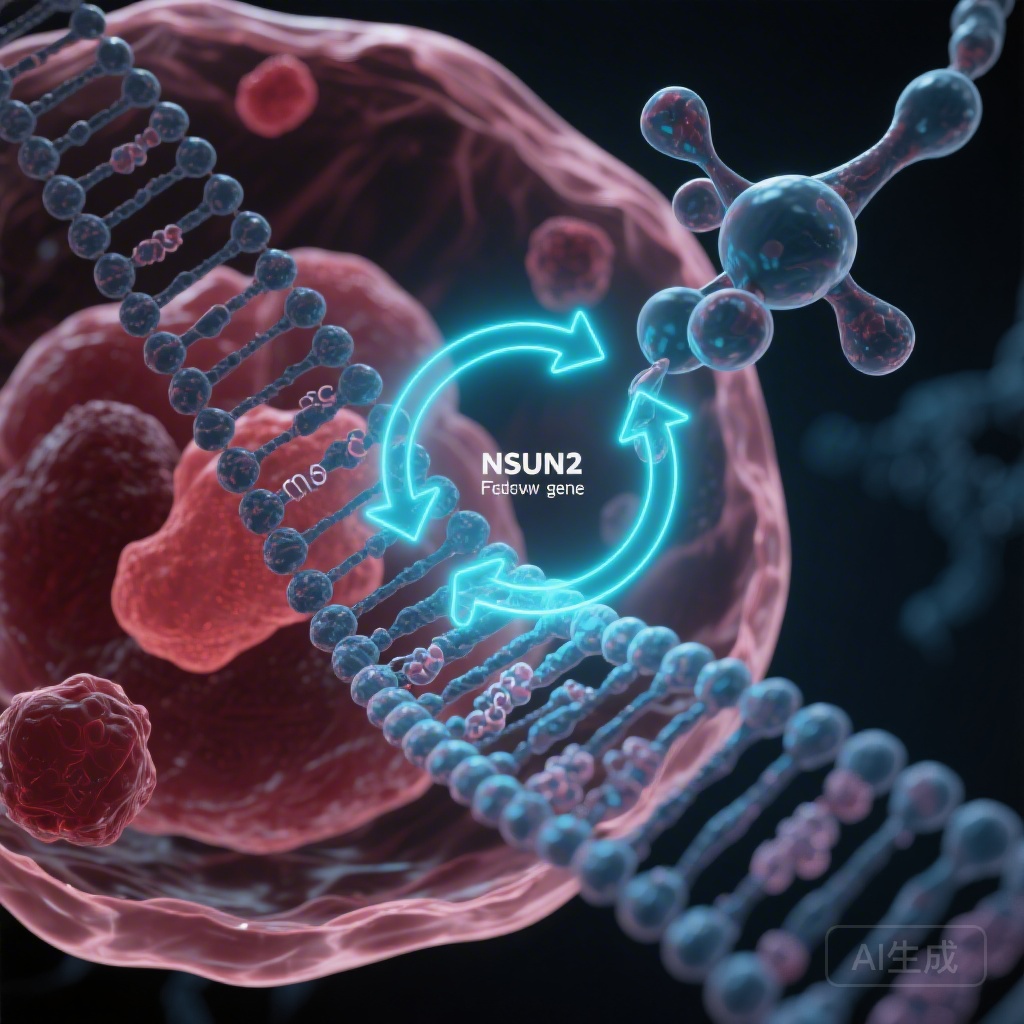
3. Một vòng lặp tiền xử lý tương hỗ tồn tại, nơi FOSB kích hoạt NSUN2 ở mức gen, tăng cường tín hiệu gây bệnh bạch cầu.
4. Sự loại bỏ gen của Nsun2 làm suy yếu khả năng tái tạo của tế bào gốc bạch cầu (LSC) và kéo dài thời gian sống trong mô hình chuột thí nghiệm mà không làm giảm sản xuất tế bào máu bình thường, nhấn mạnh một khoảng cách điều trị có giá trị cao.

Giới thiệu: Cảnh quan epigenetic của quá trình gây bệnh bạch cầu

Bạch cầu cấp tính tủy (AML) là một bệnh ác tính huyết học phức tạp, đặc trưng bởi sự mở rộng clonal của các tiền chất myeloid chưa biệt hóa. Mặc dù có những tiến bộ trong hóa trị liệu cảm ứng và các chất ức chế đích (như FLT3 hoặc IDH), nhiều bệnh nhân vẫn bị tái phát do sự tồn tại của tế bào gốc bạch cầu (LSCs). Các tế bào này có các đặc tính tái tạo độc đáo và thích nghi chuyển hóa cho phép chúng tránh khỏi các phương pháp điều trị chuẩn.

Những đột phá gần đây trong epitranscriptomics đã tiết lộ rằng các sửa đổi RNA đóng vai trò then chốt trong việc điều chỉnh biểu hiện gen trong ung thư. Mặc dù N6-methyladenosine (m6A) đã được nghiên cứu kỹ lưỡng trong AML, vai trò của 5-methylcytosine (m5C) mới chỉ bắt đầu được làm rõ. NSUN2 (NOP2/Sun RNA methyltransferase family member 2) là một thành viên chính tạo ra các sửa đổi m5C trên nhiều loại RNA. Nghiên cứu này điều tra xem các sửa đổi m5C do NSUN2 có góp phần duy trì nhóm LSC và tổng thể quá trình gây bệnh bạch cầu hay không.

Phương pháp và thiết kế nghiên cứu

Nghiên cứu sử dụng một cách tiếp cận đa chiều kết hợp dữ liệu lâm sàng, các dòng tế bào in vitro, và các mô hình chuột in vivo.

Phân tích lâm sàng và tế bào

Các hồ sơ biểu hiện ban đầu được thực hiện sử dụng các mẫu nguyên phát từ bệnh nhân AML và người hiến tặng khỏe mạnh. Các nhà nghiên cứu sử dụng NSUN2 knockdown (KD) bằng shRNA trong các dòng tế bào AML người (như THP-1 và MOLM-13) để đánh giá tác động lên sự phân chia tế bào, apoptosis, và khả năng tạo đơn vị hình thành thuộc (CFU).

Mô hình chuột in vivo

Để đánh giá tác động hệ thống của NSUN2, một mô hình AML chuột bị biến đổi MLL-AF9 (MA9) được sử dụng. Đội ngũ đã tạo ra chuột thiếu Nsun2 để quan sát tác động của mất chức năng đối với sự phát triển bạch cầu so với quá trình tạo máu bình thường. Các bài kiểm tra ghép tủy xương cạnh tranh được thực hiện để đánh giá sức khỏe của LSCs so với các tế bào gốc tạo máu bình thường.

Điều tra cơ chế

Để xác định các mục tiêu trực tiếp của NSUN2, nghiên cứu đã sử dụng RNA bisulfite sequencing (RNA-BisSeq) và RNA immunoprecipitation (RIP) sau đó là PCR định lượng. Các thử nghiệm báo cáo luciferase được sử dụng để xác nhận ý nghĩa chức năng của các vị trí m5C cụ thể, đặc biệt là trong 3′-UTR của mRNA FOSB. Chromatin immunoprecipitation (ChIP) được sử dụng để lập bản đồ sự điều chỉnh gen NSUN2 bởi FOSB.

Những phát hiện chính: NSUN2 là động lực chọn lọc của AML

Biểu hiện NSUN2 và duy trì LSC

Nghiên cứu đã phát hiện rằng biểu hiện NSUN2 cao hơn đáng kể trong các tế bào bạch cầu AML so với các tế bào tủy xương bình thường. Các thử nghiệm chức năng tiết lộ rằng việc loại bỏ NSUN2 dẫn đến tăng đáng kể tử vong theo chương trình (apoptosis) và giảm khả năng tạo thuộc của tế bào AML. Quan trọng nhất, việc mất NSUN2 đặc biệt nhắm vào quần thể LSC. Trong mô hình bạch cầu do MA9 gây ra, chuột gõ thiếu Nsun2 cho thấy sự chậm trễ đáng kể trong khởi phát bệnh và kéo dài đáng kể thời gian sống tổng thể so với các đối chứng hoang dã. Điều quan trọng là, việc thiếu Nsun2 không làm suy yếu sự phát triển của các tế bào hồng cầu, bạch cầu, hoặc tiểu cầu bình thường, cho thấy NSUN2 không cần thiết cho quá trình tạo máu ổn định.

Cơ chế phụ thuộc m5C: Ổn định FOSB

Các nhà nghiên cứu đã chứng minh rằng hiệu ứng gây bệnh của NSUN2 hoàn toàn phụ thuộc vào hoạt động methyltransferase của nó. Việc đưa lại NSUN2 hoang dã vào các tế bào thiếu hụt đã khôi phục khả năng gây bệnh của chúng, trong khi các đột biến không có hoạt tính xúc tác (C271A/C321A) không làm như vậy. Việc lập bản đồ cơ chế đã xác định gen FosB (FOSB) là mục tiêu chính. NSUN2 xúc tác sự biến đổi m5C tại nucleotide 3656 trong 3′-UTR của mRNA FOSB. Sự biến đổi này tăng độ ổn định của mRNA FOSB, ngăn ngừa sự phân hủy của nó và dẫn đến mức độ protein cao hơn trong tế bào bạch cầu.

Vòng lặp tiền xử lý: Sự tương hỗ giữa NSUN2 và FOSB

Một trong những phát hiện đáng chú ý nhất là việc phát hiện mối quan hệ điều hòa tương hỗ. Trong khi NSUN2 tăng mức độ FOSB thông qua sự ổn định mRNA, chính FOSB cũng hoạt động như một yếu tố chuyển录,结合到NSUN2基因的启动子区域。这创建了一个自我增强的前馈循环,维持两种蛋白质的高水平,推动AML的侵袭性表型。这种类型的调控回路在癌症中经常出现,以确保生存促进因子的稳健表达。

通过BCL2L1的下游生存信号传导

为了了解NSUN2-FOSB轴如何防止细胞凋亡,研究检查了下游效应物。他们发现FOSB直接结合到编码抗凋亡蛋白Bcl-xL的BCL2L1基因的启动子上,上调其表达。通过维持高水平的Bcl-xL,NSUN2-FOSB轴为AML细胞提供了强大的抵御线粒体凋亡的保护,这是化疗耐药性的标志。

专家评论:机制见解和治疗意义

NSUN2-FOSB-BCL2L1轴的鉴定代表了我们对白血病转录组学调控理解的重要进展。从临床角度来看,这项研究最令人兴奋的方面是NSUN2的选择性。许多当前的AML治疗方法受到对正常骨髓细胞(骨髓抑制)的剂量限制毒性的限制。Nsun2缺乏的小鼠保持正常造血的事实表明,NSUN2的药物抑制剂可能能够靶向白血病细胞,同时保留健康的血液生产。

此外,该轴依赖于m5C修饰,为开发针对NSUN2催化口袋的小分子抑制剂提供了明确的理由。类似的努力已经在针对m6A调节器如METTL3的研究中进行,本研究将NSUN2定位为同样可行的目标。此外,BCL2L1的参与表明,靶向该通路可能使AML细胞对现有的BH3模拟物(如Venetoclax)敏感,从而克服高NSUN2表达患者的耐药性。

然而,需要注意的是,该研究主要集中在MLL-AF9驱动的AML上。未来的研究应调查该轴是否在其他遗传亚型的AML中同样占主导地位,例如具有NPM1突变或不良风险细胞遗传学特征如单体7的AML。临床相关性研究也将需要确定NSUN2水平是否可以作为治疗反应的预测生物标志物。

结论与总结

总之,Zhou等人的研究表明,通过稳定FOSB mRNA并建立一个最终导致BCL2L1介导的抗凋亡信号传导的前馈循环,NSUN2充当AML细胞生存和LSC自我更新的核心协调者。在缺乏NSUN2的情况下正常造血的保存突显了其作为治疗易损性的潜力。随着转录组学领域的不断成熟,靶向NSUN2介导的m5C修饰可能成为急性髓系白血病精准医学工具包中的有力策略。

The NSUN2-FOSB Feedforward Loop: Unlocking m5C-Mediated Survival in Acute Myeloid Leukemia

The NSUN2-FOSB Feedforward Loop: Unlocking m5C-Mediated Survival in Acute Myeloid Leukemia

Highlights of the NSUN2-FOSB-BCL2L1 Axis

Research published in Haematologica has identified a critical epigenetic mechanism driving the progression of Acute Myeloid Leukemia (AML). The key highlights of this study include:

1. NSUN2 is significantly upregulated in primary AML patient samples but remains at low levels in normal hematopoietic stem and progenitor cells (HSPCs).
2. The NSUN2-FOSB-BCL2L1 axis operates in an m5C-dependent manner, where NSUN2 stabilizes FOSB mRNA through 5-methylcytosine modification at the 3′-UTR.
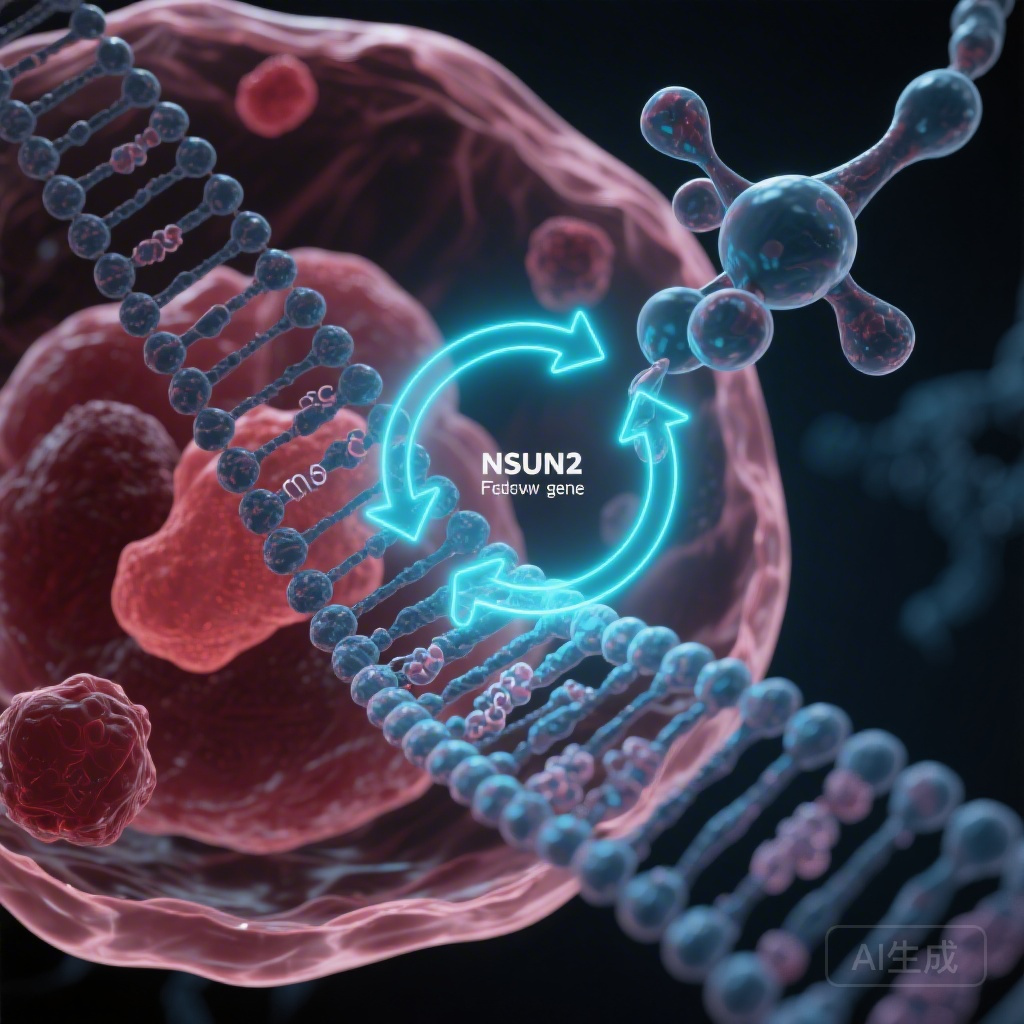
3. A reciprocal feedforward loop exists where FOSB transcriptionally activates NSUN2, amplifying leukemogenic signaling.
4. Genetic ablation of Nsun2 impairs leukemia stem cell (LSC) self-renewal and prolongs survival in murine models without compromising normal blood cell production, highlighting a high-value therapeutic window.

Introduction: The Epigenetic Landscape of Leukemogenesis

Acute Myeloid Leukemia (AML) is a complex hematologic malignancy characterized by the clonal expansion of undifferentiated myeloid precursors. Despite advancements in induction chemotherapy and targeted inhibitors (such as FLT3 or IDH inhibitors), many patients experience relapse driven by the persistence of leukemia stem cells (LSCs). These cells possess unique self-renewal properties and metabolic adaptations that allow them to evade standard treatments.

Recent breakthroughs in epitranscriptomics have revealed that RNA modifications play a pivotal role in regulating gene expression in cancer. While N6-methyladenosine (m6A) has been extensively studied in AML, the role of 5-methylcytosine (m5C) is only beginning to be elucidated. NSUN2 (NOP2/Sun RNA methyltransferase family member 2) is a primary writer of m5C modifications on various RNA species. This study investigates whether NSUN2-mediated m5C modifications contribute to the maintenance of the LSC pool and overall leukemogenesis.

Study Methodology and Design

The research utilized a multi-faceted approach combining clinical data, in vitro cell lines, and in vivo murine models.

Clinical and Cellular Analysis

Initial expression profiling was conducted using primary samples from AML patients and healthy donors. Researchers employed NSUN2 knockdown (KD) using shRNA in human AML cell lines (such as THP-1 and MOLM-13) to assess impacts on cell proliferation, apoptosis, and colony-forming unit (CFU) capacity.

In Vivo Murine Models

To evaluate the systemic effects of NSUN2, an MLL-AF9 (MA9)-transformed murine AML model was utilized. The team generated Nsun2-deficient mice to observe the impact of loss-of-function on leukemia development versus normal hematopoiesis. Competitive bone marrow transplantation assays were performed to assess the fitness of LSCs compared to normal hematopoietic stem cells.

Mechanistic Investigations

To identify the direct targets of NSUN2, the study employed RNA bisulfite sequencing (RNA-BisSeq) and RNA immunoprecipitation (RIP) followed by quantitative PCR. Luciferase reporter assays were used to confirm the functional significance of specific m5C sites, particularly within the FOSB mRNA 3′-UTR. Chromatin immunoprecipitation (ChIP) was used to map the transcriptional regulation of NSUN2 by FOSB.

Key Findings: NSUN2 as a Selective Driver of AML

NSUN2 Overexpression and LSC Maintenance

The study found that NSUN2 expression is markedly higher in AML blasts compared to normal bone marrow cells. Functional assays revealed that depleting NSUN2 led to a significant increase in programmed cell death (apoptosis) and a decrease in the ability of AML cells to form colonies. Most importantly, the loss of NSUN2 specifically targeted the LSC population. In the MA9-induced leukemia model, Nsun2 knockout mice showed a dramatic delay in disease onset and significantly prolonged overall survival compared to wild-type controls. Crucially, the absence of Nsun2 did not impair the development of normal red blood cells, white blood cells, or platelets, suggesting that NSUN2 is not essential for steady-state hematopoiesis.

The m5C-Dependent Mechanism: Stabilizing FOSB

The researchers demonstrated that the oncogenic effect of NSUN2 is strictly dependent on its methyltransferase activity. Reintroducing wild-type NSUN2 into deficient cells restored their leukemogenic potential, whereas catalytically inactive mutants (C271A/C321A) failed to do so. Mechanistic mapping identified the FosB proto-oncogene (FOSB) as a primary target. NSUN2 catalyzes the m5C modification at nucleotide 3656 in the 3′-UTR of FOSB mRNA. This modification increases the stability of the FOSB transcript, preventing its degradation and leading to higher protein levels within the leukemic cell.

The Feedforward Loop: NSUN2-FOSB Reciprocity

One of the most striking findings was the discovery of a reciprocal regulatory relationship. While NSUN2 increases FOSB levels via mRNA stabilization, FOSB itself acts as a transcription factor that binds to the promoter region of the NSUN2 gene. This creates a self-reinforcing feedforward loop that maintains high levels of both proteins, driving the aggressive phenotype of AML. This type of regulatory circuit is often found in cancer to ensure the robust expression of survival-promoting factors.

Downstream Survival Signaling via BCL2L1

To understand how the NSUN2-FOSB axis prevents apoptosis, the study examined downstream effectors. They found that FOSB directly binds to the promoter of BCL2L1 (which encodes the anti-apoptotic protein Bcl-xL), upregulating its expression. By maintaining high levels of Bcl-xL, the NSUN2-FOSB axis provides AML cells with a powerful shield against mitochondrial apoptosis, which is a hallmark of chemotherapy resistance.

Expert Commentary: Mechanistic Insights and Therapeutic Implications

The identification of the NSUN2-FOSB-BCL2L1 axis represents a significant step forward in our understanding of the epitranscriptomic regulation of leukemia. From a clinical perspective, the most promising aspect of this research is the selectivity of NSUN2. Many current AML treatments are limited by dose-limiting toxicities to normal bone marrow cells (myelosuppression). The fact that Nsun2-deficient mice maintain normal hematopoiesis suggests that pharmacological inhibitors of NSUN2 could potentially target leukemia cells while sparing healthy blood production.

Furthermore, the dependence of this axis on m5C modification provides a clear rationale for the development of small-molecule inhibitors targeting the catalytic pocket of NSUN2. Similar efforts are already underway for m6A regulators like METTL3, and this study positions NSUN2 as a similarly viable target. Additionally, the involvement of BCL2L1 suggests that targeting this pathway could sensitize AML cells to existing BH3 mimetics, such as Venetoclax, potentially overcoming resistance in patients with high NSUN2 expression.

However, it is important to note that the study primarily focused on MLL-AF9-driven AML. Future research should investigate whether this axis is equally dominant in other genetic subtypes of AML, such as those with NPM1 mutations or adverse-risk cytogenetics like monosomy 7. Clinical correlation studies will also be needed to determine if NSUN2 levels can serve as a predictive biomarker for treatment response.

Conclusion and Summary

In summary, the study by Zhou et al. uncovers a sophisticated m5C-dependent regulatory network that facilitates leukemogenesis. By stabilizing FOSB mRNA and establishing a feedforward loop that culminates in BCL2L1-mediated anti-apoptotic signaling, NSUN2 acts as a central orchestrator of AML cell survival and LSC self-renewal. The preservation of normal hematopoiesis in the absence of NSUN2 highlights its potential as a therapeutic vulnerability. As the field of epitranscriptomics continues to mature, targeting NSUN2-mediated m5C modification may emerge as a potent strategy in the precision medicine toolkit for Acute Myeloid Leukemia.

References

1. Zhou B, Yuan Y, Cai Y, et al. NSUN2-FOSB reciprocity facilitates leukemogenesis in an m5C-dependent manner by increasing BCL2L1 expression. Haematologica. 2026;111(3). PMID: 41816830.
2. Barbieri I, Kouzarides T. Role of RNA modifications in cancer. Nature. 2020;582(7812):303-314.
3. Delaunay S, Frye M. RNA modifications regulating cell fate in cancer. Nature Reviews Cancer. 2019;19(7):413-424.
4. He L, Li H, Wu A, et al. Functions of N5-methylcytosine (m5C) RNA modification in human diseases. Molecular Therapy – Nucleic Acids. 2022;29:565-578.

Comments

No comments yet. Why don’t you start the discussion?

Để lại một bình luận