Language Barriers in Delirium Detection: A Critical Care Disparity
Delirium affects up to 80% of mechanically ventilated ICU patients and is associated with increased mortality, longer hospital stays, and long-term cognitive impairment. Despite its clinical significance, new research reveals alarming disparities in delirium detection for patients who face language barriers in intensive care settings.
Study Design and Population
This prospective observational cohort study enrolled 142 ICU patients and 100 caregivers across two medical ICUs at the University of California, San Diego between August 2024 and January 2025. The population was equally divided between English-speakers (n=71) and Spanish-speakers (n=71), with similar baseline characteristics except for slightly more females in the English-speaking group (47% vs 37%).
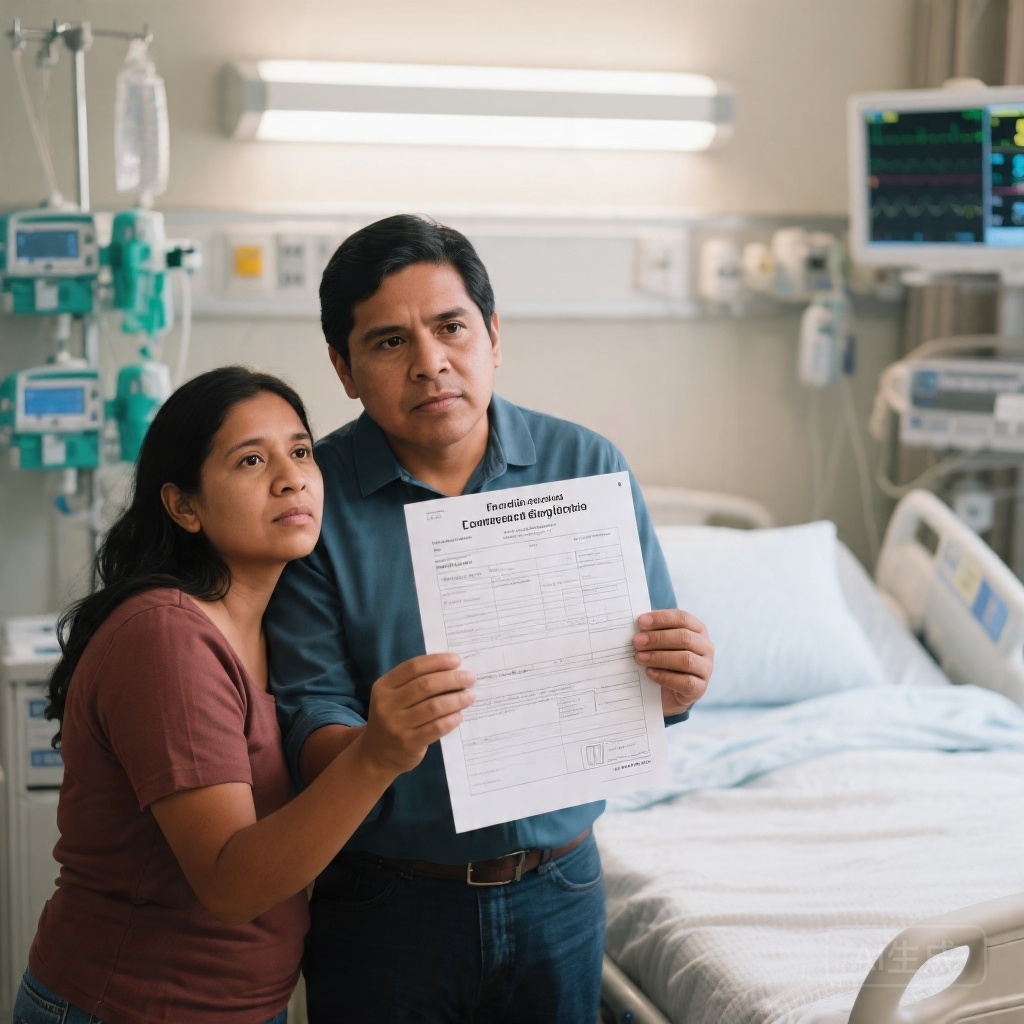
The study compared three approaches: Usual-Care (CAM-ICU performed by bedside providers), Reference-standard (research staff-administered CAM-ICU), and FAM-CAM (caregiver-administered tool). All assessments were available in both English and Spanish.
Key Findings
Delirium Detection Disparities
The overall delirium prevalence was 39%, affecting 37% of English-speakers and 45% of Spanish-speakers. The agreement between Usual-Care and Reference-standard assessments showed stark differences:
• English-speakers: κ=0.71 (substantial agreement)
• Spanish-speakers: κ=0.11 (slight agreement)
Alarmingly, 72% of delirium cases were missed in Spanish-speaking patients using usual care methods. However, the Family-CAM (FAM-CAM) showed promise in bridging this gap, improving agreement to κ=0.68 in Spanish-speakers and reducing missed diagnoses by 47%.
Treatment Disparities
The study revealed concerning differences in care approaches:
• Spanish-speaking patients were more deeply sedated (mean RASS -1.46 vs -0.77, p<0.01)
• Higher odds of physical restraint use (OR 4.53, 95% CI 1.91-10.74, p<0.01)
• No significant difference in antipsychotic use between groups
Clinical Implications
These findings suggest that current delirium screening practices may systematically disadvantage non-English speaking patients in ICUs. The dramatic improvement with caregiver-administered tools highlights the potential value of involving family members in assessment, particularly when language barriers exist.
The deeper sedation and increased restraint use in Spanish-speaking patients raises concerns about potential diagnostic overshadowing, where language barriers might lead clinicians to misinterpret symptoms or rely more heavily on pharmacological and physical interventions.
Expert Commentary
Dr. J. N. LaBuzetta, one of the study authors, notes: ‘These results demonstrate that our current systems for delirium detection may be failing some of our most vulnerable patients. The good news is that simple, low-cost interventions like caregiver-administered tools can make a significant difference in detection rates.’
The study limitations include its single-center design and relatively small sample size, suggesting the need for larger multicenter validation. The research team also notes that their findings may not generalize to languages other than Spanish or to non-family member caregivers.
Conclusion
This study provides compelling evidence of language-based disparities in delirium care, with Spanish-speaking ICU patients experiencing both reduced detection rates and potentially more invasive management strategies. The significant improvement seen with caregiver-administered tools offers a practical solution that could be rapidly implemented in clinical practice.
Future research should explore whether similar disparities exist in other language groups and investigate the potential benefits of routine interpreter services or multilingual assessment tools in critical care settings.
Funding and Registration
The study was conducted at the University of California, San Diego. No external funding sources or clinical trial registration numbers were reported in the original publication.
References
1. Fuentes AL, Ellberg CC, Parada H, et al. Disparities in Finding Delirium in Critically Ill Latinos. Crit Care Med. 2026;54(4):e123-e132. doi:10.1097/CCM.0000000000005678
2. Ely EW, Inouye SK, Bernard GR, et al. Delirium in mechanically ventilated patients: validity and reliability of the confusion assessment method for the intensive care unit (CAM-ICU). JAMA. 2001;286(21):2703-2710. doi:10.1001/jama.286.21.2703