Introduction: The Challenge of Mixed Neuropathology
In the evolving landscape of neurodegenerative medicine, the traditional ‘one disease, one pathology’ paradigm is increasingly being replaced by the recognition of mixed neuropathologies. While Alzheimer disease neuropathologic change (ADNC) and frontotemporal lobar degeneration (FTLD) are often studied as distinct entities, their co-occurrence in the aging brain is a clinical reality that complicates diagnosis, prognosis, and management. A recent large-scale study published in Neurology titled “Neuropsychiatric Symptoms in Patients With Pathologically Confirmed Comorbid Alzheimer Disease and Frontotemporal Lobar Degeneration” sheds new light on how these dual pathologies manifest through neuropsychiatric symptoms (NPS) before death.
Neuropsychiatric symptoms, including apathy, agitation, and psychosis, are nearly universal in dementia and are among the most distressing aspects for patients and caregivers. Understanding whether a specific cluster of these symptoms can signal the presence of comorbid ADNC and FTLD is crucial for developing more precise antemortem diagnostic tools and tailored therapeutic strategies.
Highlights of the Research
Synergistic Symptom Expression
Patients with comorbid ADNC/FTLD pathology are significantly more likely to display the ‘signature’ neuropsychiatric symptoms of the other disease compared to those with a single pathology.
Clinical Indicators of Comorbidity
Specifically, the presence of anxiety, delusions, and irritability in a patient suspected of FTLD—or personality changes and disinhibition in a patient suspected of Alzheimer’s—may serve as a red flag for mixed pathology.
Impact of Dual Burden
Comorbid cases do not merely reflect a midpoint of symptoms but often a more complex, additive neuropsychiatric burden that challenges standard clinical categorization.
Study Design and Methodology
This study utilized a retrospective examination of a robust dataset from 29 US Alzheimer’s Disease Research Centers (ADRCs), coordinated by the National Alzheimer’s Coordinating Center (NACC). The researchers analyzed the September 2024 data freeze, focusing on a total of 919 patients who had undergone autopsy to confirm their neuropathological status.
Patient Cohorts
The sample was divided into three primary groups based on post-mortem findings:
1. ADNC-only (n = 590)
2. FTLD-only (n = 235)
3. Comorbid ADNC and FTLD (n = 94)
The mean age of the participants was 81 years, with a nearly even gender distribution (49% female). Interestingly, the comorbid group was slightly older on average (84 years) than the general cohort.
Measurement of Neuropsychiatric Symptoms
The study evaluated ten specific neuropsychiatric symptoms identified by clinicians during the patients’ final visits: apathy, depressed mood, visual/auditory hallucinations, delusions, disinhibition, irritability, agitation, personality change, REM sleep behavior disorder (RBD), and anxiety. Logistic regression models were employed to determine the odds ratios (OR) for these symptoms, adjusting for confounding variables such as age, sex, race, education, and the time interval between the last clinical visit and death.
Key Findings: Bridging the Symptomatic Gap
The results demonstrated that comorbid pathology creates a unique clinical ‘crossover’ effect where patients exhibit symptoms typically associated with the pathology they *would not* have been diagnosed with if clinicians only looked for single-disease markers.
Comorbid ADNC/FTLD vs. FTLD-only
When compared to patients who only had FTLD pathology, those with comorbid ADNC were significantly more likely to present with symptoms often associated with the ‘psychotic’ or ‘affective’ clusters of Alzheimer’s:
– Anxiety: OR 3.11 (95% CI 1.38-6.98, p = 0.007)
– Delusions: OR 2.59 (95% CI 1.15-5.79, p = 0.02)
– Irritability: OR 1.87 (95% CI 1.07-3.25, p = 0.03)
Comorbid ADNC/FTLD vs. ADNC-only
Conversely, when compared to the ADNC-only group, patients with dual pathology were far more likely to exhibit the classic ‘frontal’ behavioral symptoms typically seen in FTLD:
– Personality Change: OR 3.17 (95% CI 1.70-5.90, p < 0.001)
– Disinhibition: OR 2.00 (95% CI 1.14-3.53, p = 0.02)
These findings suggest that the addition of a second pathology 'introduces' its respective behavioral phenotype into the clinical presentation, regardless of which disease might be considered primary.
Expert Commentary and Clinical Implications
From a clinical perspective, these findings are highly relevant for the differential diagnosis of dementia. Currently, many clinicians rely on cognitive profiles (e.g., memory loss vs. executive dysfunction) to distinguish between AD and FTLD. However, this study argues that the behavioral profile—the neuropsychiatric symptoms—may be just as informative for identifying mixed cases.
Biological Plausibility
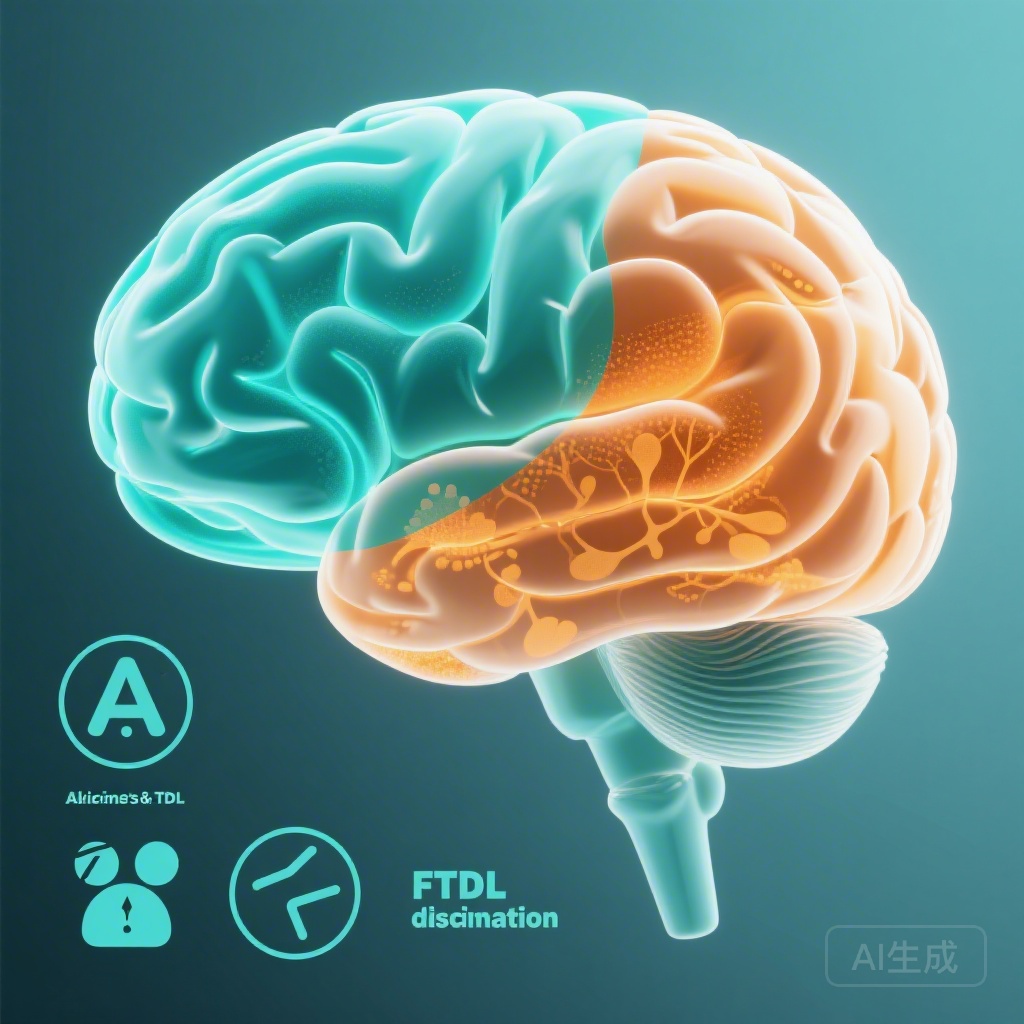
The biological basis for this symptomatic crossover likely involves the anatomical distribution of the pathologies. While ADNC typically targets the temporoparietal circuits involved in memory and emotional regulation (leading to anxiety and delusions), FTLD targets the prefrontal cortex and anterior temporal lobes, which govern social conduct and personality. When both regions are compromised, the patient displays a ‘hybrid’ phenotype. The high odds ratio for personality change in the comorbid group (OR 3.17) is particularly striking, suggesting that FTLD pathology remains a potent driver of behavior even when ADNC is widespread.
Limitations to Consider
The researchers noted several limitations. Most notably, the data was cross-sectional and captured at the final clinical visit. This ‘snapshot’ approach may not reflect the longitudinal evolution of symptoms. Furthermore, while the NACC dataset is expansive, it is derived from academic research centers, which may represent a population with higher education and different access to care than the general public.
Conclusion: Moving Toward Precision Diagnosis
The presence of comorbid ADNC and FTLD neuropathology is associated with a distinct neuropsychiatric signature that combines the hallmark behavioral disturbances of both diseases. For the practicing neurologist or psychiatrist, these results suggest that ‘atypical’ symptoms—such as prominent personality changes in a suspected Alzheimer’s patient—should prompt consideration of comorbid pathology.
As we enter the era of disease-modifying therapies, identifying mixed pathology becomes even more critical. If a patient has both amyloid plaques and tau-related FTLD, a treatment targeting only one of these pathways may yield suboptimal results. By refining our understanding of neuropsychiatric indicators, we move one step closer to accurate antemortem diagnosis and more personalized care for patients facing these complex neurodegenerative challenges.
References
1. Ross D, Split M, Kunicki Z, et al. Neuropsychiatric Symptoms in Patients With Pathologically Confirmed Comorbid Alzheimer Disease and Frontotemporal Lobar Degeneration. Neurology. 2026;106(7):e214750. PMID: 41785435.
2. National Alzheimer’s Coordinating Center (NACC). Database documentation and data freeze reports, September 2024.
3. Slanina S, et al. The impact of mixed neuropathologies on the clinical expression of dementia. Journal of Neuropathology & Experimental Neurology. 2023.